Green steel looks expensive at the mill and cheap in the showroom
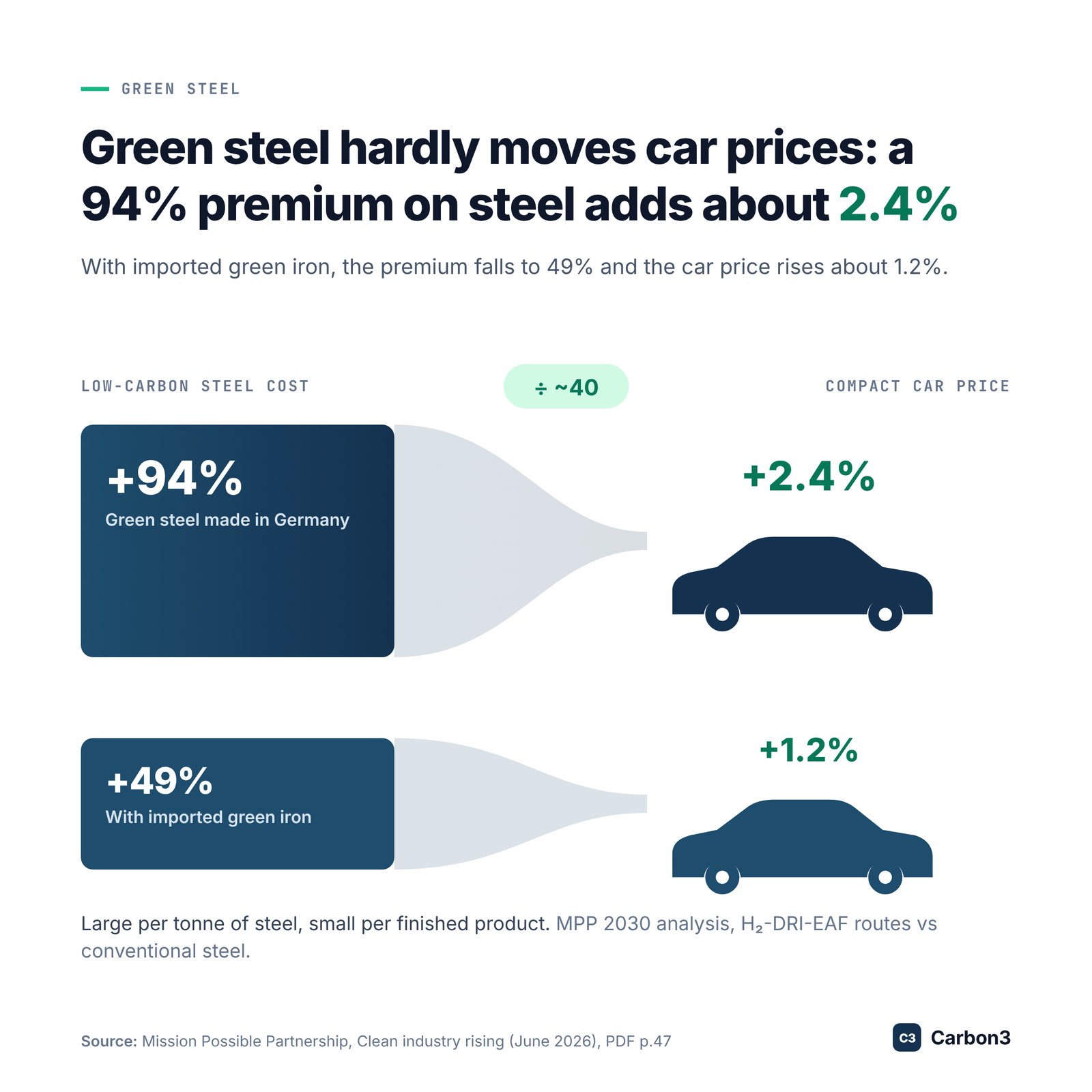
Mission Possible Partnership finds a 94% premium on hydrogen-based steel adds only about 2.4% to the cost of a compact car in 2030, which gives buyers a cheap way to act on purchased-goods emissions.
By Carbon3 team2 min read
The green premium looks very different at the steel mill than at the showroom, and the gap between those two views matters for every company that buys steel inside a finished product.
What the modeling shows
Mission Possible Partnership modeled clean steel for a compact car in 2030 in its report Clean industry rising, published in June 2026. In that analysis, hydrogen-based steel made in Germany costs about 94% more than conventional steel. Because steel is only one input among many in a car, that premium adds only about 2.4% to the car's final cost.
The picture changes again when the iron is made elsewhere. With imported green iron, MPP finds the steel premium falls to about 49%, and the impact on the car's cost falls to about 1.2%. MPP describes the relationship between the material premium and the end-product premium as a dilution factor, which it puts at around 40.
Why buyers see a different number than producers
For a steelmaker, a premium of that size is a serious barrier, since it applies to the whole of its product. For a carmaker or machinery manufacturer, the same premium is spread across a much larger bill of materials and a much higher selling price. As a result, the cost that looks prohibitive at the mill can look modest at the point of sale.
That asymmetry is important because of where emissions sit in the inventory. For automotive and machinery buyers, steel can weigh heavily in purchased-goods emissions under Scope 3 while weighing lightly in product price. The buyer therefore has a strong reporting reason to care about cleaner steel and a comparatively small cost per unit when it does.
Turning the dilution into action
The dilution effect does not finance anything on its own. Someone still has to pay the producer's premium up front, and the buyer needs a reliable record of what that payment achieved.
This is where co-funding comes in. A buyer can co-fund verified low-emission steel in its own supply chain, with the resulting emissions reductions recorded once as inset credits. The project developer issues credits on the Carbon3 registry once a verification report is on file, so each reduction is claimed only once and its chain of custody stays clear. Spread across the units a buyer sells, that contribution can cost little per unit.
Insetting of this kind finances reductions inside the buyer's own value chain rather than compensating for emissions elsewhere, which is the core difference between insets and offsets.
Claim treatment depends on the applicable reporting framework.
Correction, 30 October 2026: An earlier version of this article said the reductions behind Carbon3 credits are independently verified. Credits are issued once a verification report is on file. Carbon3 asks for a verifier that is independent of the project, but the registry does not yet check who wrote the report.
Source: Mission Possible Partnership, Clean industry rising (June 2026).
Learn more
How insetting works in steel and cement
Originally published on LinkedIn, 25 October 2026.
Read more from the research team.
Sector: Steel
The cost of delayed action in the steel sector
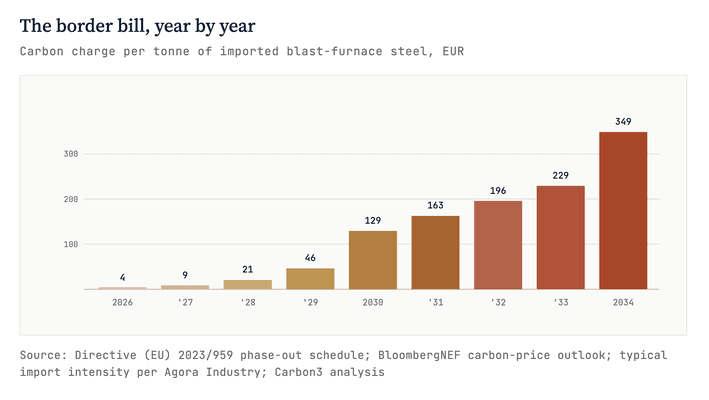
Europe's carbon border charge phases in slowly at first, then steeply.
Read the articleSector: Steel
Australia has the ore, the sun and the policy money, but not yet the offtake
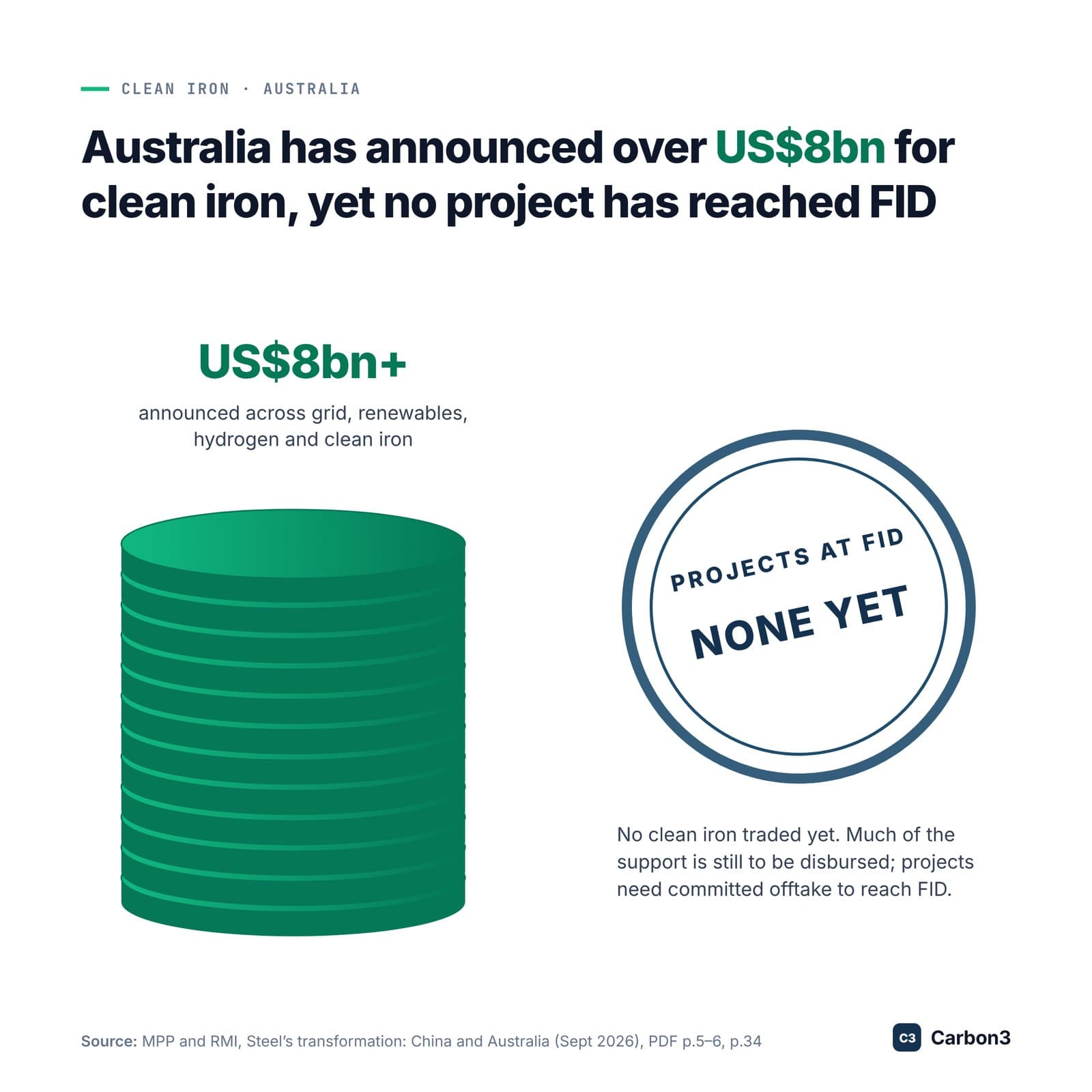
MPP and RMI count more than US$8bn in announced Australian incentives, yet no clean iron project has reached final investment decision and at least 10 iron projects need committed buyers.
Read the articleTransition finance
Waiting on decarbonization is getting expensive
McKinsey's 'The sustainability reset' finds CBAM defaults can raise bills by up to 60% and green steel demand outrunning supply by about a third by 2030.
Read the article
See the companies behind these figures in the Data Hub.
Look up your suppliers’ emissions and targets, free.