Australia has the ore, the sun and the policy money, but not yet the offtake
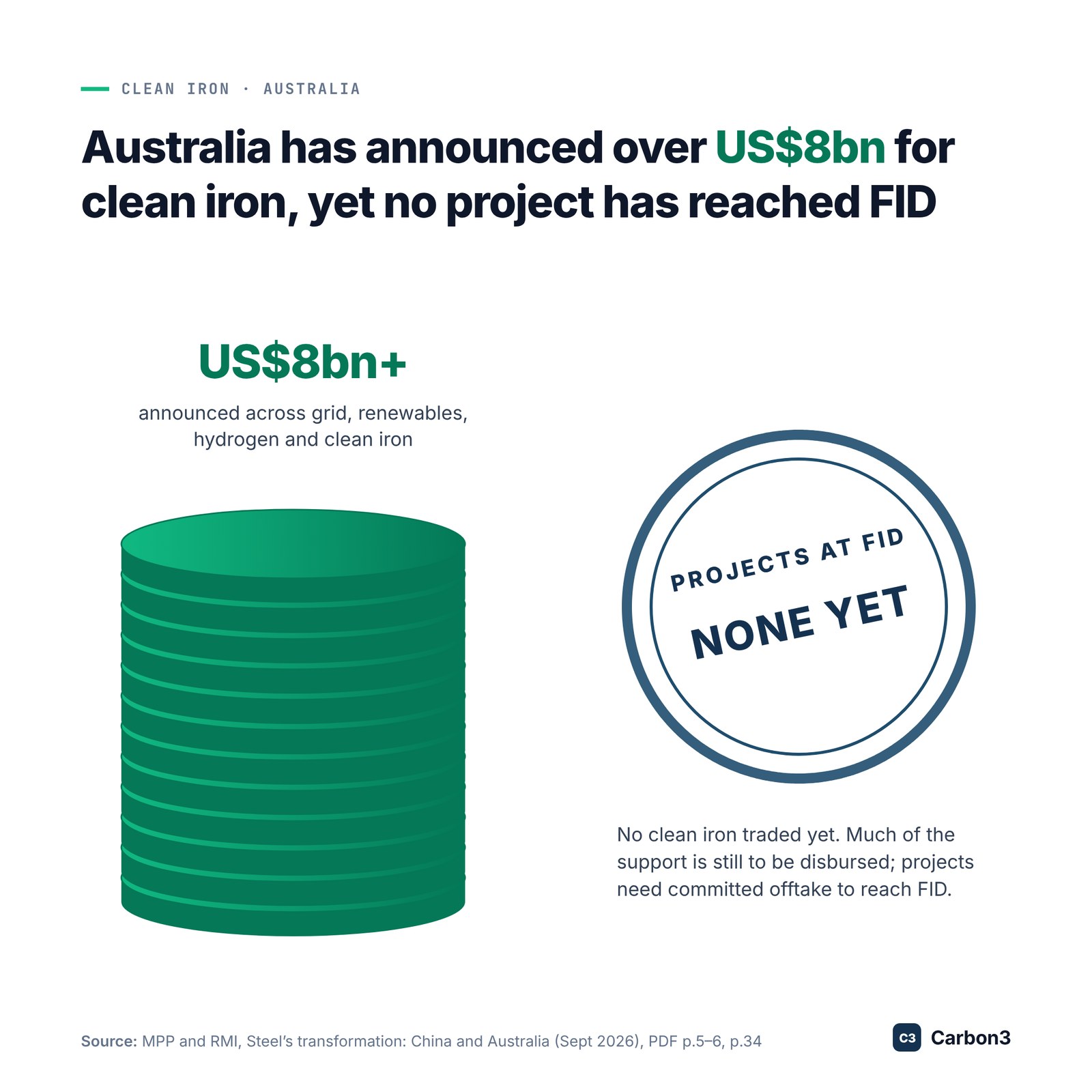
MPP and RMI count more than US$8bn in announced Australian incentives, yet no clean iron project has reached final investment decision and at least 10 iron projects need committed buyers.
By Carbon3 team2 min read
Australia has the iron ore, the solar resource and growing policy support to become a major supplier of clean iron. What it does not yet have is buyers who have signed up to take the product.
What MPP and RMI found
In their September 2026 report on steel's transformation in China and Australia, Mission Possible Partnership (MPP) and RMI count more than US$8bn in announced incentives in Australia. That money covers the grid, renewables, hydrogen and clean iron, and much of it has not yet been disbursed.
So far, that support has not taken a single project to final investment decision. No clean iron has been traded. At least 10 hot briquetted iron (HBI) projects, with about 15 Mtpa of proposed capacity, need committed buyers before they can move ahead.
Why offtake is the missing piece
Policy money can lower the cost of building a plant, but lenders and investors also want to see revenue. For a new clean iron project, that usually means long-term offtake agreements with steelmakers or their customers. Without those contracts, projects stay on the drawing board, however strong the resource base.
That puts steel buyers, and the companies further down the chain that buy steel in their products, in an unusual position. Their early commitments can decide which projects get built and how quickly.
What buyers can do now
Committing to physical offtake years in advance is a big step for many buyers. Co-funding verified low-emission iron and steel in their own supply chain is another way to send a demand signal to developers today.
When that support is recorded once as inset credits, the emissions reductions stay linked to the supply chain they came from and cannot be claimed twice. The project developer issues credits on the Carbon3 registry once a verification report is on file, so developers, buyers and auditors can all see who holds each claim.
This is insetting, not offsetting. The action sits inside the steel value chain that buyers already depend on, rather than in an unrelated project elsewhere.
For Australian developers, a clear and traceable demand signal could help close the gap between announced support and real investment decisions.
Claim treatment depends on the applicable reporting framework.
Correction, 30 October 2026: An earlier version of this article said the reductions behind Carbon3 credits are independently verified. Credits are issued once a verification report is on file. Carbon3 asks for a verifier that is independent of the project, but the registry does not yet check who wrote the report.
Source: MPP and RMI, Steel's transformation: China and Australia (September 2026).
Learn more
How insetting works in steel and cement
Originally published on LinkedIn, 27 October 2026.
Read more from the research team.
Sector: Steel
Green steel looks expensive at the mill and cheap in the showroom
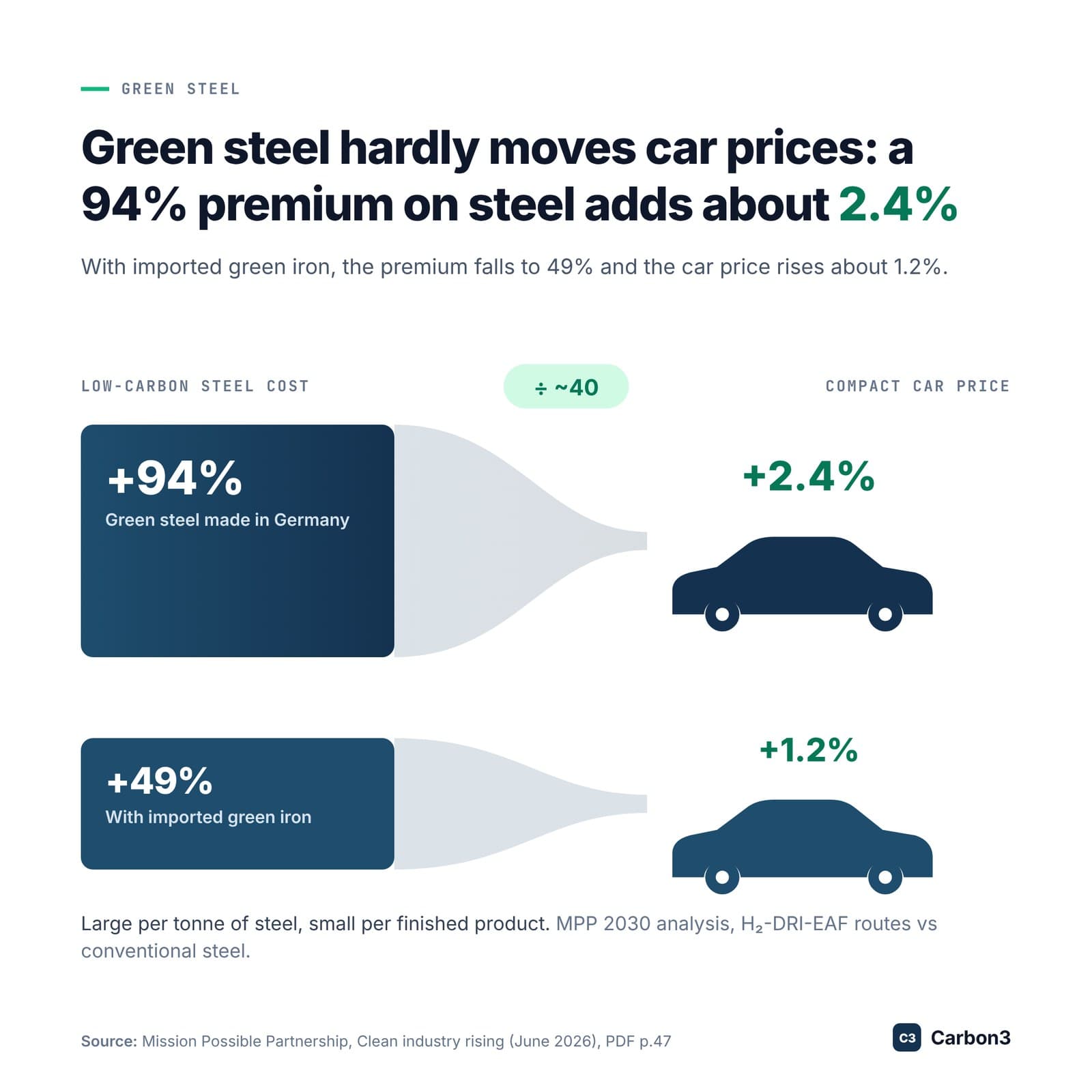
Mission Possible Partnership finds a 94% premium on hydrogen-based steel adds only about 2.4% to the cost of a compact car in 2030, which gives buyers a cheap way to act on purchased-goods emissions.
Read the articleSector: Steel
Europe's carbon border tax is about to get expensive for Indian steel
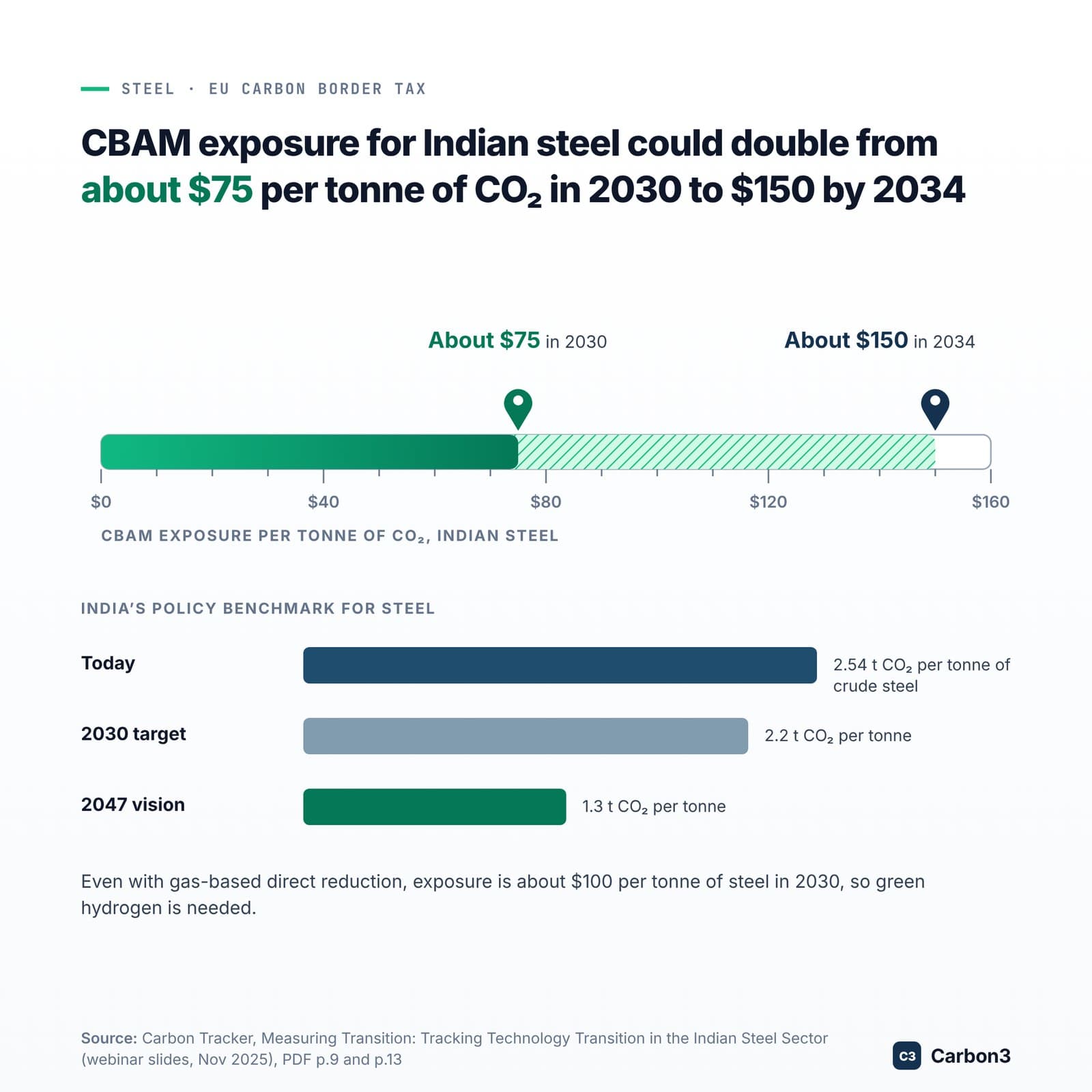
Carbon Tracker puts CBAM exposure for Indian steel at about $75 per tonne of CO2 in 2030, rising to about $150 by 2034, and European importers pay it.
Read the articleTransition finance
Heavy industry has a pipeline, not yet a committed build
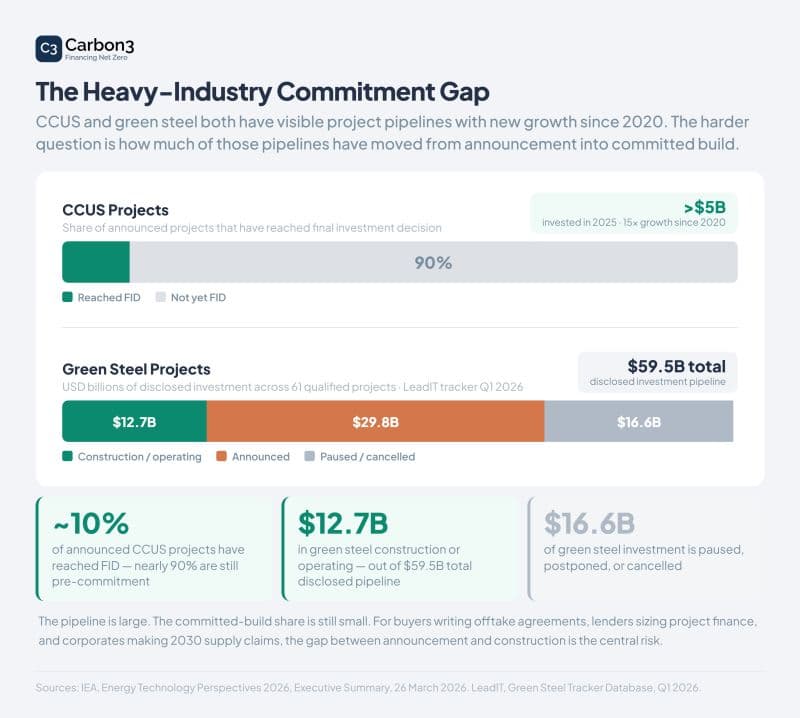
CCUS investment has grown more than fifteen-fold since 2020, yet almost 90 percent of announced projects have not reached final investment decision.
Read the article
See the companies behind these figures in the Data Hub.
Look up your suppliers’ emissions and targets, free.