Europe's carbon border tax is about to get expensive for Indian steel
Carbon Tracker puts CBAM exposure for Indian steel at about $75 per tonne of CO2 in 2030, rising to about $150 by 2034, and European importers pay it.
By Carbon3 team2 min read
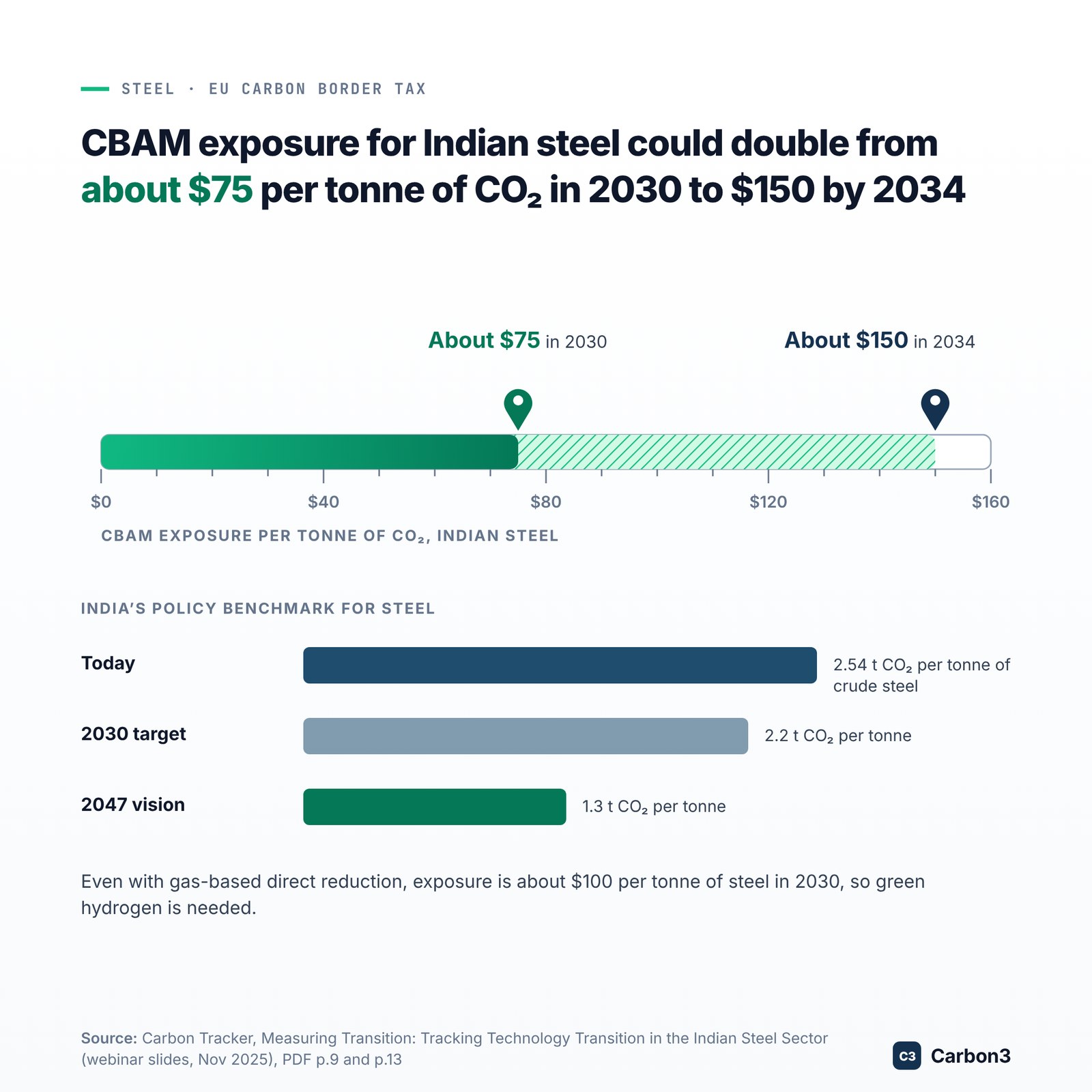
Europe's carbon border tax is about to become a real cost line for Indian steel. Carbon Tracker's review of the Indian steel majors, Measuring Transition, puts the exposure of Indian steel to the EU Carbon Border Adjustment Mechanism (CBAM) at about $75 per tonne of CO₂ in 2030, rising to about $150 per tonne by 2034.
Where Indian steel stands today
CBAM prices the embedded emissions of goods such as steel when they enter the EU, so the carbon intensity of each mill matters directly. Carbon Tracker puts Indian steel at 2.54 tonnes of CO₂ per tonne of crude steel. India's national target is 2.2 tonnes in 2030, and its longer-term vision is 1.3 tonnes in 2047.
The gap between today's intensity and those targets is what turns a border mechanism into a pricing problem. Every tonne of CO₂ above the benchmark becomes a cost that someone in the chain has to carry.
Gas helps, but not enough
Switching to gas-based direct reduction lowers emissions, but Carbon Tracker finds that it does not close the gap. Even with that route, exposure stays near $100 per tonne of steel in 2030. The analysis points to green hydrogen as the route that brings the cost down further.
That makes the choice of technology a commercial decision as much as an environmental one. A mill that moves early to lower-emission production offers its European customers a lower border cost on every shipment.
Why European buyers should care
CBAM is paid by the European importer, not by the Indian producer. As a result, the cost of carbon-intensive steel lands in the buyer's accounts, and cleaner supply translates directly into lower border costs.
This gives European buyers a reason to support supplier decarbonization rather than simply switching suppliers. Insetting, which means financing emissions reductions in a company's own value chain, is one way to share the cost and risk of those supplier investments. Once a verification report is on file, the project developer issues inset credits on the Carbon3 registry, so each reduction is not claimed twice. This is insetting, not offsetting, and the difference is explained at carbon3.net/insets-vs-offsets.
Claim treatment depends on the applicable reporting framework.
The open question is which Indian mills will move first, and which European buyers will help them do it.
Source: Carbon Tracker, Measuring Transition, p. 9 and p. 13.
Learn more
How insetting works in steel and cement
Originally published on LinkedIn, 31 October 2026.
Read more from the research team.
Sector: Steel
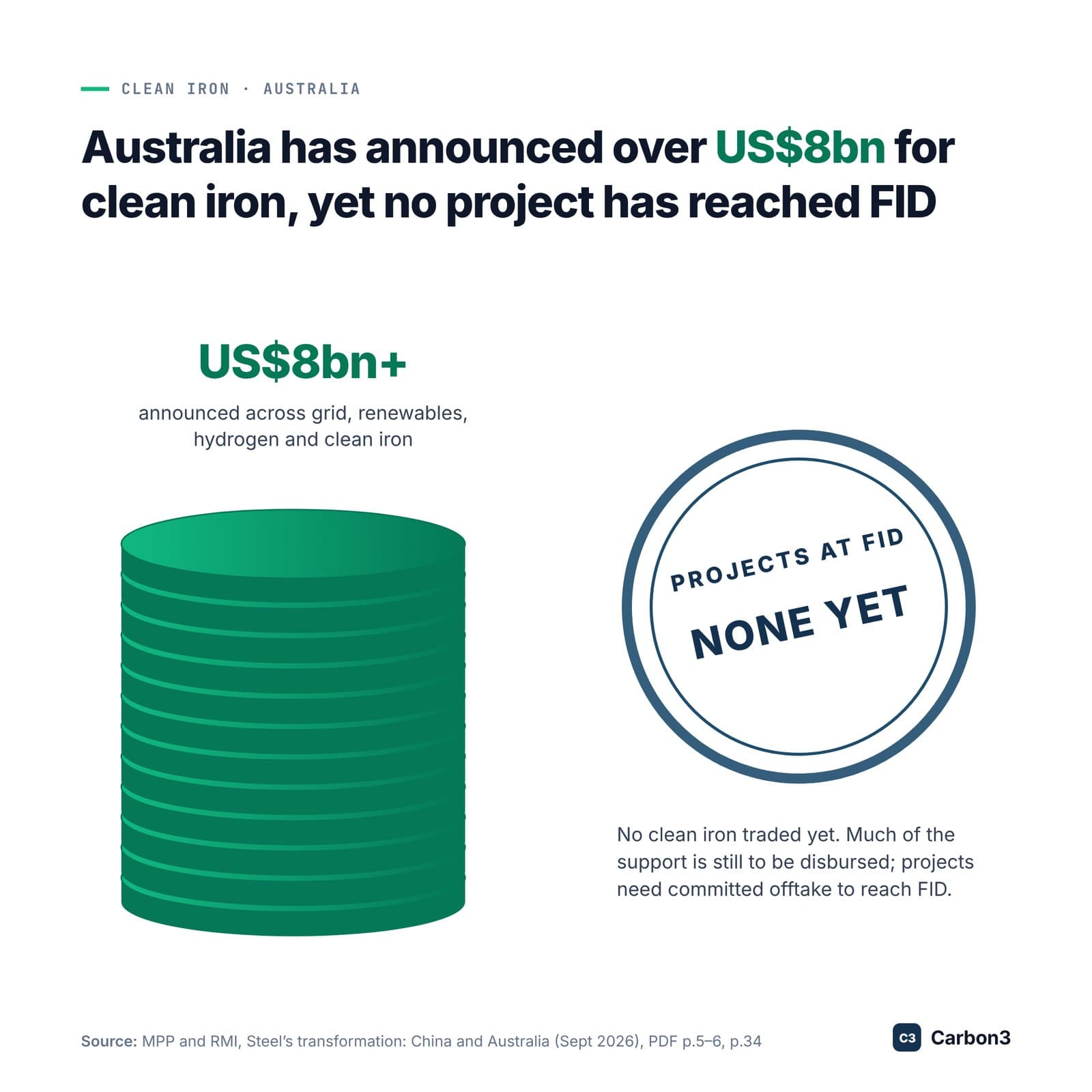
Australia has the ore, the sun and the policy money, but not yet the offtake
MPP and RMI count more than US$8bn in announced Australian incentives, yet no clean iron project has reached final investment decision and at least 10 iron projects need committed buyers.
Read the articleSector: Steel
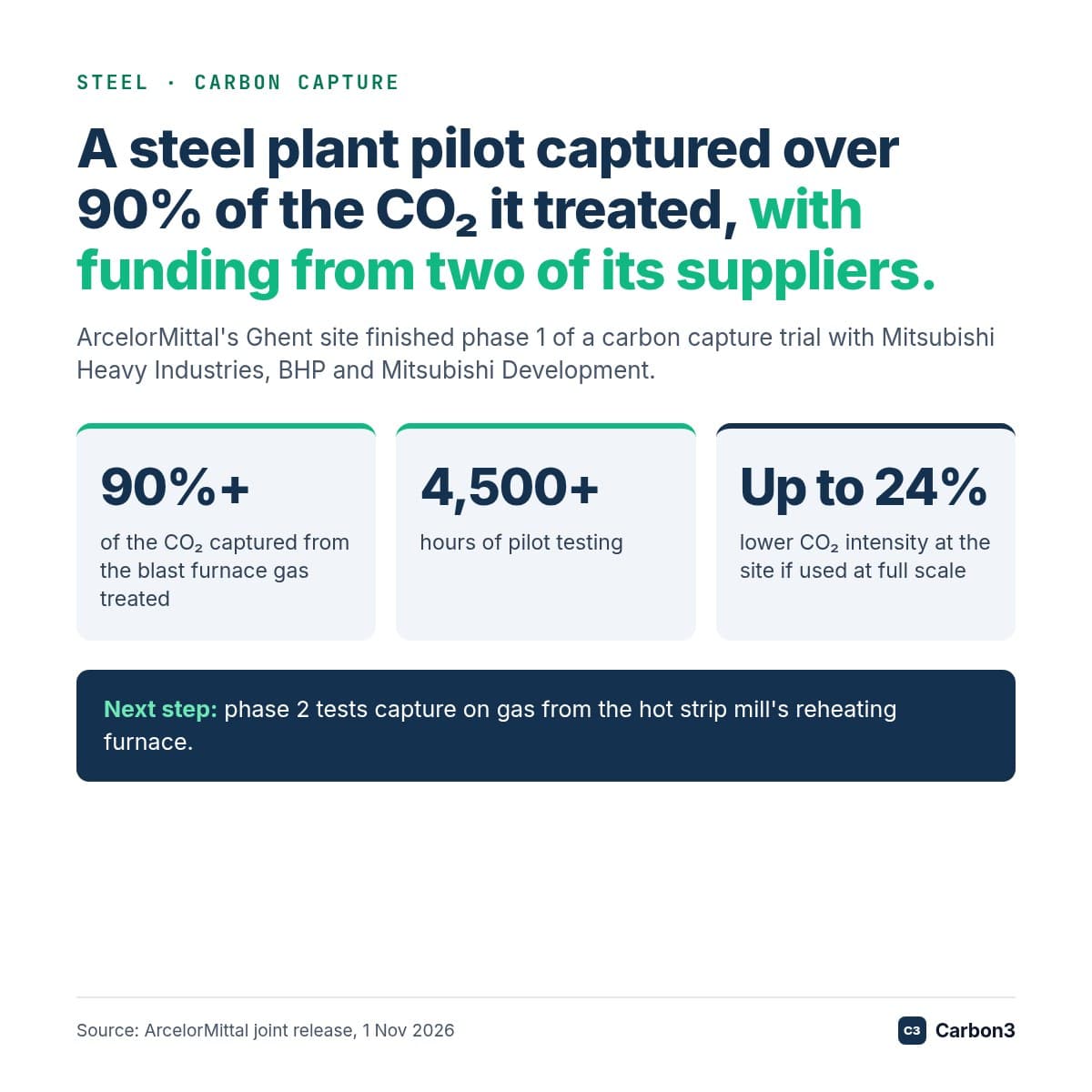
A carbon capture pilot at ArcelorMittal Ghent is funded by two of the plant's suppliers
The first phase of the trial captured more than 90% of the CO₂ in the blast furnace gas it treated, with BHP and Mitsubishi Development paying for it and Mitsubishi Heavy Industries supplying the technology.
Read the articleTransition finance
Waiting on decarbonization is getting expensive
McKinsey's 'The sustainability reset' finds CBAM defaults can raise bills by up to 60% and green steel demand outrunning supply by about a third by 2030.
Read the article
See the companies behind these figures in the Data Hub.
Look up your suppliers’ emissions and targets, free.