A carbon capture pilot at ArcelorMittal Ghent is funded by two of the plant's suppliers
The first phase of the trial captured more than 90% of the CO₂ in the blast furnace gas it treated, with BHP and Mitsubishi Development paying for it and Mitsubishi Heavy Industries supplying the technology.
By Carbon3 team2 min read
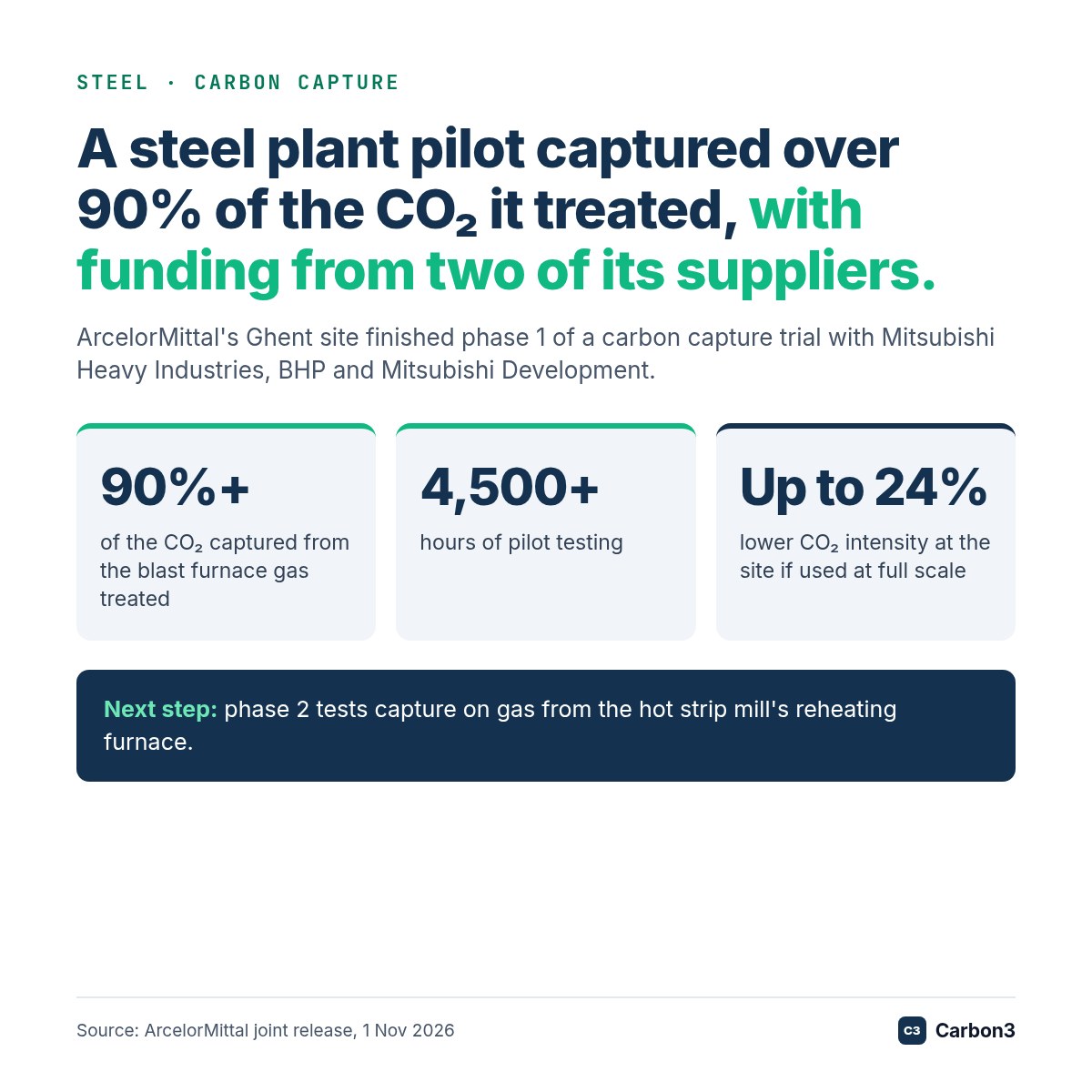
A carbon capture pilot at ArcelorMittal's integrated steel plant in Ghent, Belgium, has finished its first phase. According to a joint release from ArcelorMittal, Mitsubishi Heavy Industries, BHP and Mitsubishi Development on 1 November 2026, the trial captured more than 90% of the CO₂ in the blast furnace gas it treated, over more than 4,500 hours of operational testing.
Who is paying for it
The detail that stands out is the funding. BHP and Mitsubishi Development, both key suppliers of steelmaking raw materials to ArcelorMittal's European operations, are paying for the trial, while Mitsubishi Heavy Industries supplies the capture technology.
That turns the usual Scope 3 story around. In most supply chains the buyer asks its suppliers to reduce their emissions. Here two raw material suppliers are putting money into emissions reductions at their customer's plant, which sits downstream of them in the value chain.
What the pilot showed
Phase 1 treated a proportion of the blast furnace off-gas and showed capture rates above 90% at pilot scale. The partners estimate that applying the technology at full scale to the blast furnace off-gas could reduce the Ghent site's CO₂ intensity by up to 24%, measured at the level of hot-rolled product on a cradle-to-gate basis.
The second phase moves to a different source: the gases from the hot strip mill's reheating furnace. BHP notes that around 70% of global steel production comes from blast furnace steelmaking today, which is why capture on blast furnace gas draws so much attention from the companies that sell into it.
Counting the reduction once
When a supplier funds a reduction at its customer's plant, both companies have a reason to report it. The steelmaker sees lower emissions at its own site, and the suppliers see lower emissions in the use of the products they sell. Without an agreed split, the same tonne can end up in two reports.
Insetting, which means financing emissions reductions in a company's own value chain, depends on settling that split once and on the record. Once a reduction has been checked against a verification report, the project developer issues inset credits on the Carbon3 registry, allocated in proportion to each party's contribution, so each reduction is claimed only once. This is insetting, not offsetting, and the difference is explained at carbon3.net/insets-vs-offsets.
Claim treatment depends on the applicable reporting framework.
The open question from Ghent is who should count the reduction: the steelmaker that hosts it, or the suppliers who funded it.
Source: ArcelorMittal, MHI, BHP and Mitsubishi Development joint release, 1 November 2026
Learn more
How insetting works in steel and cement
Originally published on LinkedIn, 1 November 2026.
Read more from the research team.
Sector: Steel
Europe's carbon border tax is about to get expensive for Indian steel
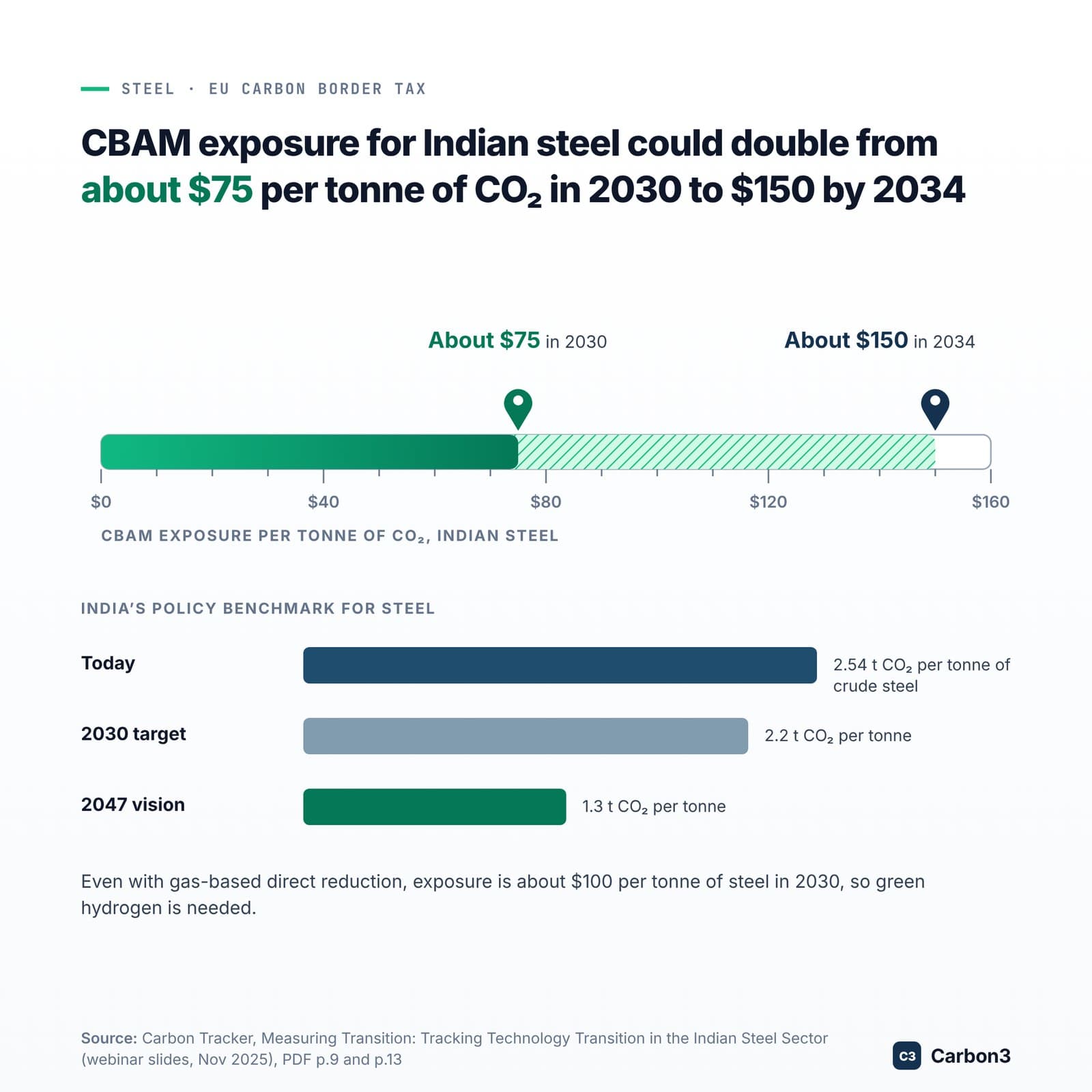
Carbon Tracker puts CBAM exposure for Indian steel at about $75 per tonne of CO2 in 2030, rising to about $150 by 2034, and European importers pay it.
Read the articleSector: Steel
Sharing the green steel premium
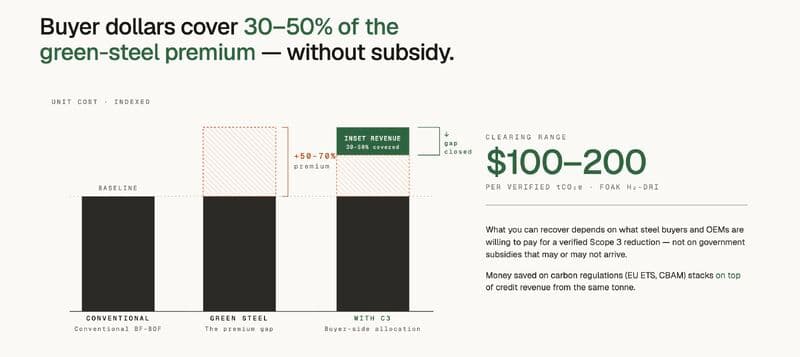
Clean steel costs 50 to 70 percent more.
Read the articleField notes
Mitsubishi Heavy Industries and the Category 11 question
Around 99 percent of MHI's Scope 3 is product use.
Read the article
See the companies behind these figures in the Data Hub.
Look up your suppliers’ emissions and targets, free.