Sharing the green steel premium
Clean steel costs 50 to 70 percent more. Inset buyers can close 30 to 50 percent of the gap; the rest needs a financeable structure.
By Carbon3 team2 min read
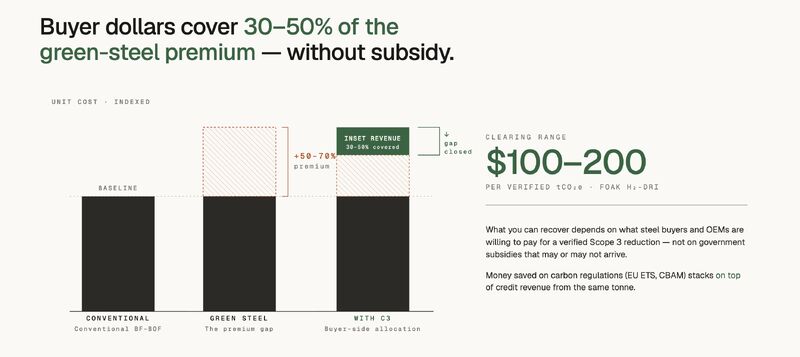
If you're a big brand trying to reduce Scope 3 emissions, steel is one of the hardest and priciest things to fix. Clean steel from a first-of-its-kind hydrogen plant costs 50-70% more than the normal kind.
Easy move: wait for the price to drop, wait for a subsidy, hope someone upstream eats the gap. But waiting means your emissions number sits still while the reporting rules keep getting stricter.
There's a better way... When buyers and brands pay for a verified emissions reduction on a real tonne of steel, that demand pays about $US 100-200 per verified tonne of CO₂ saved, enough to cover 30-50% of the price gap on its own. You're not propping up a plant. You're buying an audit-grade emissions reduction at a known price.
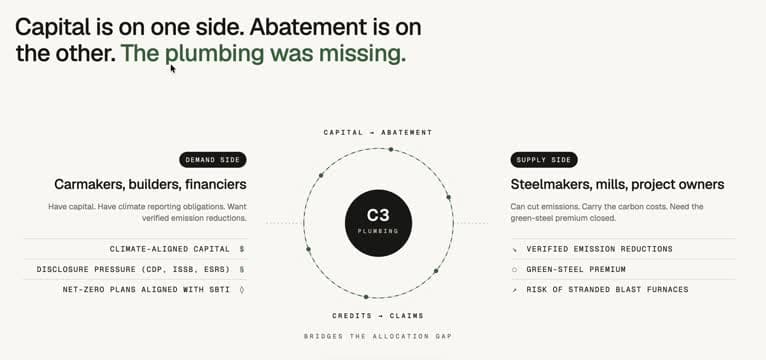
But inset buyers close part of the gap, not all of it. The rest still needs funding, and a green project is too big a bet for one balance sheet. At Carbon3, we let different investors back the same project together, each taking the share that fits their risk appetite: pre-purchased credits, sustainability-linked loans, project equity and verified-credit offtake combine into one financeable deal. The price gap gets shared, not carried alone.
Learn more in our latest 2026 Sustainable Iron & Steel Outlook linkedin.com
Learn more
How insetting works in steel and cement
Originally published on LinkedIn, 3 June 2026.
Read more from the research team.
Sector: Steel
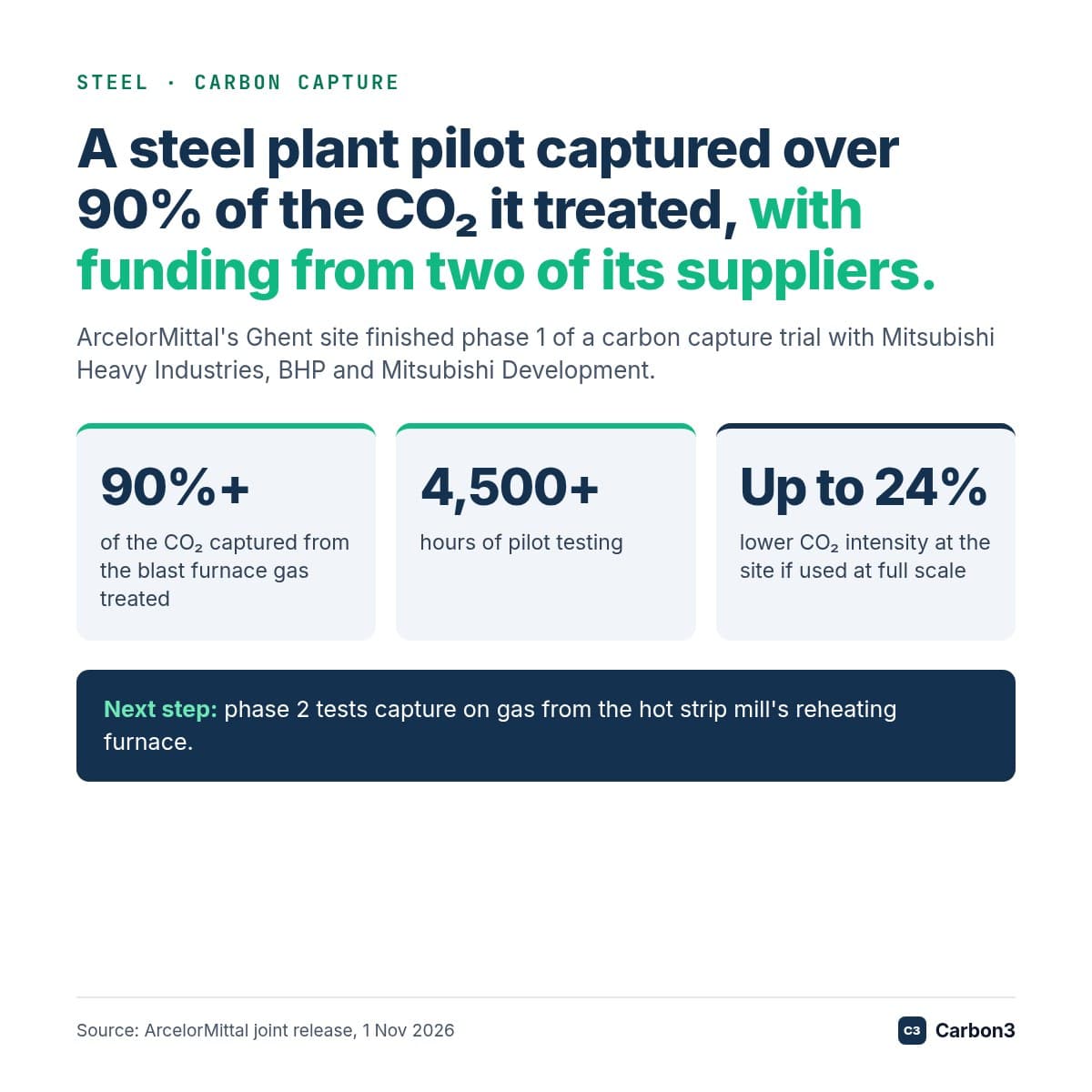
A carbon capture pilot at ArcelorMittal Ghent is funded by two of the plant's suppliers
The first phase of the trial captured more than 90% of the CO₂ in the blast furnace gas it treated, with BHP and Mitsubishi Development paying for it and Mitsubishi Heavy Industries supplying the technology.
Read the articleSector: Steel
Even free money was not enough for hydrogen steel
ArcelorMittal put its European hydrogen plans on hold and turned down €1.3 billion.
Read the articleSector: Maritime
The EU wants to pay most of shipping’s clean fuel premium, and cargo owners would fund the rest
A proposed reserve of 110 million carbon allowances would narrow the price gap for green marine fuels, which makes the question of who claims the reduction more pressing.
Read the article
See the companies behind these figures in the Data Hub.
Look up your suppliers’ emissions and targets, free.