Waiting on decarbonization is getting expensive
McKinsey's 'The sustainability reset' finds CBAM defaults can raise bills by up to 60% and green steel demand outrunning supply by about a third by 2030.
By Carbon3 team2 min read
For a while, waiting looked like the safe option on decarbonization. McKinsey's September 2026 report, "The sustainability reset", suggests that is no longer true.
The cost of defaults
Under the EU's Carbon Border Adjustment Mechanism, importers without verified supplier data fall back on default emissions values. McKinsey finds that relying on those defaults can raise CBAM bills by up to 60%. The defaults are set to be conservative, so a company that has not done the data work pays for it.
A supply squeeze on green steel
The second finding concerns availability. McKinsey expects demand for green steel to outrun supply by about a third by 2030. Companies that have committed to lower-carbon materials, and those that will need them for regulatory or customer reasons, will be competing for a limited pool.
That changes the logic of waiting. A buyer that delays until green steel is plentiful may find that it is not, and that earlier movers have already secured the supply.
Verified supplier data pays back
Across both points, McKinsey identifies verified supplier data as a high-return investment. It reduces CBAM costs directly by replacing defaults with actual figures. It shows which suppliers are already lower-emission, which matters when supply is tight. And it underpins credible Scope 3 reporting.
Why waiting costs more now
The common thread is that the costs of inaction are becoming concrete. They show up in a CBAM bill, in a supply contract that cannot be signed, in a reporting gap that is harder to close later. These are not distant climate risks; they are line items.
What moving early looks like
Moving early does not mean solving everything at once. It means starting with the suppliers and materials where the stakes are highest: getting verified data, understanding where reductions are possible, and agreeing who pays for them.
Carbon3's approach is built for that step. Buyers co-fund verified reductions at their suppliers, and those reductions are recorded as inset credits, tied to the value chain where they happen. Insetting is not offsetting, and inset credits are not CBAM certificates. What they provide is a clear record of reductions that buyers helped pay for, at the suppliers they depend on.
McKinsey's framing of a "reset" fits. The question is shifting from whether to act to how much more it costs to act later.
Originally published on LinkedIn, 4 October 2026.
The Carbon3 Newsletter
Weekly analysis of industrial decarbonization and insetting across Scope 1 to 3, from the Carbon3 team.
Read more from the research team.
Transition finance
Supply-chain decarbonization is a demand and financing problem
Global emissions rose 0.2% in the first half of 2026.
Read the articleTransition finance
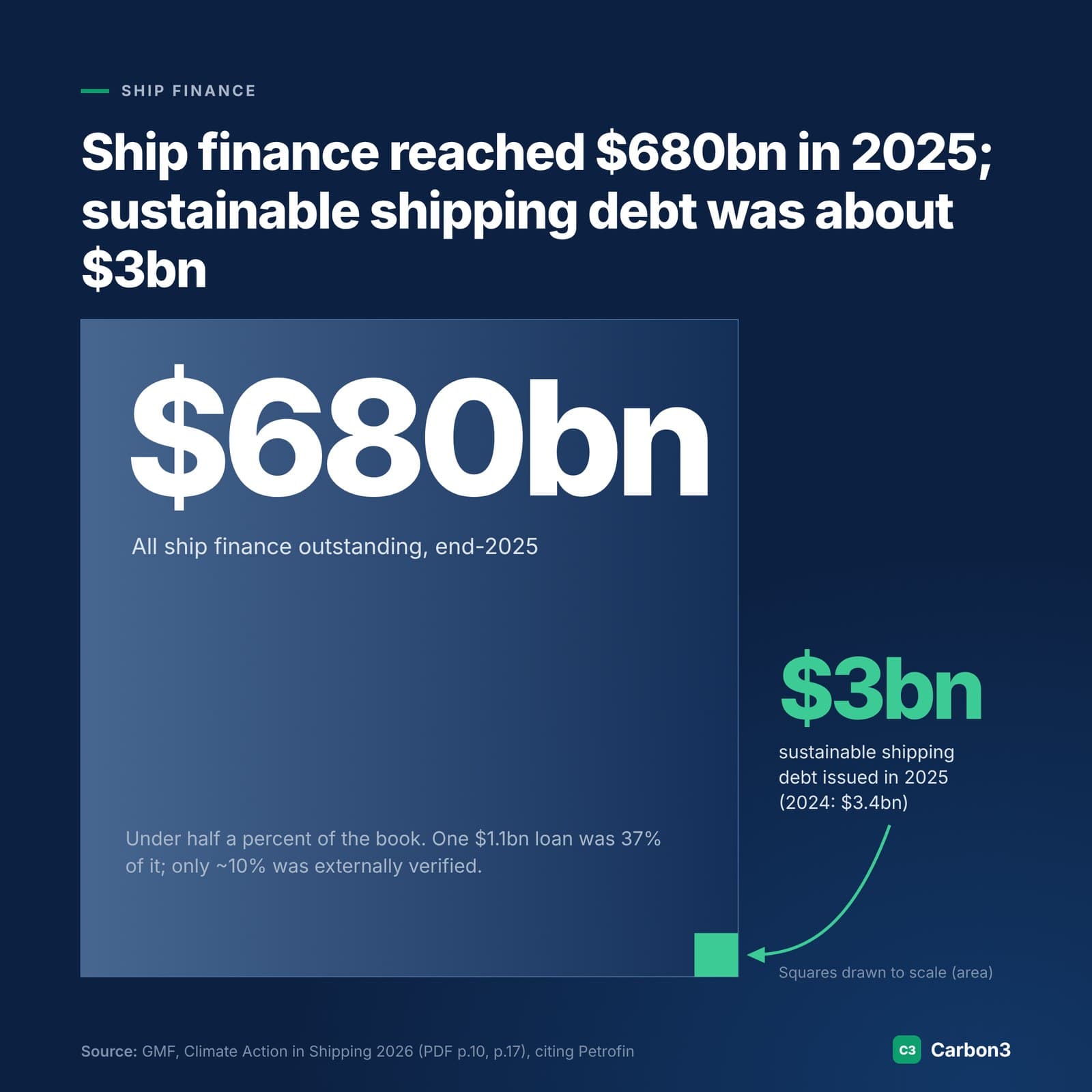
Ship finance is a $680bn book; sustainable shipping debt was about $3bn
Global ship finance stood at about $680bn at the end of 2025, while shipping-specific sustainable debt issuance was about $3.0bn, and only about 10% of it was externally verified.
Read the articleSector: Steel
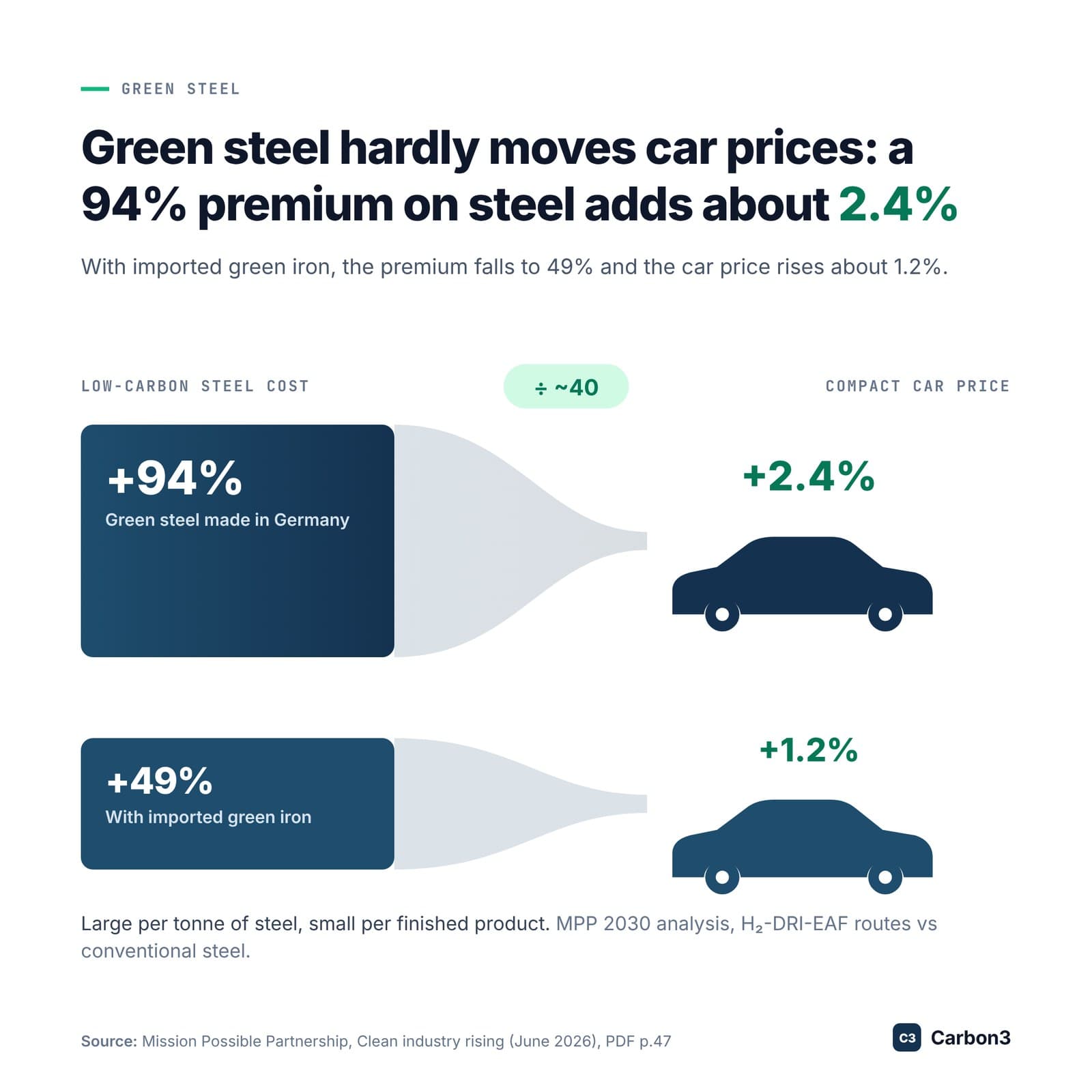
Green steel looks expensive at the mill and cheap in the showroom
Mission Possible Partnership finds a 94% premium on hydrogen-based steel adds only about 2.4% to the cost of a compact car in 2030, which gives buyers a cheap way to act on purchased-goods emissions.
Read the article
See the companies behind these figures in the Data Hub.
Look up your suppliers’ emissions and targets, free.