Ship finance is a $680bn book; sustainable shipping debt was about $3bn
Global ship finance stood at about $680bn at the end of 2025, while shipping-specific sustainable debt issuance was about $3.0bn, and only about 10% of it was externally verified.
By Carbon3 team2 min read
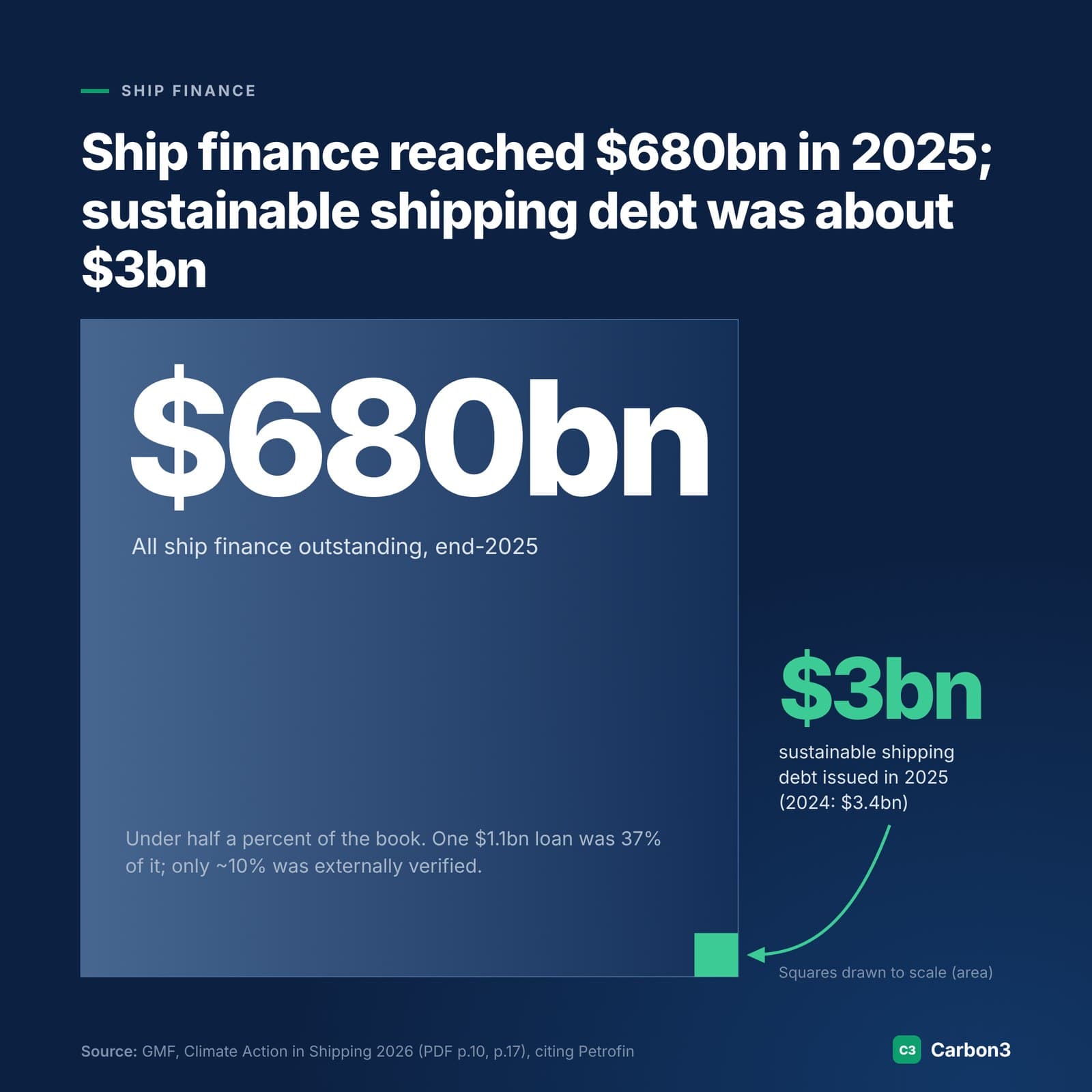
Ship finance is a US$680bn book. Sustainable shipping debt last year was about $3bn.
The Global Maritime Forum's Climate Action in Shipping: 2026 Edition, citing Petrofin, puts the global ship finance portfolio at about $680bn at the end of 2025. Against that, shipping-specific sustainable debt issuance, covering instruments such as green loans and bonds, sustainability-linked loans and transition finance, came to about $3.0bn in 2025, down from $3.4bn in 2024.
A thin and concentrated market
The sustainable slice is not only small, it is concentrated. A single $1.1bn green loan, to Hapag-Lloyd, made up 37% of the 2025 total. Only about 10% of shipping's sustainable debt issuance was externally verified.
Put together, those figures describe a market where labeled finance is a tiny fraction of the overall book, where one deal can move the annual total, and where most of what is labeled sustainable has not been independently checked.
Capital follows what can be measured
Lenders, investors and their advisors need to know what a financed project actually delivered. Without measured, verified outcomes, a sustainability label is hard to price and hard to defend, and it is difficult for a lender to tell one loan apart from another.
The low share of externally verified issuance points to the same gap. The money exists in the ship finance book. What is missing is a reliable way to show the result.
A shared record
Verified reductions inside the value chain, recorded once as inset credits, give lenders, advisors and cargo owners a shared record of what a project delivered.
On Carbon3, a reduction is measured against a baseline, independently verified and then issued by the project developer as inset credits, each with a serial number linked to its project and verification data. A lender can see the verified outcome of a project it financed. A cargo owner that co-funded the change can see the reduction recorded against its own value chain. An advisor can trace either claim back to the same record.
Insetting is not offsetting: the credits represent reductions inside the value chain, not compensation from projects outside it.
Claim treatment depends on the applicable reporting framework.
Source: Global Maritime Forum, Climate Action in Shipping: 2026 Edition.
Originally published on LinkedIn, 21 October 2026.
The Carbon3 Newsletter
Weekly analysis of industrial decarbonization and insetting across Scope 1 to 3, from the Carbon3 team.
Read more from the research team.
Transition finance
Waiting on decarbonization is getting expensive
McKinsey's 'The sustainability reset' finds CBAM defaults can raise bills by up to 60% and green steel demand outrunning supply by about a third by 2030.
Read the articleTransition finance
Hydrogen has a demand problem, and the contracts show it
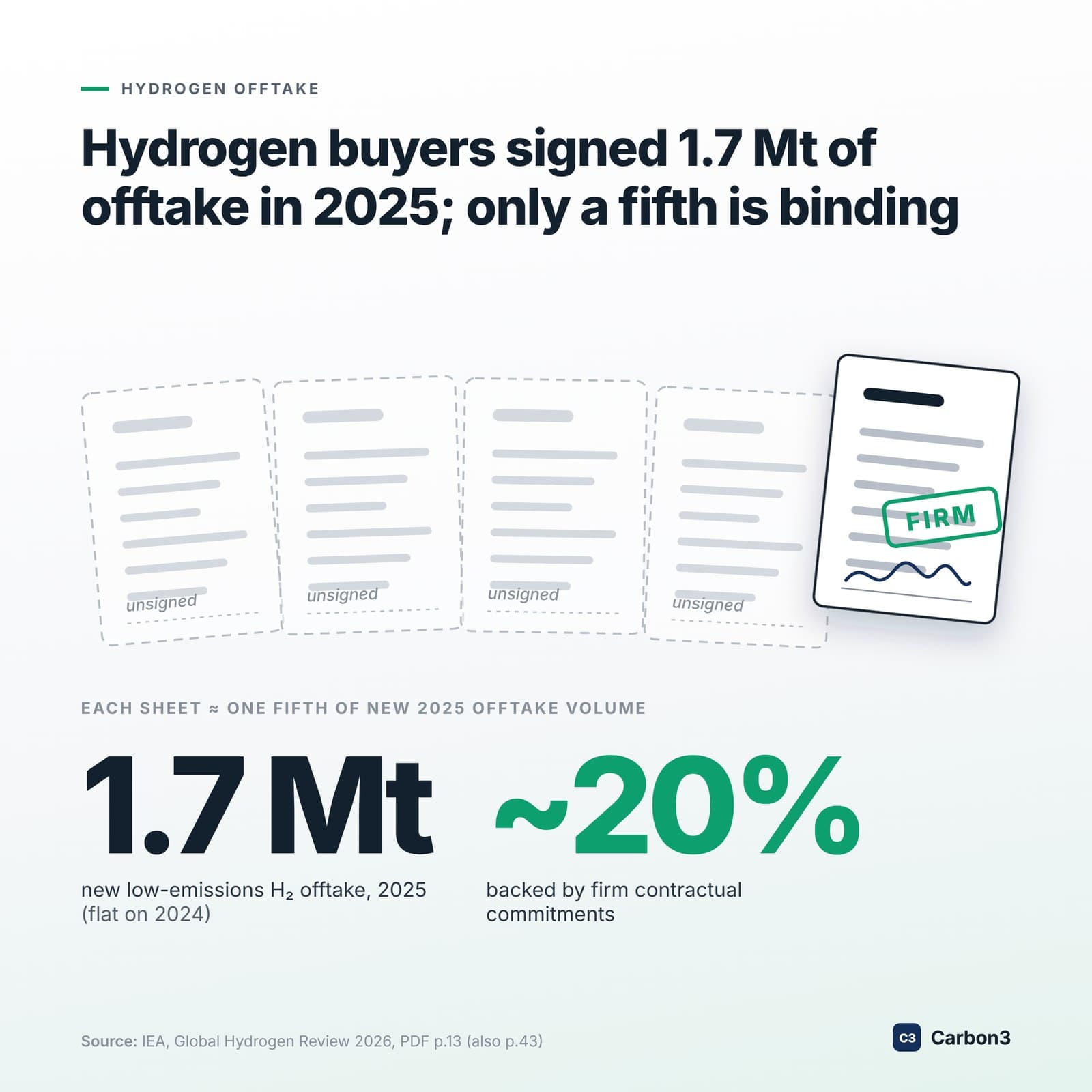
The IEA's Global Hydrogen Review 2026 finds new low-emissions hydrogen offtake was about 1.7 Mt in 2025, and only around 20% of newly signed volumes were firm.
Read the articleSector: Maritime
Book and claim has barely started in shipping
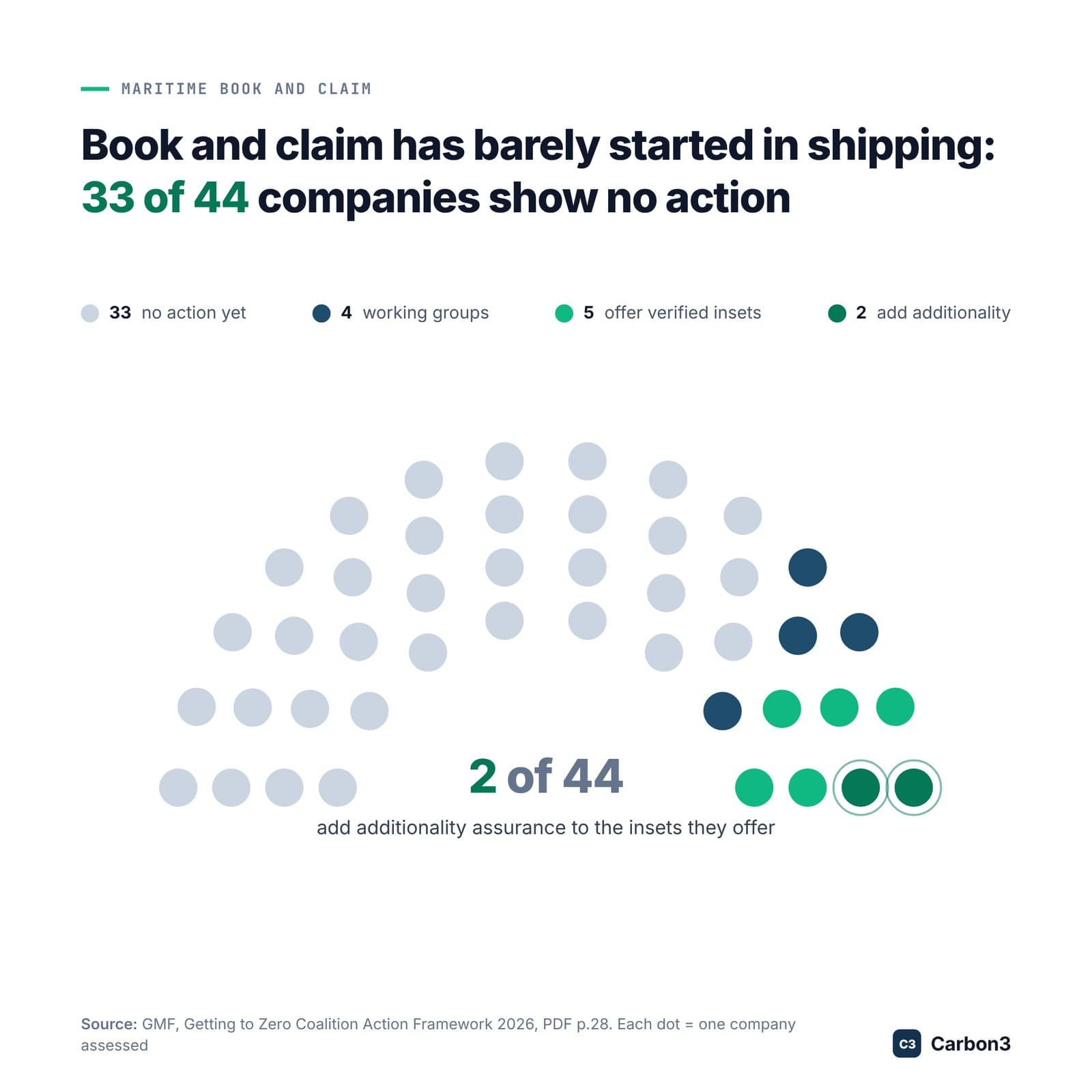
The Getting to Zero Coalition assessed 44 shipping companies on book and claim and found 33 showing insufficient action, while five offer verified insets.
Read the article
See the companies behind these figures in the Data Hub.
Look up your suppliers’ emissions and targets, free.