A nitric acid plant in Uzbekistan plans to cut 683,000 tonnes of CO₂e a year, with monitoring to prove it
Maxam Chirchiq has signed a contract with Alvigo for a nitrous oxide abatement catalyst, and a continuous emissions monitoring system will verify the reductions from 2027.
By Carbon3 team2 min read
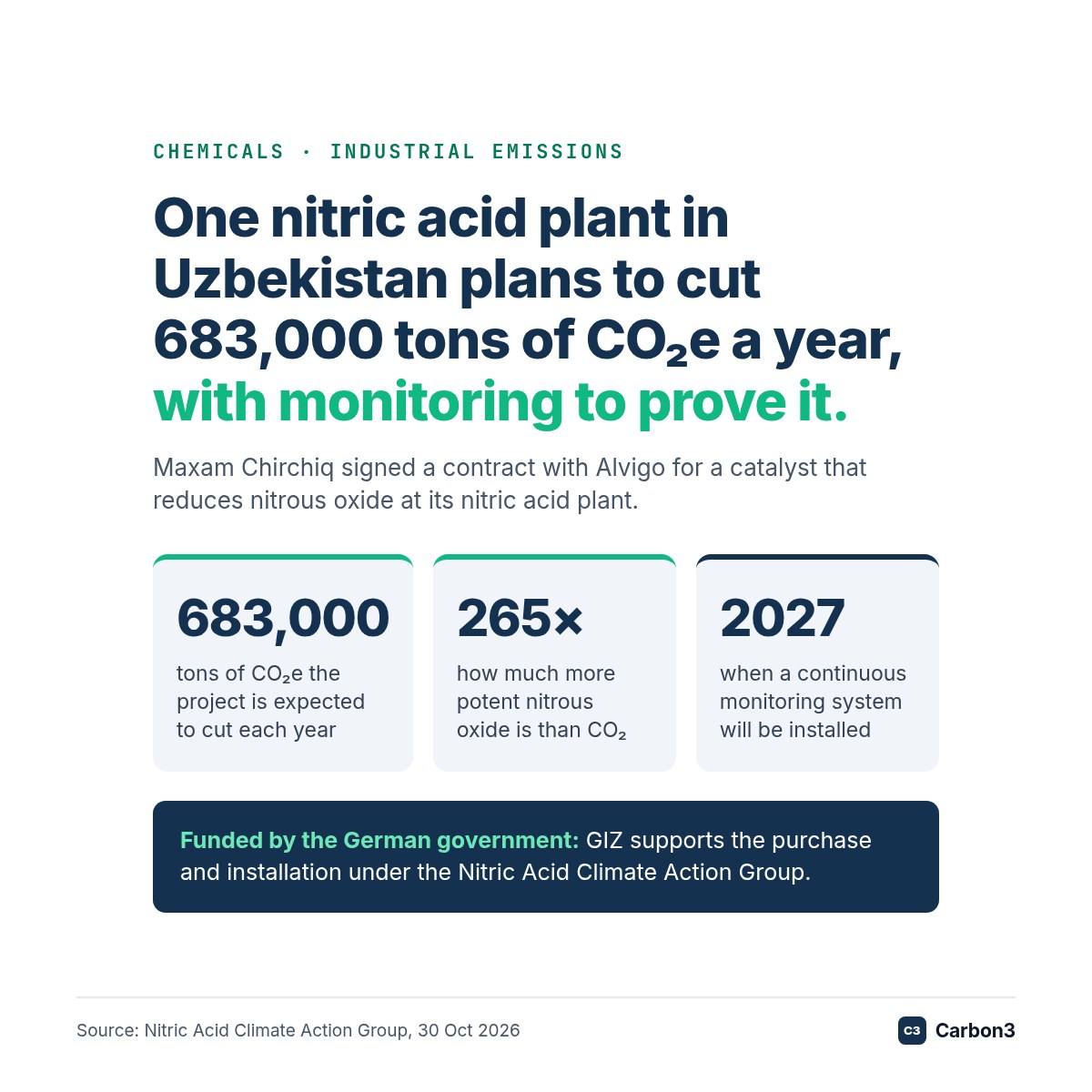
Maxam Chirchiq has signed a supply and implementation contract with Alvigo for a secondary nitrous oxide abatement catalyst at its nitric acid plant in Uzbekistan. Once the system is running, the project is expected to reduce emissions by 683,000 tonnes of CO₂e a year.
A large number needs strong measurement
A reduction this large is only as credible as the measurement behind it. The figure is an expectation for now, and its value to anyone relying on it will depend on what is measured once the catalyst is in operation.
Nitrous oxide is generated as a by-product of nitric acid production. It is about 265 times more potent than CO₂, so even a modest volume of gas translates into a large figure in CO₂ equivalent, which is also why the measurement has to be right.
Who pays and who checks
The German government funds the project, which is implemented under the Nitric Acid Climate Action Group, and GIZ supports the procurement and installation. A continuous emissions monitoring system will be installed in 2027, and continuous monitoring and reporting will verify the emissions reductions.
Continuous monitoring is the right standard for a source like this. It records what actually leaves the stack over time, rather than relying on a one-off test or a default factor.
What a buyer should ask for
Nitric acid is sold on into other companies' value chains, so the reduction could matter to buyers further down those chains that report Scope 3 emissions. Before counting such a reduction, a buyer would reasonably ask to see the monitoring data and to know that no one else is claiming the same tonnes.
Insetting, which means financing emissions reductions in a company's own value chain, depends on that single record. Once a reduction has been checked against a verification report, the project developer issues inset credits on the Carbon3 registry, so each reduction is claimed only once. This is insetting, not offsetting, and the difference is explained at carbon3.net/insets-vs-offsets.
Claim treatment depends on the applicable reporting framework.
The open question is how many buyers will ask for the monitoring data before they count the reduction in their own Scope 3.
Source: Nitric Acid Climate Action Group, "Maxam Chirchiq and Alvigo Sign Contract for Secondary N₂O Abatement Catalyst at Nitric Acid Plant" (30 October 2026).
Learn more
How each credit stays sound
Originally published on LinkedIn, 1 November 2026.
Read more from the research team.
Integrity
We asked the smartest AI models about insetting
Is insetting the best route to decarbonizing supply chains and tackling Scope 3?
Read the articleIntegrity
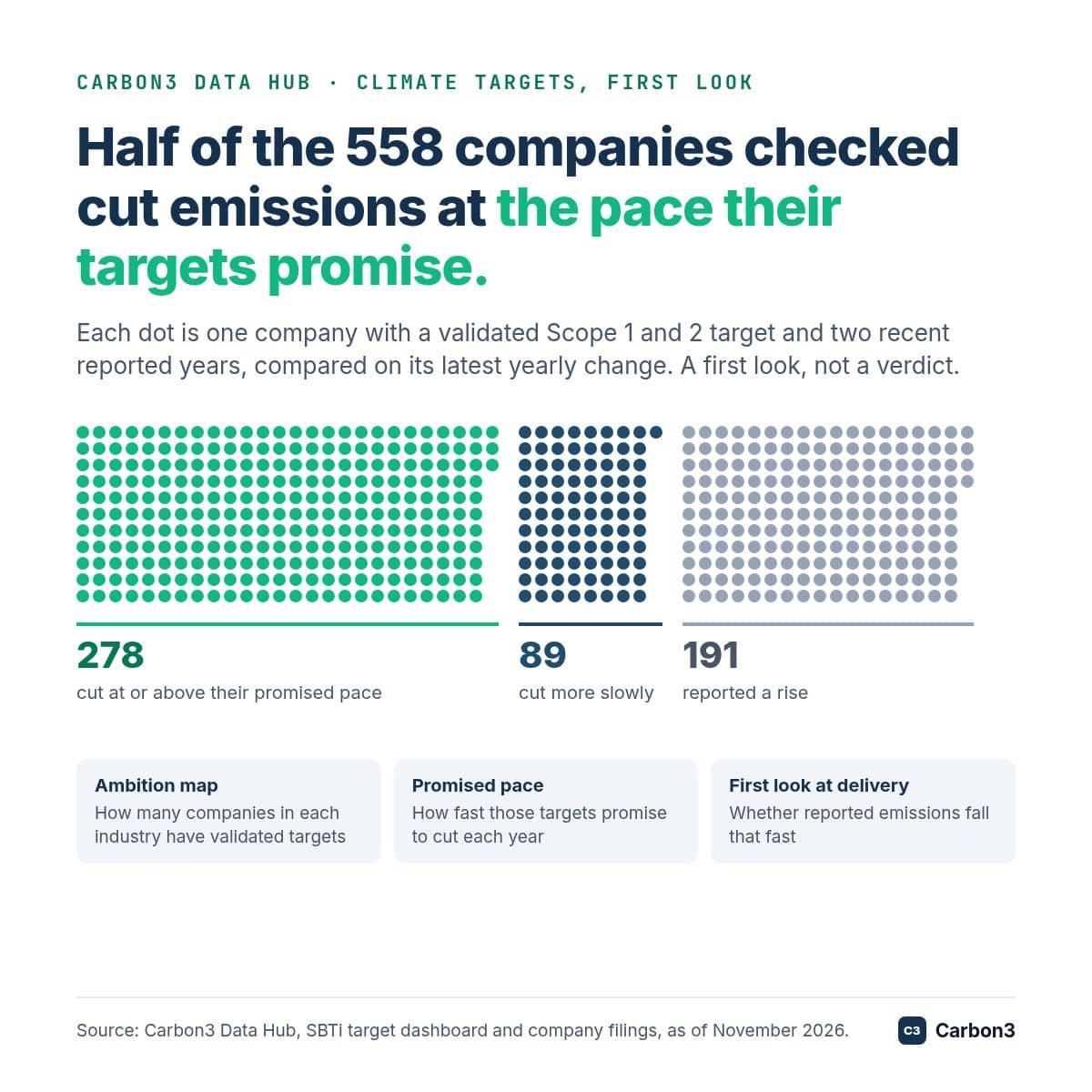
Half of the 558 companies checked are reducing emissions at the pace their targets promise
Carbon3's first look at whether climate targets are being delivered compares validated Scope 1 and 2 targets with two recent reported years.
Read the articleTransition finance
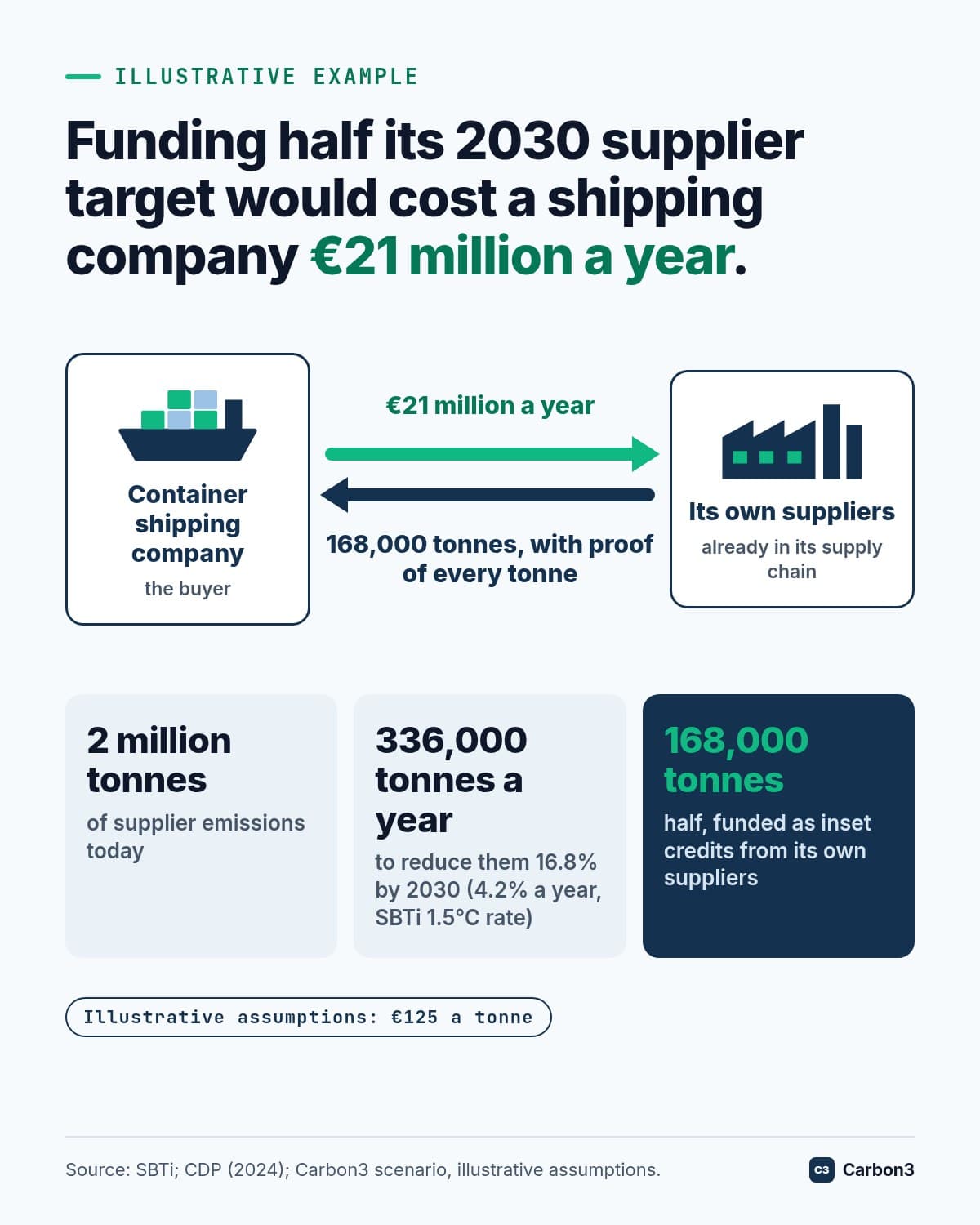
Funding half a shipping company's 2030 supplier target would cost €21 million a year
An illustrative Carbon3 example: a container shipping company with 2 million tonnes of supplier emissions funds half of its required reductions at suppliers it already buys from, with proof of every tonne.
Read the article
See the companies behind these figures in the Data Hub.
Look up your suppliers’ emissions and targets, free.