The US clean energy pipeline needs buyers, not more intent
Announced clean generation is outpacing cancellations. Corporate Scope 3 spend is the demand signal stalled projects lack.
By Carbon3 team2 min read
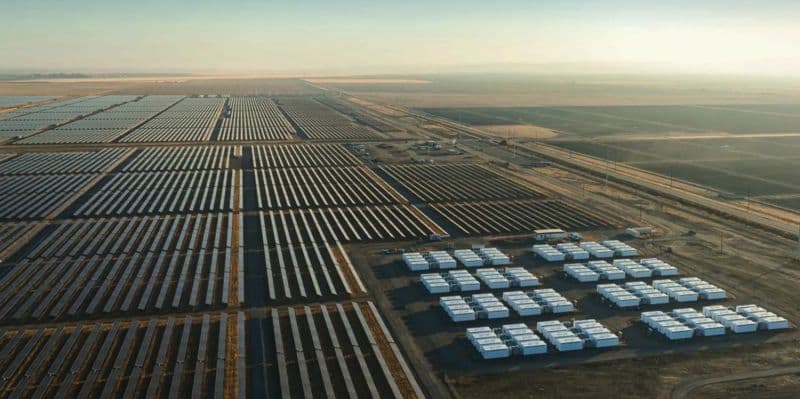
US clean energy project pipeline shows net growth in 2026. Analysis from Carbon Pulse indicates 17.3 GW of announced clean generation through May exceeds 13.3 GW in cancellations or postponements. This net positive signals sustained developer interest despite financing headwinds. The data points to continued capital deployment in renewables and storage. Project developers appear to be navigating permitting delays and supply chain constraints more effectively than in prior periods.
This is where corporate procurement stops being an ESG line item and becomes project infrastructure. Most large corporates carry their emissions weight in Scope 3, upstream and downstream of their own operations, and the spend they already push through their value chain is exactly the demand signal stalled projects lack. The gap is a credible, auditable way to route that spend into specific assets and claim the reduction where it actually occurs.
At Carbon3, that's the mechanism we build for: verifiable, additionality-backed inset credits that let a buyer finance real capacity inside their value chain and book the abatement against Scope 3. Sensor-verified and allocable, not a retroactive offset bolted on after combustion. Insetting turns diffuse corporate demand into the bankable offtake that converts announcements into steel in the ground.
The pipeline doesn't need more intent. It needs buyers positioned to absorb the green premium at the point of transaction.
Source: carbon-pulse.com
Originally published on LinkedIn, 22 July 2026.
The Carbon3 Newsletter
Weekly analysis of industrial decarbonization and insetting across Scope 1 to 3, from the Carbon3 team.
Read more from the research team.
Transition finance
When cutting beats buying: the balance-sheet case for insetting
Our 2026 white paper models four value chains to 2050 and finds reducing emissions in-house already cheaper than buying credits in most sectors.
Read the articleTransition finance
Blended finance moves money. Proof keeps it there.
Allianz Global Investors makes two useful points about financing the transition.
Read the articleSector: Steel
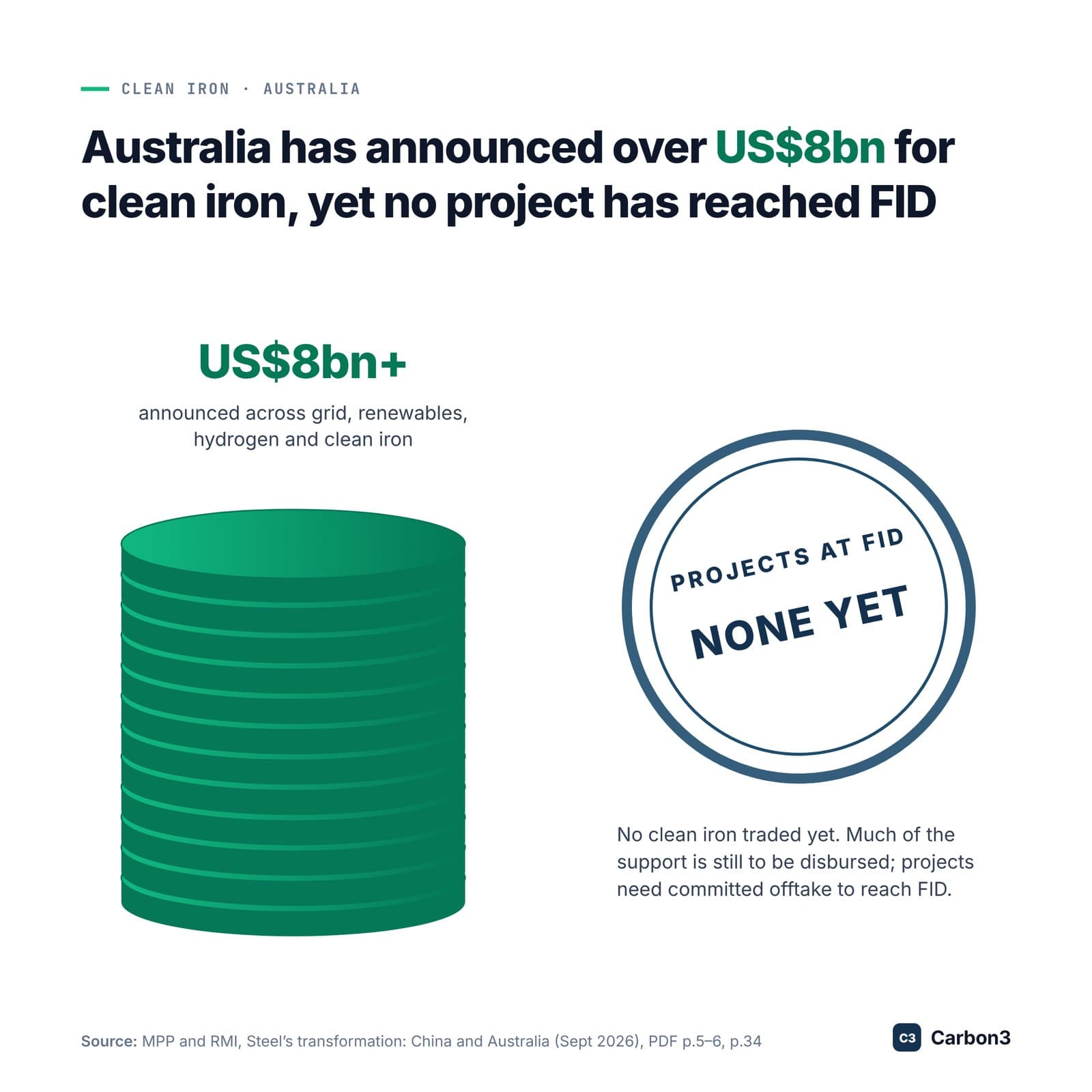
Australia has the ore, the sun and the policy money, but not yet the offtake
MPP and RMI count more than US$8bn in announced Australian incentives, yet no clean iron project has reached final investment decision and at least 10 iron projects need committed buyers.
Read the article
See the companies behind these figures in the Data Hub.
Look up your suppliers’ emissions and targets, free.