In Australia, cutting methane can cost less than buying credits
IEEFA, citing the IEA, notes 97% of oil and gas methane could be abated for under US$20 a tonne, about A$28, while ACCUs averaged A$38 a tonne in Q2 2026.
By Carbon3 team2 min read
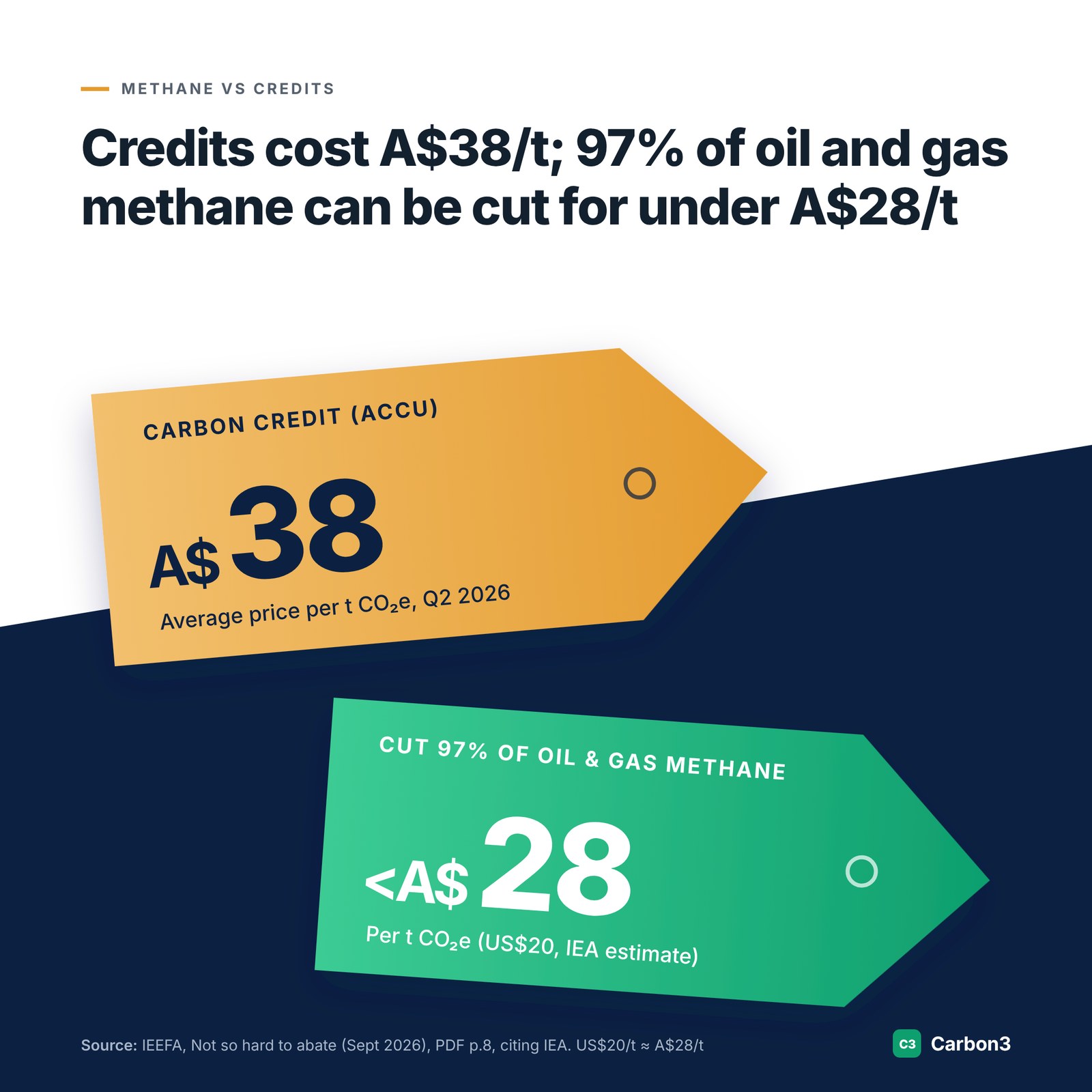
In Australia, cutting methane can cost less than buying credits.
The Institute for Energy Economics and Financial Analysis (IEEFA), in its September 2026 report Not so hard to abate, cites International Energy Agency analysis showing that 97% of oil and gas methane emissions could be cut for under US$20 per tonne of CO2e, about A$28.
Over the same period, Australian Carbon Credit Units (ACCUs) averaged A$38 per tonne in the second quarter of 2026.
When abatement is cheaper than the credit
The comparison is simple. If a tonne of methane can be abated in the oil and gas value chain for less than A$28, and a tonne of credits costs around A$38 on the market, the cheaper tonne is the one cut at source.
That changes the budget conversation. Credits are often treated as the default way to close the gap between a company's emissions and its targets. Where abatement inside the value chain costs less than the credit, the default no longer holds, and the case for funding reductions directly gets stronger.
Where the reductions sit
Methane from oil and gas operations is a supplier-side problem for many buyers. It sits upstream, in the production, processing and transport of the fuels and feedstocks they buy, and in their Scope 3 footprint.
Reductions of this kind are often well understood technically: finding and fixing leaks, replacing venting equipment and reducing flaring. What is often missing is a funding model and a way for the buyer to show what its money achieved.
Co-funding and recording the reduction
Buyers can co-fund methane reductions at their suppliers, have them measured and checked by a verifier, and hold one serialized record of each verified tonne as an inset credit on Carbon3. The record links the reduction to the supplier and the project that delivered it, so it can be traced and is not counted twice.
That gives the buyer something different from a credit purchased elsewhere: a verified reduction inside its own value chain, often at a lower cost per tonne.
Insetting is not offsetting. The reduction is made within the buyer's own supply chain, rather than paying for a tonne cut somewhere unrelated.
Claim treatment depends on the applicable reporting framework.
Correction, 30 October 2026: An earlier version of this article said Carbon3 credits carry serial numbers. They do not yet. Each batch of credits has its own record ID on the Carbon3 registry, and every transfer, split and retirement is recorded against it. Source: Carbon3 registry.
Source: IEEFA, Not so hard to abate (September 2026).
Learn more
How insetting works, step by step
Originally published on LinkedIn, 22 October 2026.
Read more from the research team.
Market structure
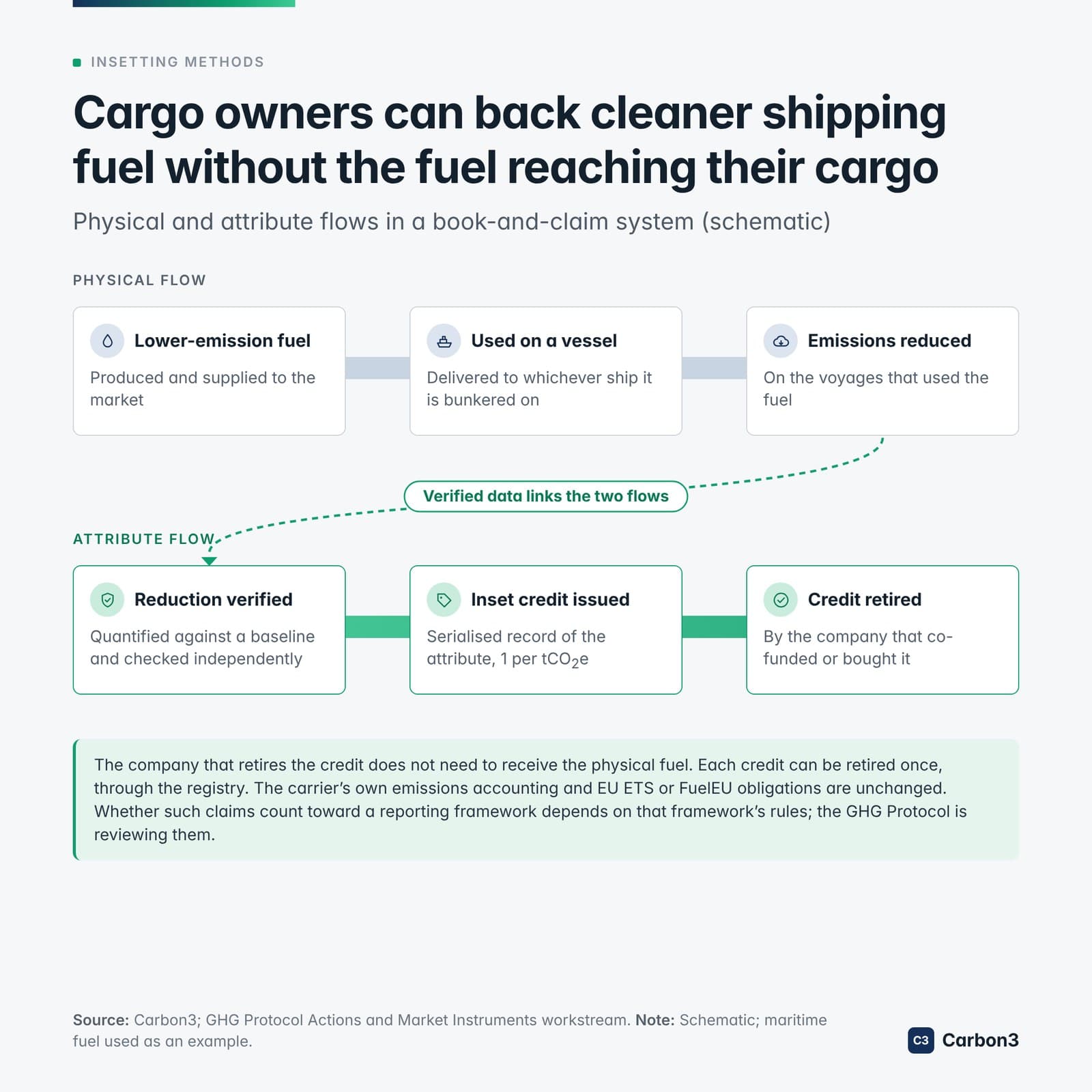
A cargo owner can back cleaner shipping fuel without the fuel reaching its cargo
Book and claim separates the physical flow of a lower-emission fuel from the record of its reduction.
Read the articleMarket structure
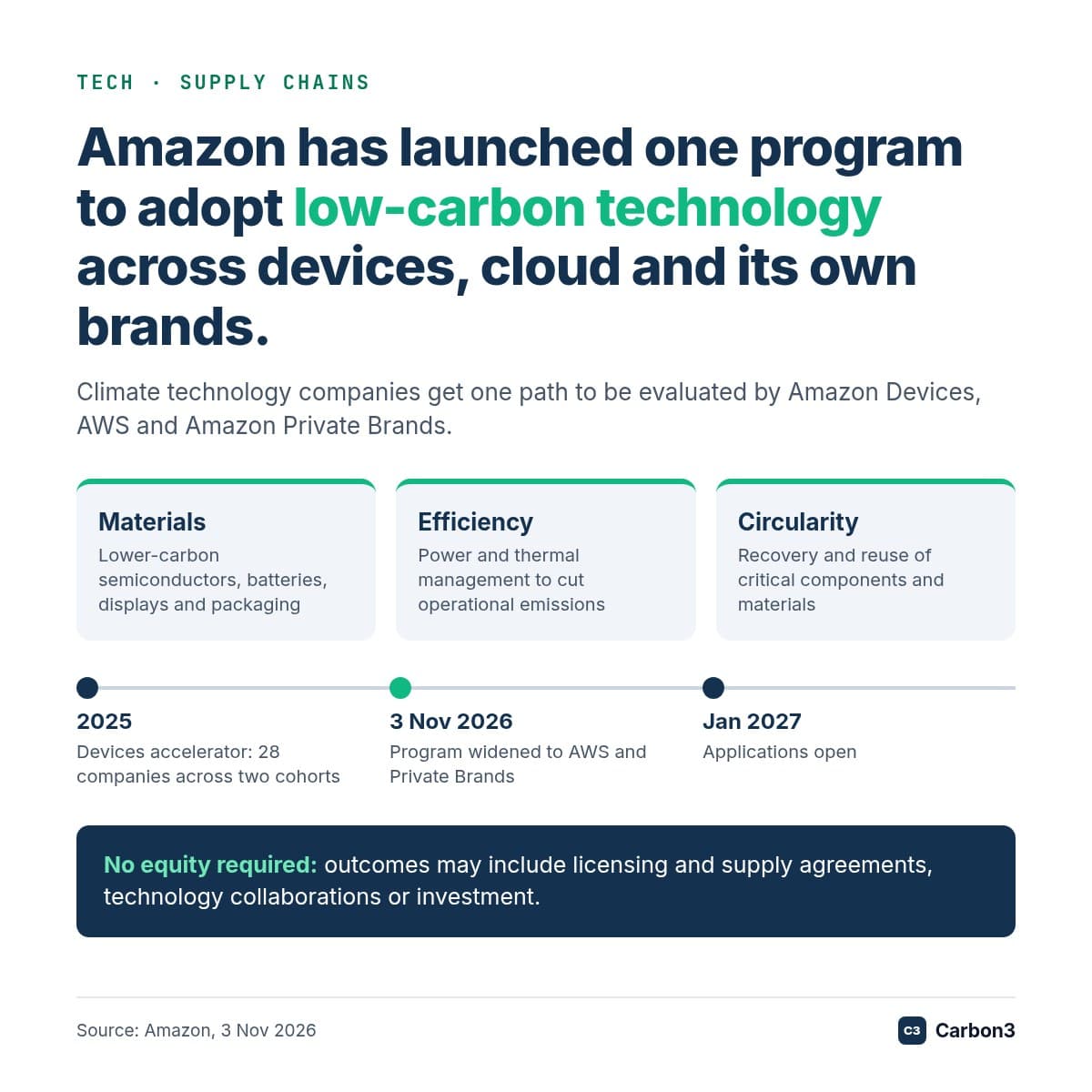
Amazon opens one path for climate technology across devices, cloud and its own brands
The new Amazon Sustainability Deep Tech Accelerator lets climate technology companies be evaluated for adoption by Amazon Devices, AWS and Amazon Private Brands, with no equity required to join.
Read the articlePolicy
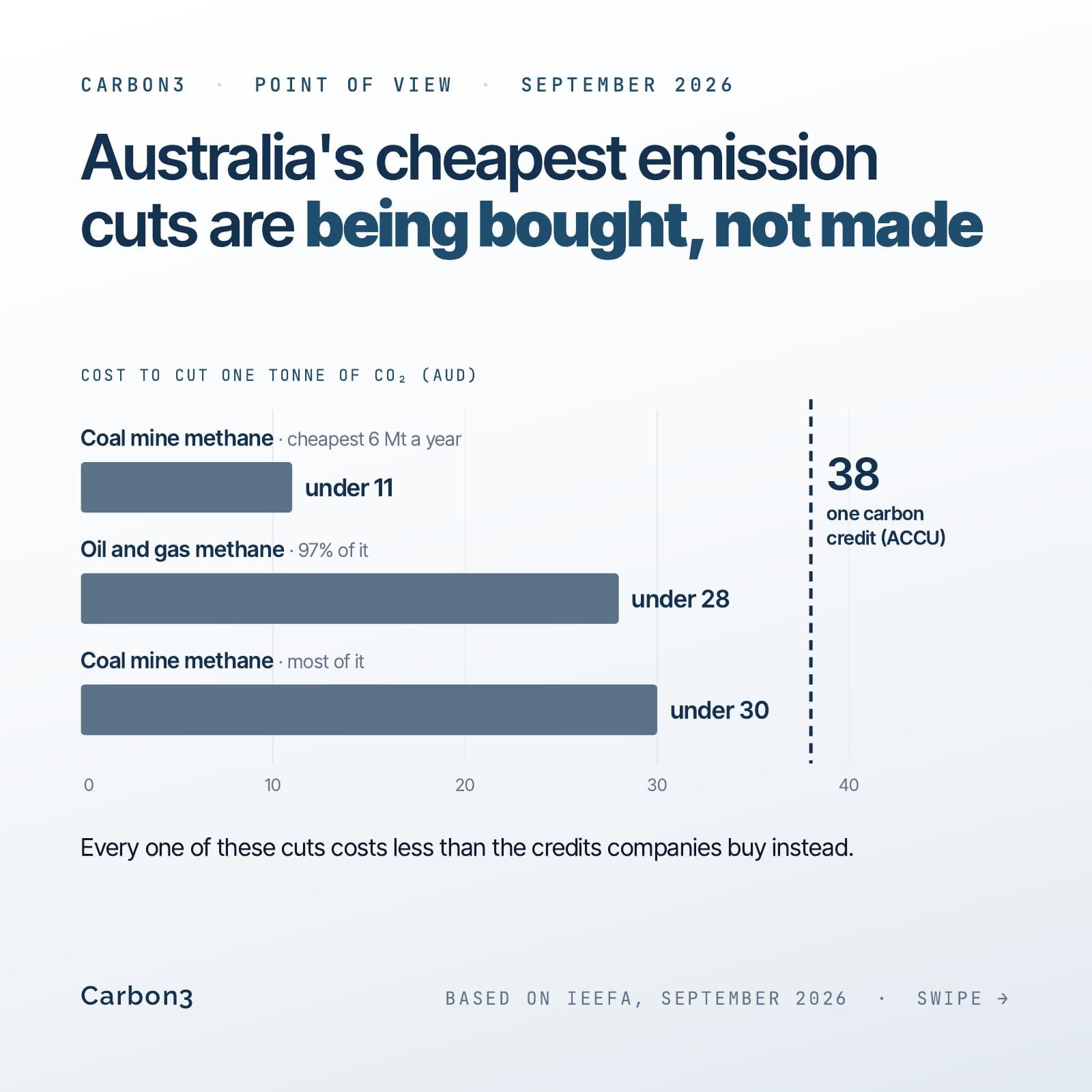
Australia's cheapest emissions reductions are being bought, not made
IEEFA finds capturing methane from coal and gas would cost less than A$30 a tonne, well under the price of a carbon credit.
Read the article
See the companies behind these figures in the Data Hub.
Look up your suppliers’ emissions and targets, free.