A cargo owner can back cleaner shipping fuel without the fuel reaching its cargo
Book and claim separates the physical flow of a lower-emission fuel from the record of its reduction. Verified data links the two, and each inset credit is retired once.
By Carbon3 team2 min read
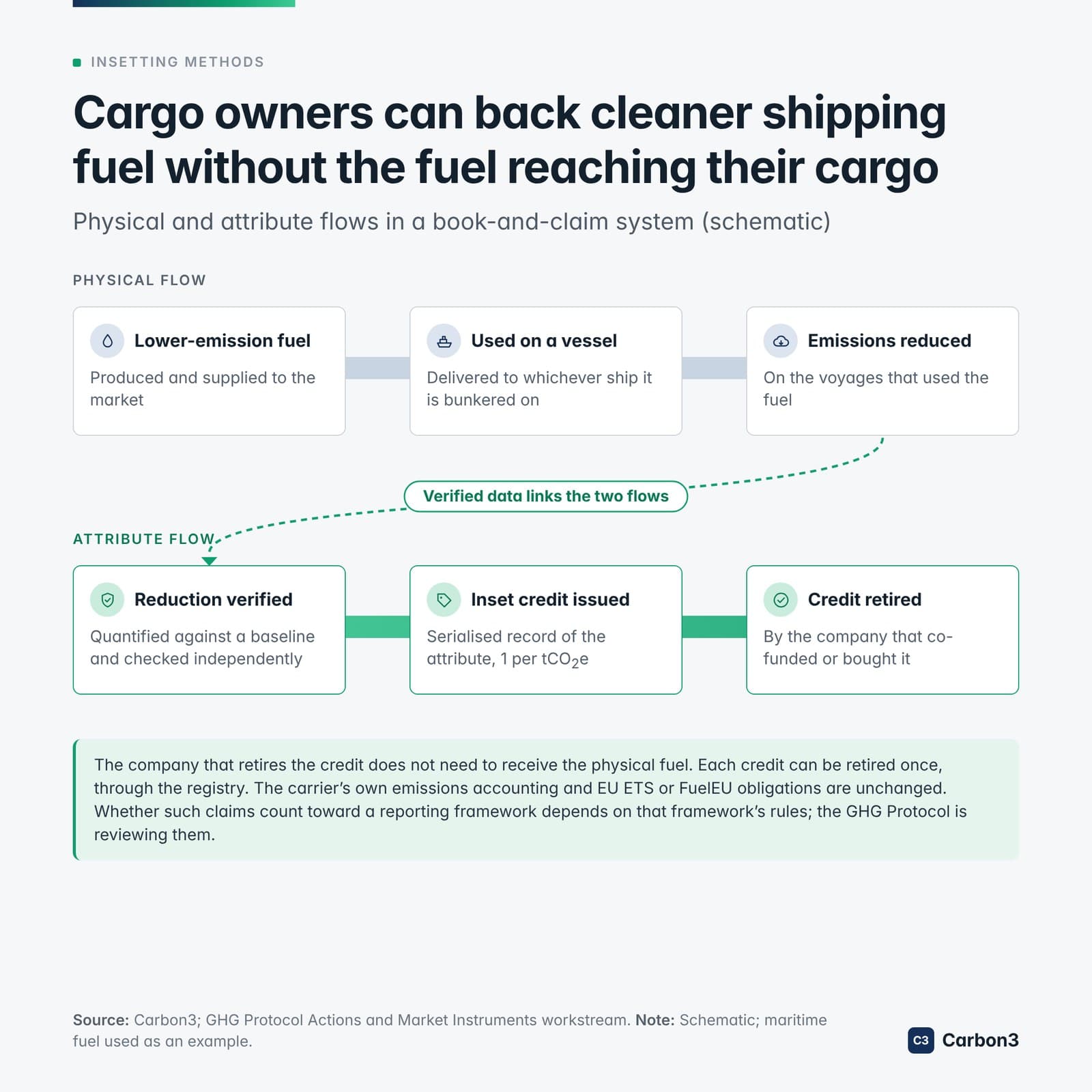
A cargo owner can back cleaner shipping fuel without that fuel ever reaching its cargo. That is the idea behind book and claim, a chain-of-custody model in which the environmental attribute of a lower-emission fuel is tracked separately from the fuel itself. Marine fuel is a useful example, because fuel cannot be routed to a particular shipper's containers, and the vessel that burns it rarely carries only one customer's goods.
Two flows, one link
Book and claim works with two parallel flows.
The physical flow is the fuel itself. A lower-emission fuel is produced and supplied to the market. It is delivered to whichever ship it is bunkered on, and emissions are reduced on the voyages that used it. None of that depends on who paid for it.
The attribute flow is the record of the reduction. The reduction is quantified against a baseline and checked independently. Once verified, an inset credit is issued: a serialized record of the attribute, one credit per tonne of CO2e reduced. The credit is then retired by the company that co-funded the fuel or bought the credit.
What connects the two is verified data. The attribute flow only exists because the physical flow happened and was measured, so the quality of the record depends on the quality of the evidence behind it.
What the model does and does not change
The company that retires the credit does not need to receive the physical fuel. That is the point of the model: a cargo owner whose goods move on many vessels and routes can still support the use of cleaner fuel somewhere in the fleet that serves it.
Each credit can be retired only once, through the registry. That single retirement is what keeps a reduction from being claimed twice by different buyers.
The model does not change the carrier's position. The carrier's own emissions accounting, and its obligations under the EU Emissions Trading System or FuelEU Maritime, are unchanged. Book and claim adds a record for the party that funds the reduction; it does not move the carrier's compliance obligations to someone else.
Where the rules stand
Whether a book-and-claim claim counts toward a given reporting framework depends on that framework's rules. The GHG Protocol is reviewing them through its Actions and Market Instruments workstream, so the treatment of these claims in corporate inventories is still open.
For cargo owners, that makes the record itself the part to get right now: a verified reduction, a serialized credit, and a single retirement that can be shown to auditors and partners. Insetting is the term for funding reductions inside a company's own value chain, and Carbon3 works on the record-keeping that lets each verified reduction be issued, transferred and retired once. Claim treatment depends on the applicable reporting framework.
Sources: Carbon3; GHG Protocol Actions and Market Instruments workstream.
Originally published on LinkedIn, 17 October 2026.
The Carbon3 Newsletter
Weekly analysis of industrial decarbonization and insetting across Scope 1 to 3, from the Carbon3 team.
Read more from the research team.
Market structure
Seven new carbon pricing instruments, one point of extra coverage
Carbon pricing added seven instruments in a year, but global emissions coverage rose only from about 28% to just over 29%.
Read the articleMarket structure
In Australia, cutting methane can cost less than buying credits
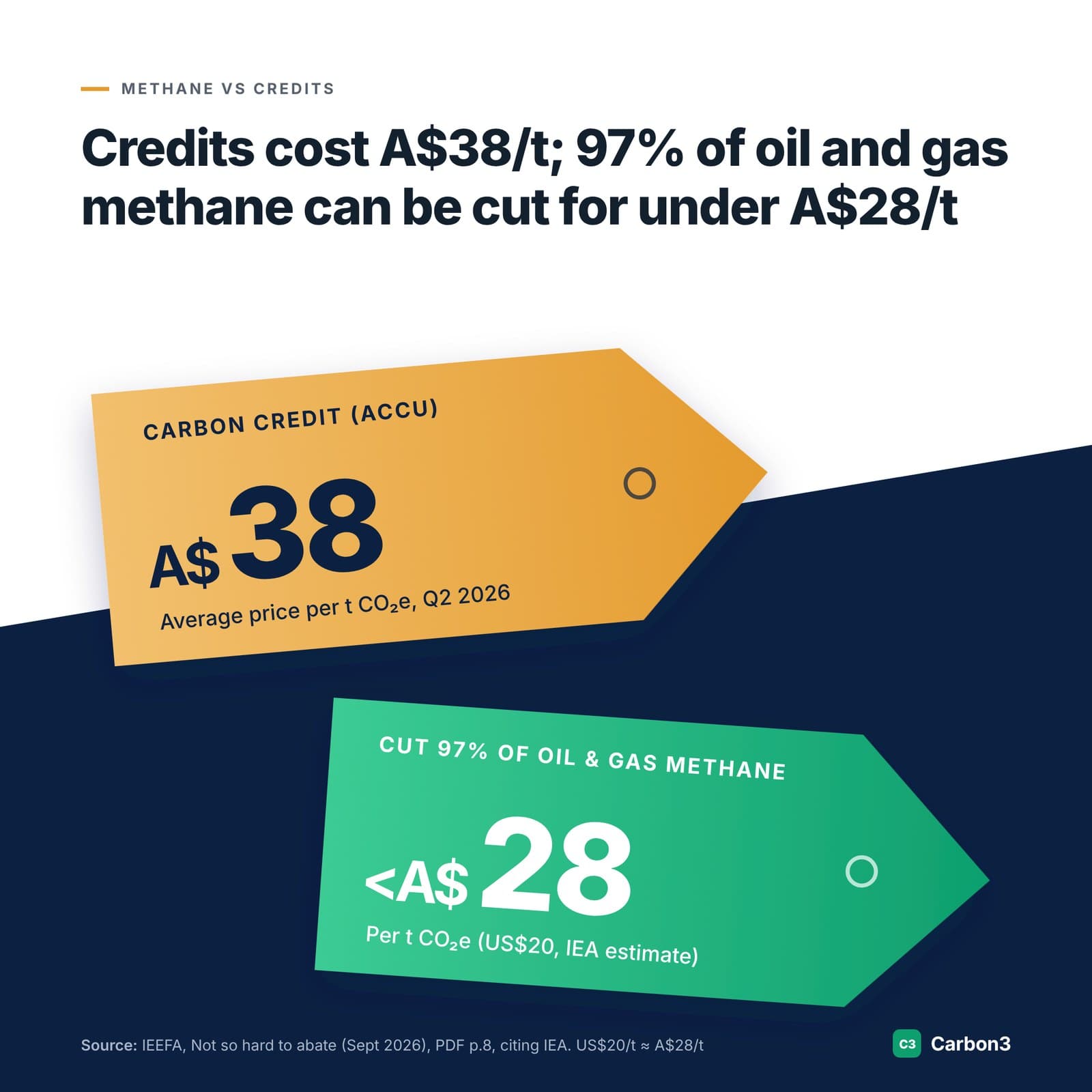
IEEFA, citing the IEA, notes 97% of oil and gas methane could be abated for under US$20 a tonne, about A$28, while ACCUs averaged A$38 a tonne in Q2 2026.
Read the articleSector: Maritime
In shipping, the party paying for cleaner fuel is not the party holding the emissions
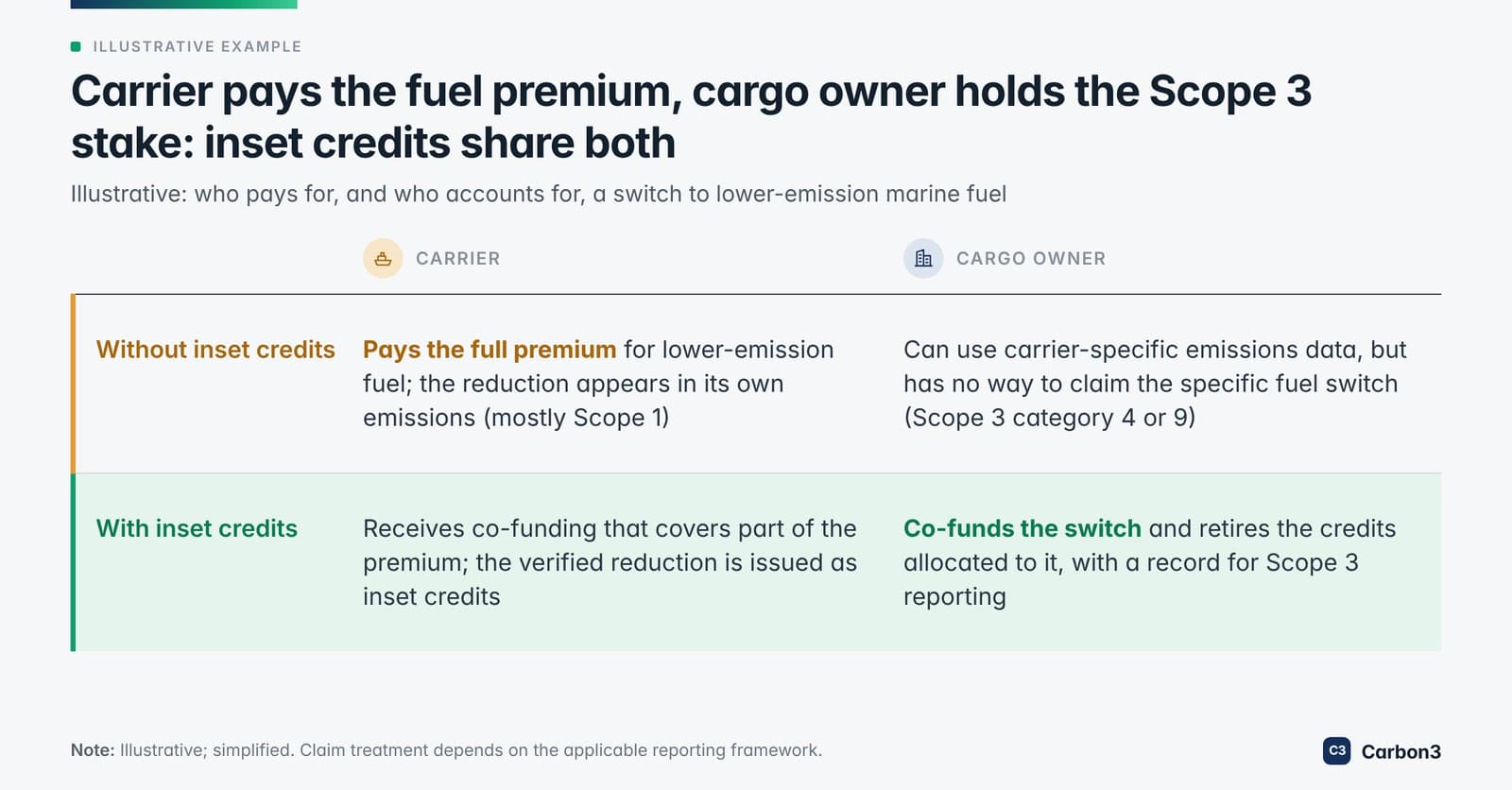
The carrier pays the fuel premium; the cargo owner reports the emissions in Scope 3.
Read the article
See the companies behind these figures in the Data Hub.
Look up your suppliers’ emissions and targets, free.