Seven new carbon pricing instruments, one point of extra coverage
Carbon pricing added seven instruments in a year, but global emissions coverage rose only from about 28% to just over 29%. Revenue reached $107bn in 2025.
By Carbon3 team2 min read
Carbon pricing added seven new instruments in a year. Global emissions coverage rose only from about 28% to just over 29%.
More schemes, similar reach
The number of carbon taxes and emissions trading systems keeps growing. But new instruments tend to be smaller, or cover narrower parts of an economy, than the large systems already in place. Seven new instruments moving coverage by about one percentage point shows how much of the world's emissions still sit outside any carbon price.
The money is significant
Carbon pricing raised $107bn in revenue in 2025. That is a substantial sum, and it shows that where carbon pricing applies, it bites. Governments use the revenue in different ways, from general budgets to climate programs and household support.
What sits outside
The flip side is that about 70% of emissions face no direct carbon price. For companies, that gap runs through their supply chains. A supplier in a jurisdiction or sector without carbon pricing has no compliance cost pushing it to reduce emissions, even when those emissions sit in a customer's Scope 3 inventory and count against that customer's targets.
In those parts of the chain, the incentive to reduce emissions has to come from somewhere else, most often from the customer.
The role of buyers
That is where value-chain action matters. A buyer can ask for lower-carbon products, change how it scores tenders, and co-fund reductions that a supplier would not make on its own. Where there is no carbon price to make the business case, buyer funding can.
When a buyer co-funds a verified reduction at a supplier, the result can be recorded as an inset credit, tied to the value chain where it happened and to the party that holds it. Insetting is not offsetting, and inset credits are not compliance instruments. They work alongside carbon pricing, including in the large share of emissions that carbon pricing does not reach.
The takeaway
Carbon pricing is spreading and raising real money, but slowly in terms of coverage. Companies waiting for a carbon price to reach their suppliers may wait a long time. For most supply chains, the faster lever is the buyer.
Originally published on LinkedIn, 6 October 2026.
The Carbon3 Newsletter
Weekly analysis of industrial decarbonization and insetting across Scope 1 to 3, from the Carbon3 team.
Read more from the research team.
Market structure
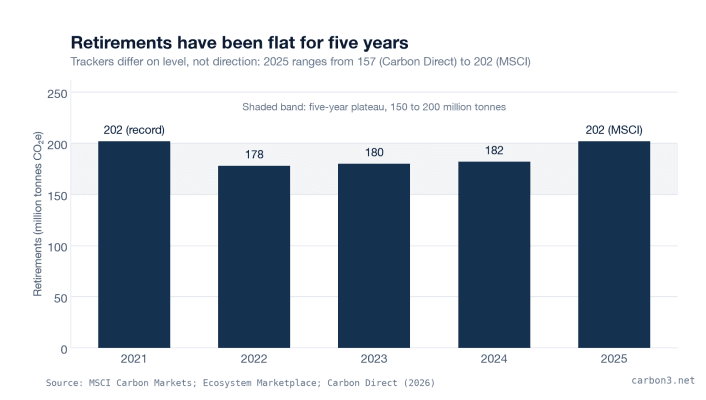
Carbon markets 2026: flat on the surface, splitting underneath
Where the voluntary carbon market and corporate supply-chain climate action are heading, based on registry data, new standards and disclosed deals.
Read the articleMarket structure
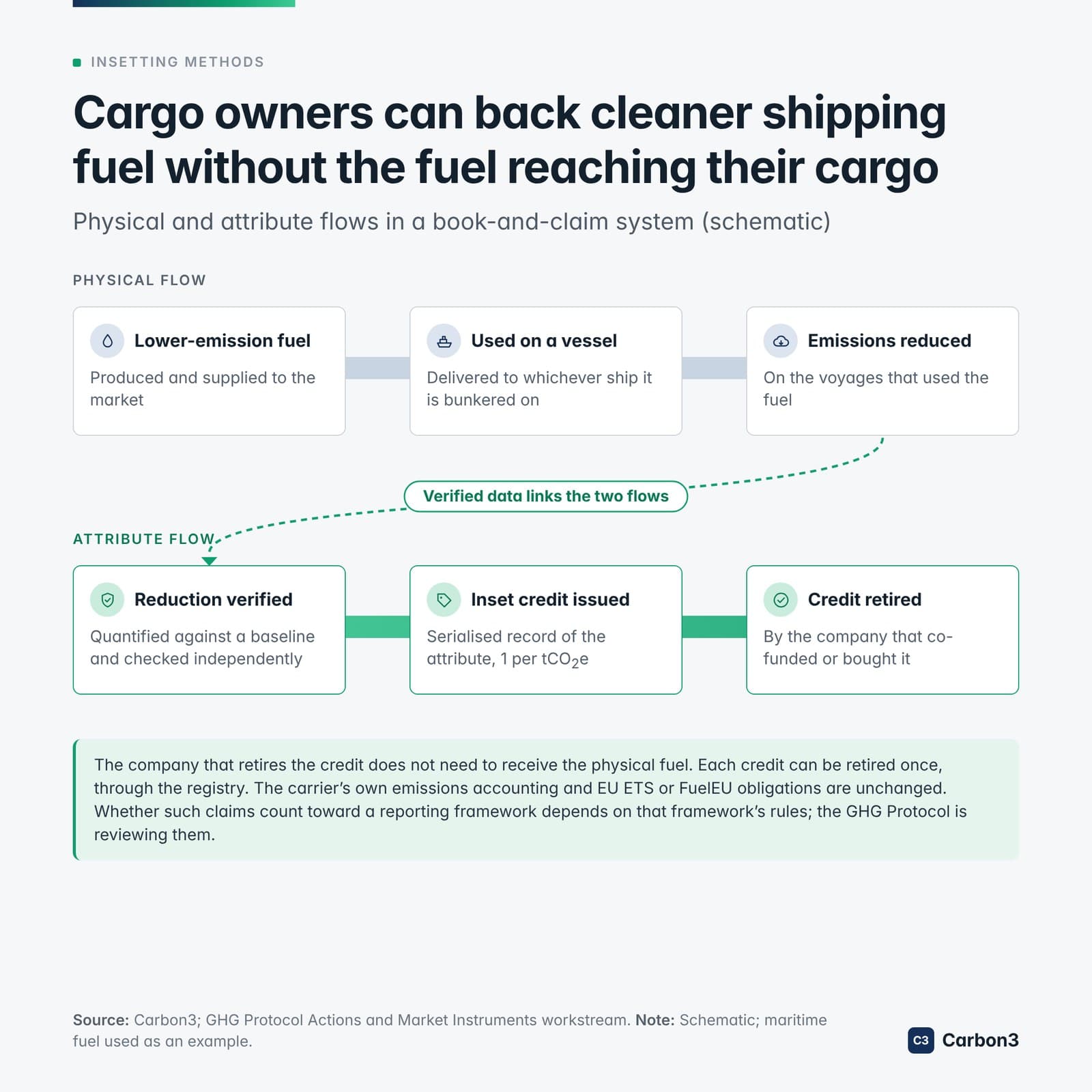
A cargo owner can back cleaner shipping fuel without the fuel reaching its cargo
Book and claim separates the physical flow of a lower-emission fuel from the record of its reduction.
Read the articleTransition finance
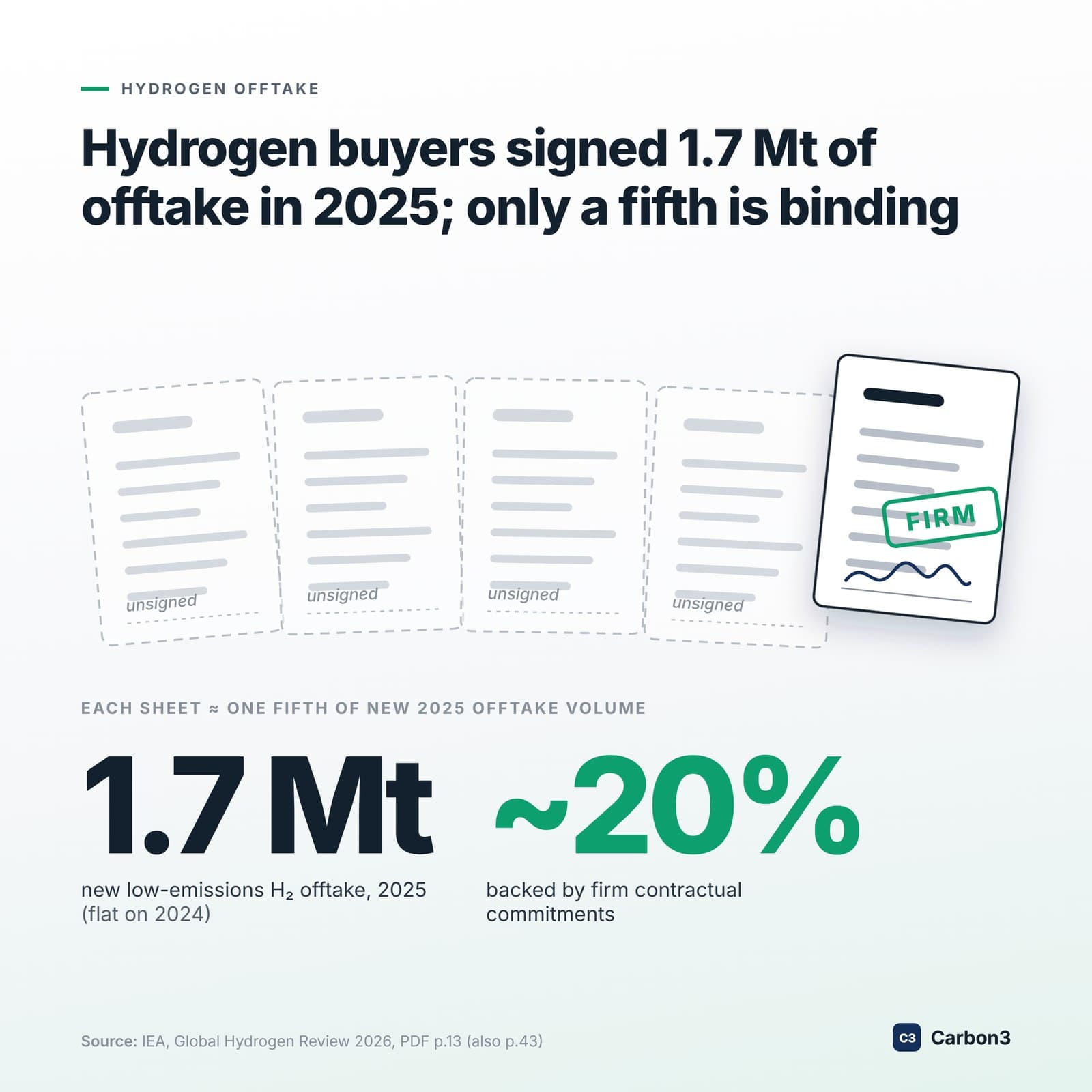
Hydrogen has a demand problem, and the contracts show it
The IEA's Global Hydrogen Review 2026 finds new low-emissions hydrogen offtake was about 1.7 Mt in 2025, and only around 20% of newly signed volumes were firm.
Read the article
See the companies behind these figures in the Data Hub.
Look up your suppliers’ emissions and targets, free.