In shipping, the party paying for cleaner fuel is not the party holding the emissions
The carrier pays the fuel premium; the cargo owner reports the emissions in Scope 3. Inset credits let both sides share the cost and record the verified reduction once.
By Carbon3 team2 min read
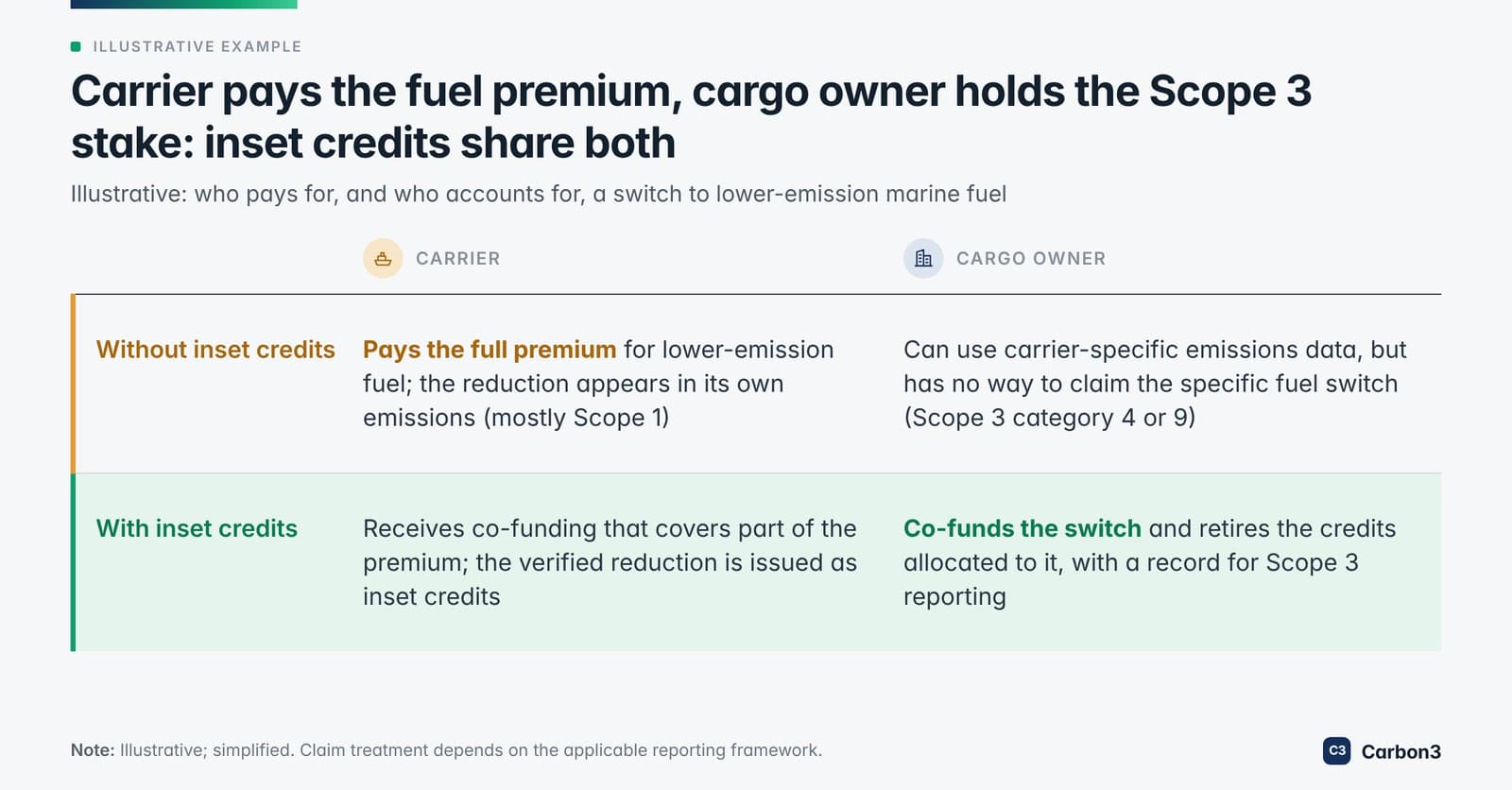
In shipping, the party paying for cleaner fuel is usually not the party holding the emissions. That mismatch explains a good part of why lower-emission marine fuels move more slowly than the technology alone would suggest.
Who pays
When a carrier switches a vessel to a lower-emission marine fuel, it is the carrier that pays the premium. The fuel bill sits on the carrier's books, and in a competitive freight market that extra cost is hard to pass on unless a customer has asked for it.
Who accounts
The emissions tell a different story. For the carrier, fuel burned on its own ships is Scope 1. For the cargo owner that buys the transport, the same tonnes sit in its Scope 3 inventory. Many cargo owners have Scope 3 targets that depend on exactly these tonnes coming down, yet they do not choose the fuel and do not pay for it directly.
So the party with the cost has limited reason to act alone, and the party with the target has no direct lever. Carbon3's illustrative graphic sets this out side by side: who pays and who accounts for a fuel switch, first without inset credits and then with them.
What inset credits change
Inset credits give carrier and cargo owner a way to share the cost of the switch and to record the verified reduction once. The cargo owner co-funds part of the premium. The reduction is verified and recorded as an inset credit, so there is a single record of which party holds it, rather than two parties each telling their own version of the same tonnes.
That shared record matters in both directions. The carrier gets a customer willing to fund part of the premium, which makes the business case for the switch easier to make. The cargo owner gets a verified reduction tied to its own value chain, rather than an unrelated project elsewhere.
Insetting is not offsetting
Insetting funds reductions inside the value chain. It is not offsetting: the money goes to an emission source the cargo owner already reports, not to a project outside its chain. The point is to change what happens on the ships that actually carry the cargo.
Claim treatment depends on the applicable reporting framework.
The graphic is part of Carbon3's Insetting 101 series, which walks through how inset credits work in practice.
Originally published on LinkedIn, 11 October 2026.
The Carbon3 Newsletter
Weekly analysis of industrial decarbonization and insetting across Scope 1 to 3, from the Carbon3 team.
Read more from the research team.
Sector: Maritime
Ethanol isn't a better marine fuel. It's an earlier one.
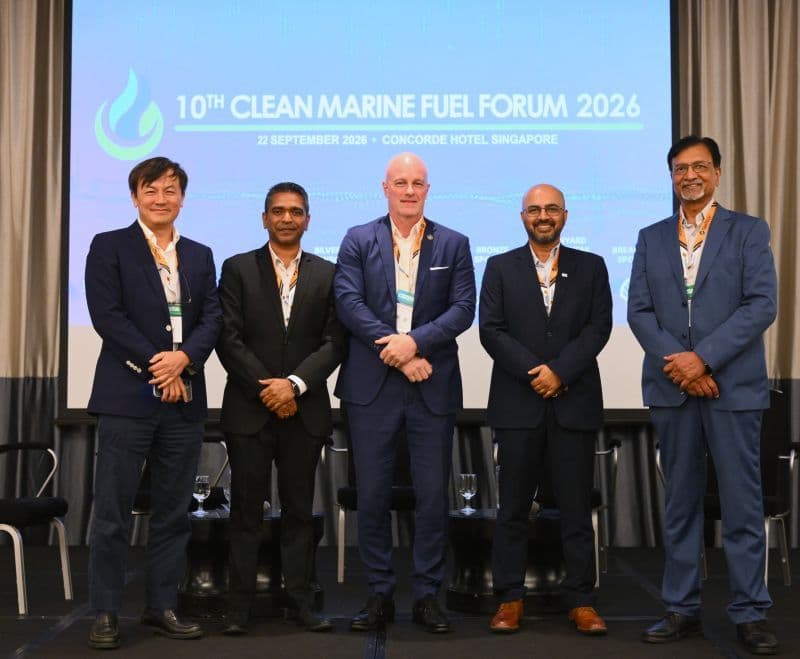
At the Clean Marine Fuel Forum in Singapore, the case for ethanol rests on three tests: the molecules exist, the assets already work, and the economics clear today.
Read the articleSector: Maritime
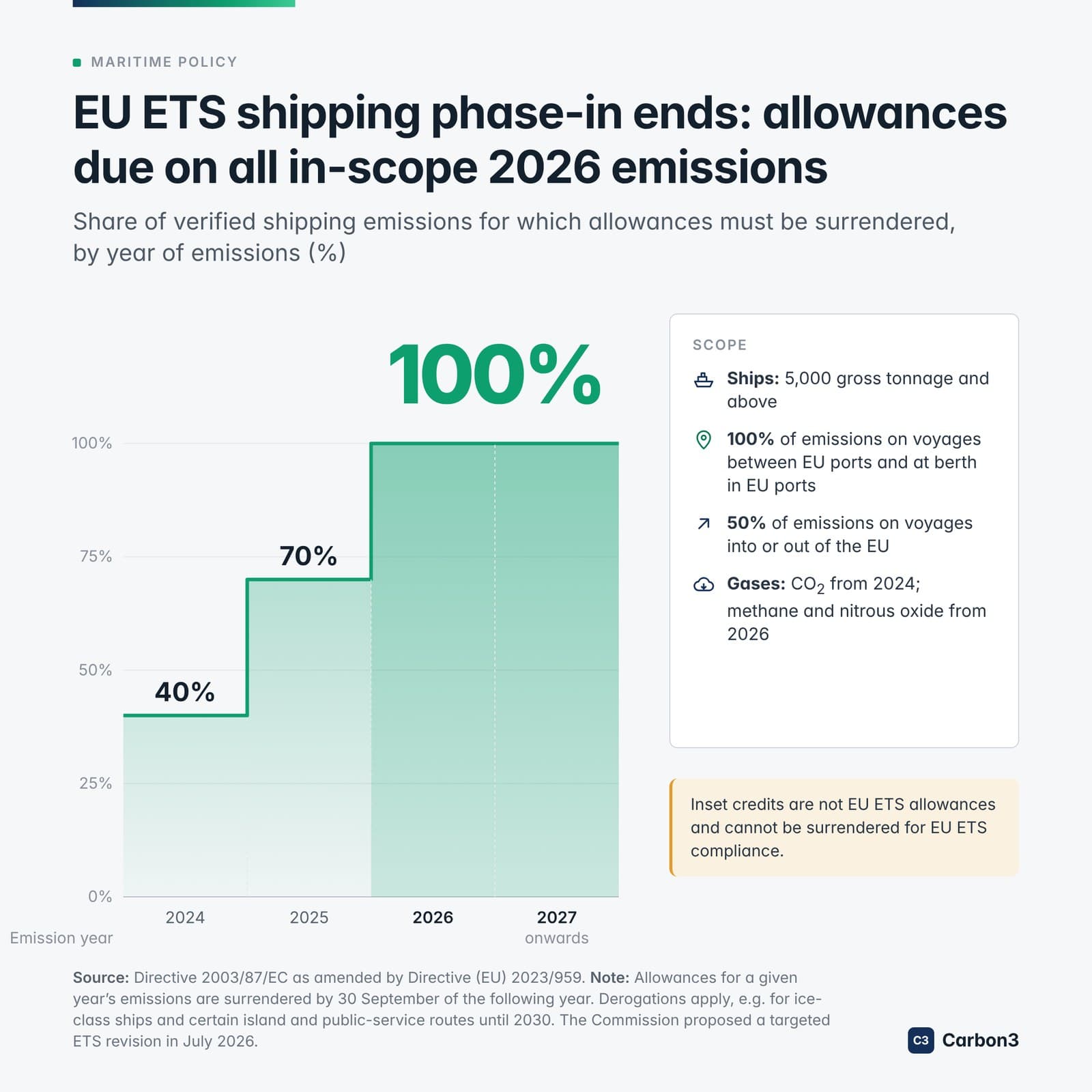
The EU ETS phase-in for shipping is over
Allowances are now due on 100% of in-scope 2026 shipping emissions.
Read the articleMarket structure
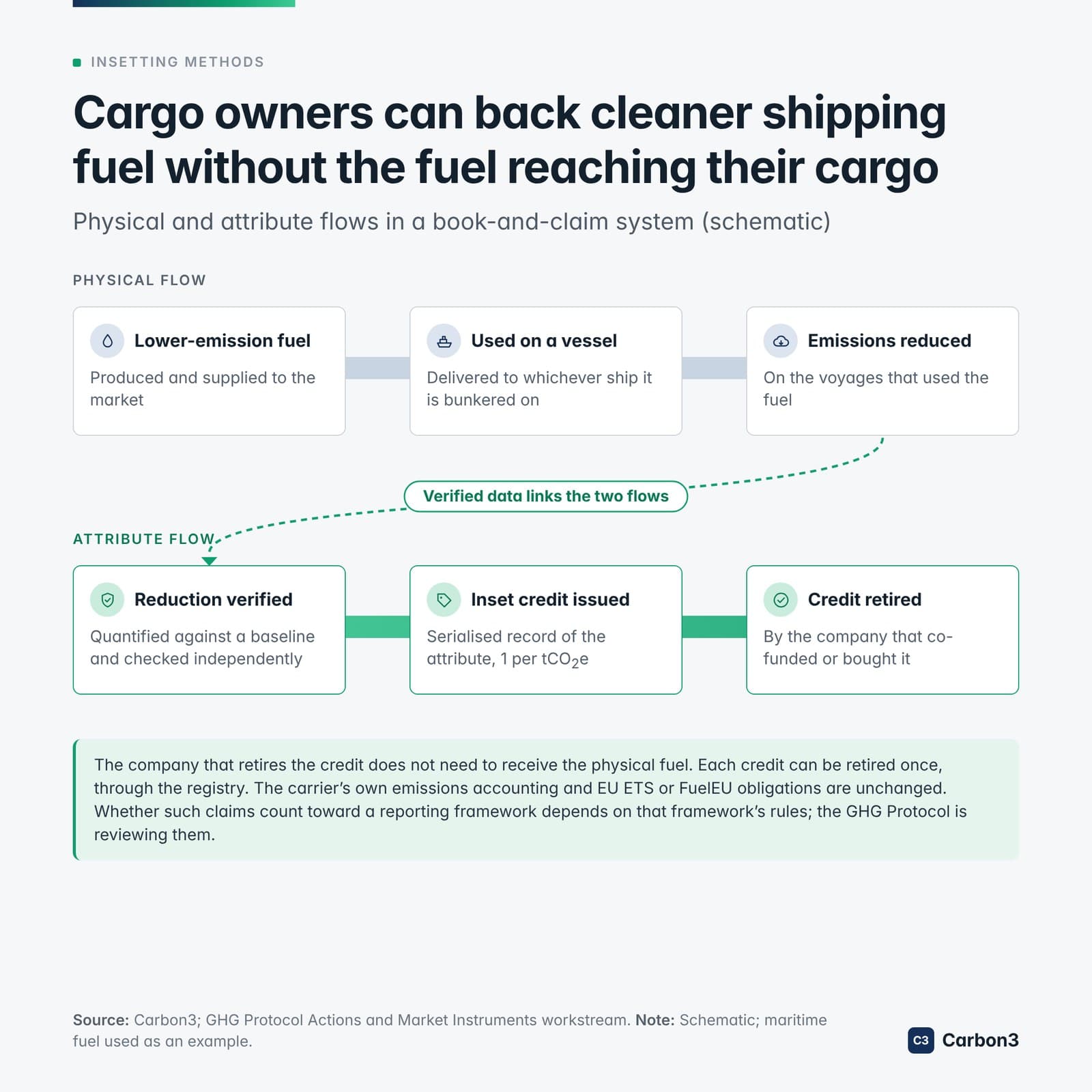
A cargo owner can back cleaner shipping fuel without the fuel reaching its cargo
Book and claim separates the physical flow of a lower-emission fuel from the record of its reduction.
Read the article
See the companies behind these figures in the Data Hub.
Look up your suppliers’ emissions and targets, free.