The EU ETS phase-in for shipping is over
Allowances are now due on 100% of in-scope 2026 shipping emissions. Inset credits are not EU ETS allowances: they answer a different question.
By Carbon3 team2 min read
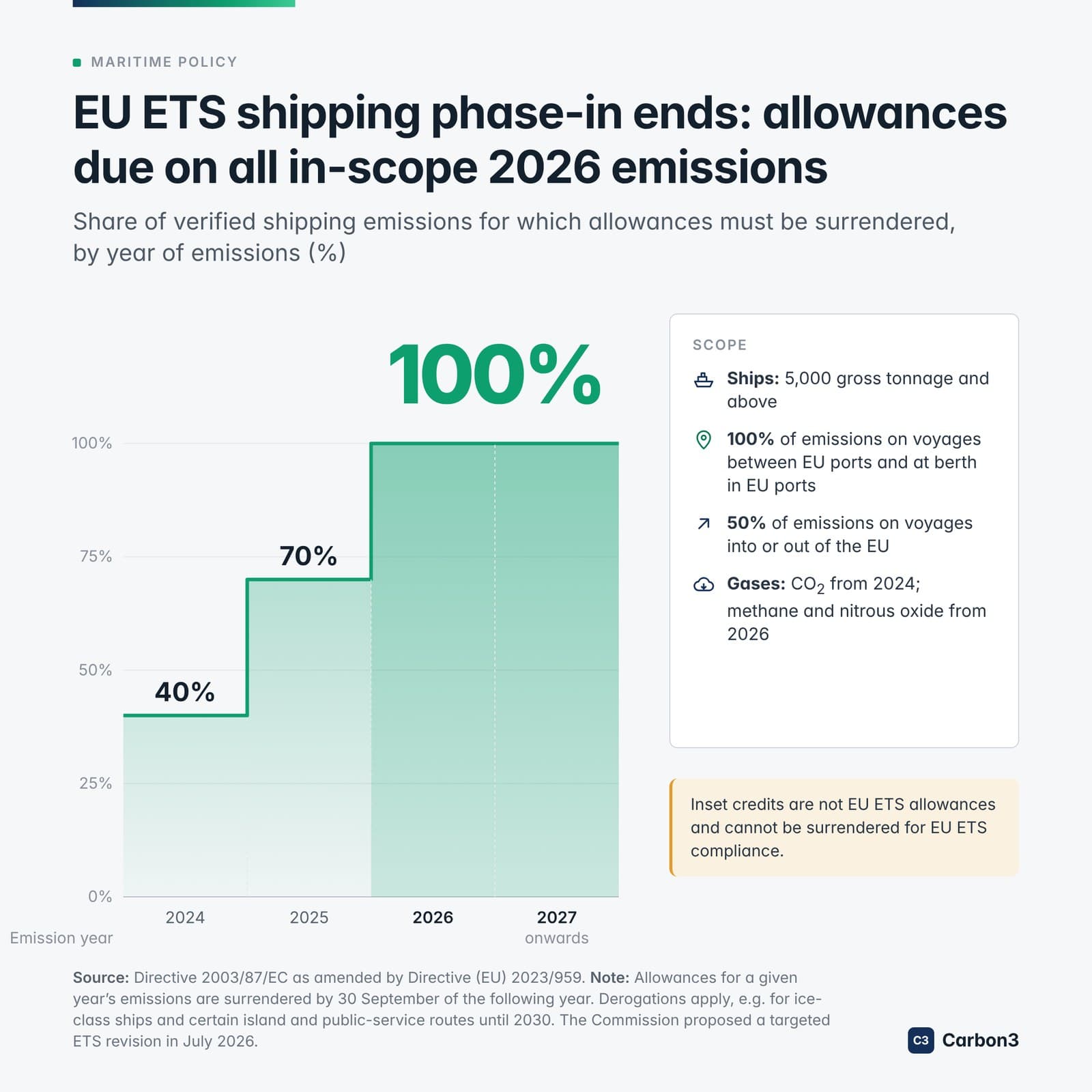
The EU ETS phase-in for shipping is over. From the 2026 emissions year, allowances are due on 100% of in-scope emissions.
How the phase-in ran
Shipping entered the EU Emissions Trading System with a gradual ramp. Ships of 5,000 gross tonnage and above surrendered allowances for 40% of their 2024 emissions and 70% of their 2025 emissions. From 2026 it is the full amount. Allowances for a given year's emissions are due by 30 September of the following year, so the first full-coverage surrender falls in 2027.
Not every tonne counts the same way. Voyages between an EU port and a port outside the EU count at 50%, and derogations apply. The European Commission's EU ETS maritime pages set out the detail.
What full coverage means
For shipping companies, the end of the phase-in removes the last of the discount. Every in-scope tonne now carries a full allowance cost. That makes the cost of conventional fuel more visible, and it sharpens the comparison with lower-emission alternatives on routes that fall within the scheme.
For cargo owners, the effect is indirect but real. Compliance costs on the carrier side tend to show up in freight terms, and the emissions behind those voyages sit in the cargo owner's Scope 3 inventory.
Inset credits are not allowances
One point Carbon3 is clear on: inset credits are not EU ETS allowances. They cannot be surrendered under the ETS and they do not reduce a carrier's compliance obligation.
Inset credits record verified reductions inside a value chain, for example a cargo owner co-funding a lower-emission voyage with its carrier. That is a separate question from compliance. The ETS sets what a shipowner must surrender for the emissions it produces; inset credits record who funded and who holds a verified reduction in a supply chain.
Keeping the two apart avoids confusion in both directions. A carrier still has its ETS obligation regardless of any inset arrangement, and a cargo owner's inset credit is not a compliance instrument.
The practical takeaway
With full ETS coverage in place, the economics of cleaner fuel on in-scope routes are clearer than they were during the phase-in. Value-chain partners who want reductions they can record have a clearer basis for co-funding them, alongside, not instead of, the compliance system.
Originally published on LinkedIn, 12 October 2026.
The Carbon3 Newsletter
Weekly analysis of industrial decarbonization and insetting across Scope 1 to 3, from the Carbon3 team.
Read more from the research team.
Sector: Maritime
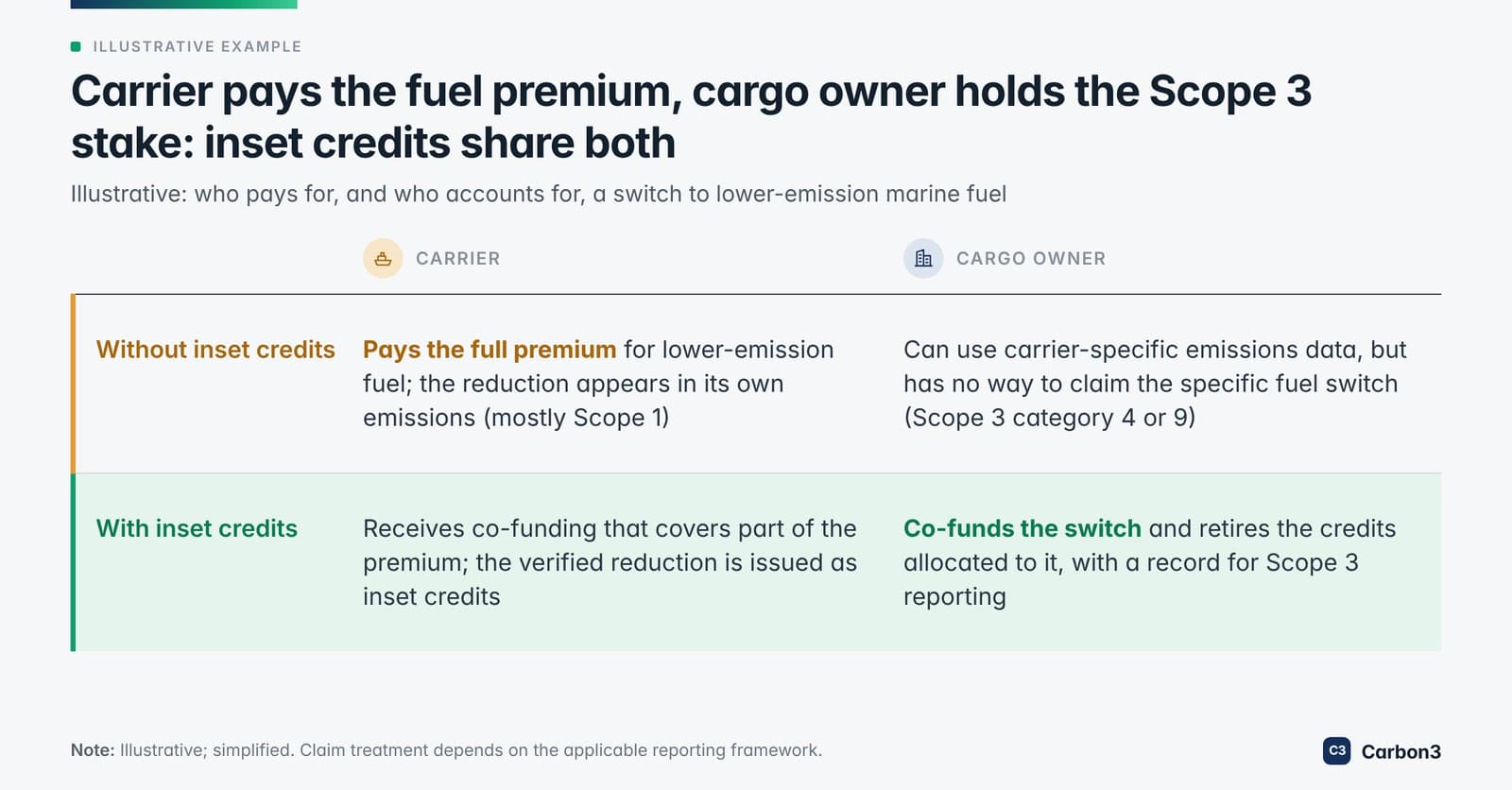
In shipping, the party paying for cleaner fuel is not the party holding the emissions
The carrier pays the fuel premium; the cargo owner reports the emissions in Scope 3.
Read the articleSector: Maritime
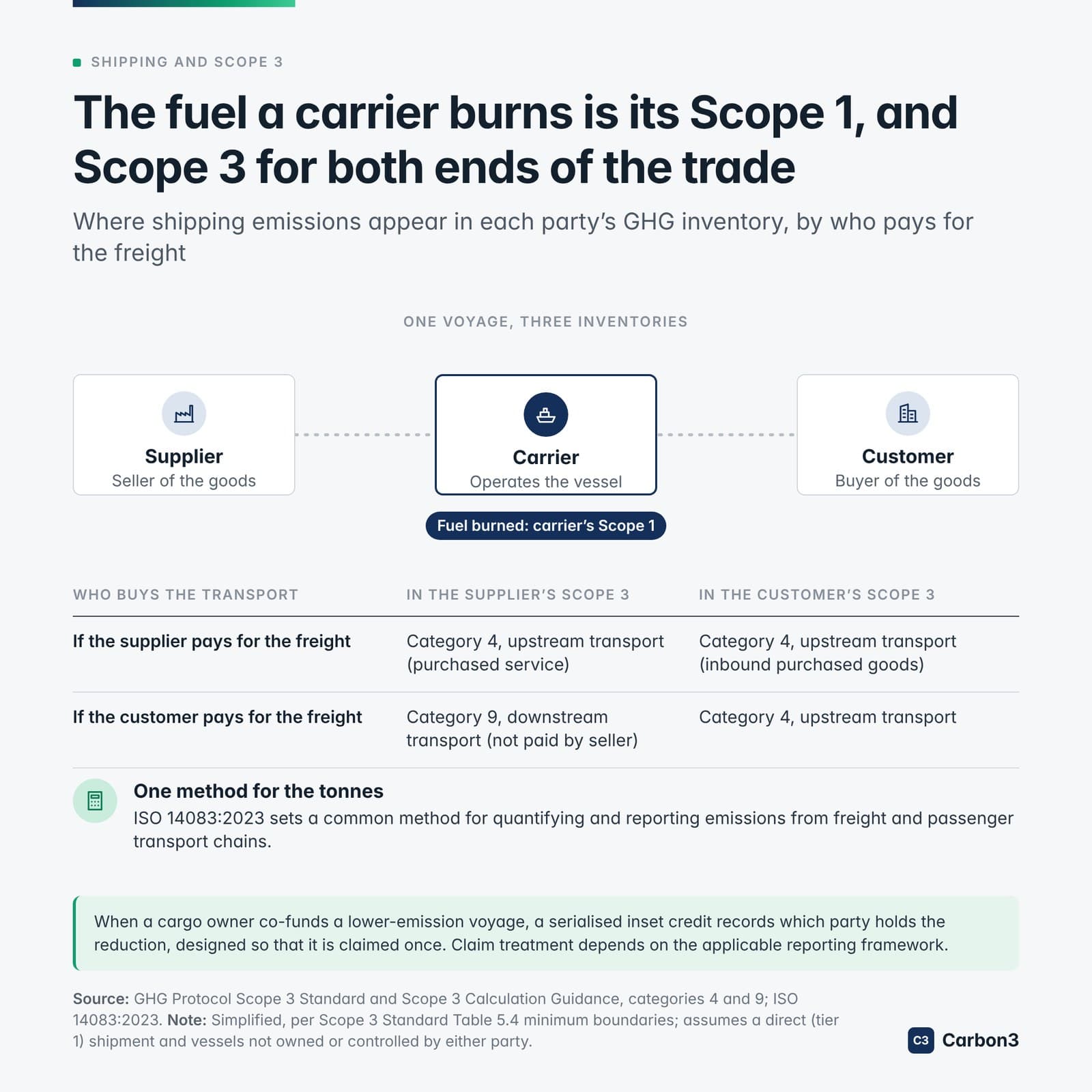
One container voyage shows up in three inventories
Carrier Scope 1, buyer category 4, seller category 4 or 9.
Read the articleField notes
From Web Summit to real impact
Inset credits as revenue, AI-powered validation, carrots over sticks, and a marketplace where reductions become liquid assets.
Read the article
See the companies behind these figures in the Data Hub.
Look up your suppliers’ emissions and targets, free.