One container voyage shows up in three inventories
Carrier Scope 1, buyer category 4, seller category 4 or 9. A cleaner voyage matters to both sides of the trade, and the reduction needs a clear owner.
By Carbon3 team2 min read
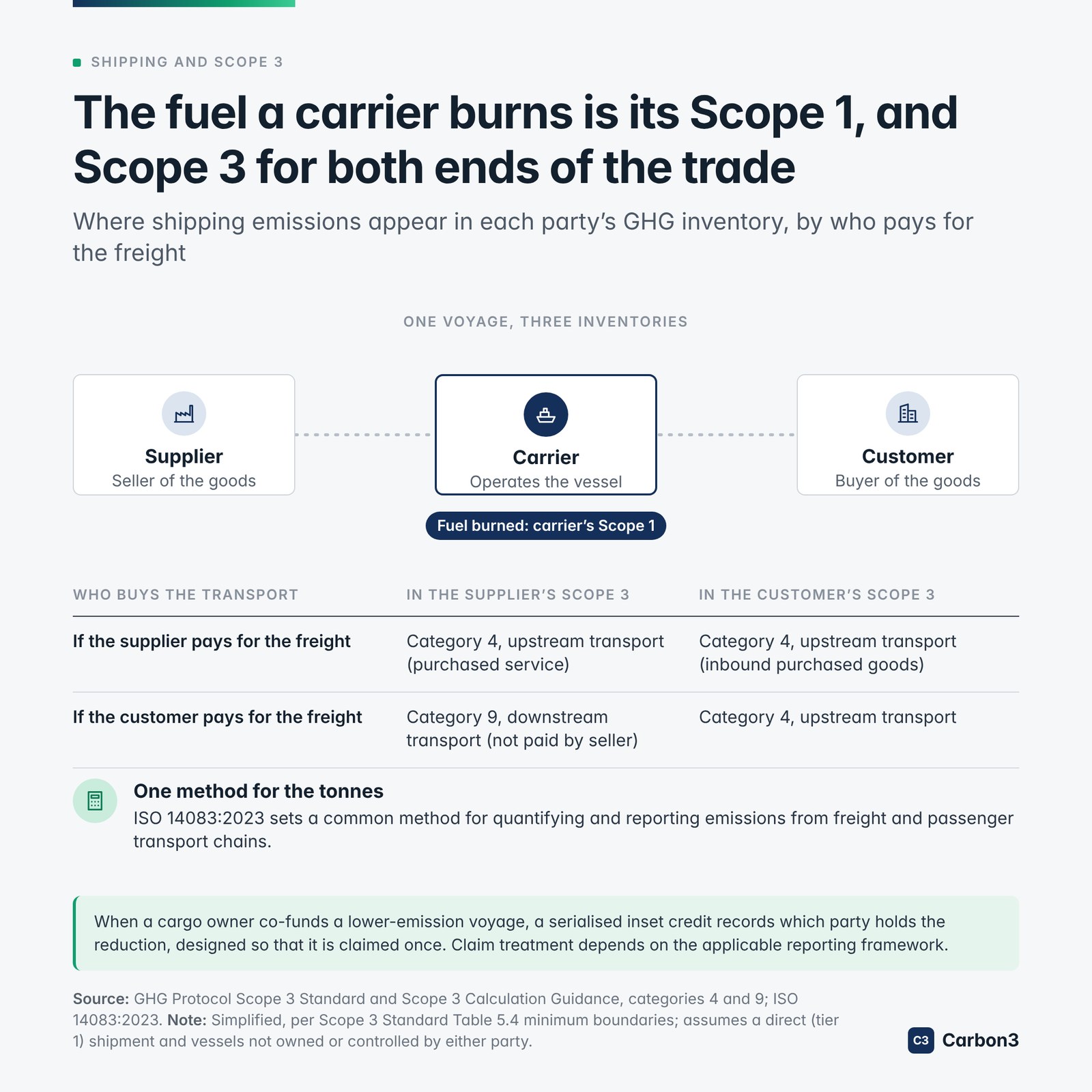
One container voyage shows up in three inventories.
Three views of the same tonnes
The fuel burned on the voyage is the carrier's Scope 1: direct emissions from assets it operates.
Under the GHG Protocol, the buyer of the goods reports inbound shipping in Scope 3 category 4, upstream transportation and distribution.
The seller reports the same voyage in category 4 if it pays for the freight, or in category 9, downstream transportation and distribution, if it does not.
So a single voyage can appear in three companies' inventories at once, each for a legitimate reason. That is how value-chain accounting is designed: each company reports the emissions linked to its activities, and the same tonnes show up from different angles.
A common method for the tonnes
ISO 14083:2023 gives a common method for quantifying greenhouse gas emissions from transport operations, including shipping. When carrier, buyer and seller use the same method, their figures for the same voyage can be compared and reconciled rather than estimated three different ways.
Why it matters for cleaner fuel
This is why a carrier's switch to cleaner fuel matters to both sides of the trade. A lower-emission voyage reduces the carrier's Scope 1, and it reduces the transport emissions that buyer and seller report in Scope 3.
It is also why a reduction needs a clear record of who holds it. If three parties can see the same tonnes, three parties could also try to tell the same reduction as their own.
Recording who holds the reduction
When a cargo owner co-funds a lower-emission voyage, a serialized inset credit records which party holds the reduction. The serial number ties the credit to a specific verified reduction, and the record shows who holds it, so the same reduction is not sold or reported twice.
Insetting funds reductions inside the value chain; it is not offsetting. The voyage that gets cleaner is the one that actually carries the cargo.
Claim treatment depends on the applicable reporting framework.
Correction, 30 October 2026: An earlier version of this article said Carbon3 credits carry serial numbers. They do not yet. Each batch of credits has its own record ID on the Carbon3 registry, and every transfer, split and retirement is recorded against it. Source: Carbon3 registry.
Learn more
How insetting works in shipping
Originally published on LinkedIn, 14 October 2026.
Read more from the research team.
Sector: Maritime
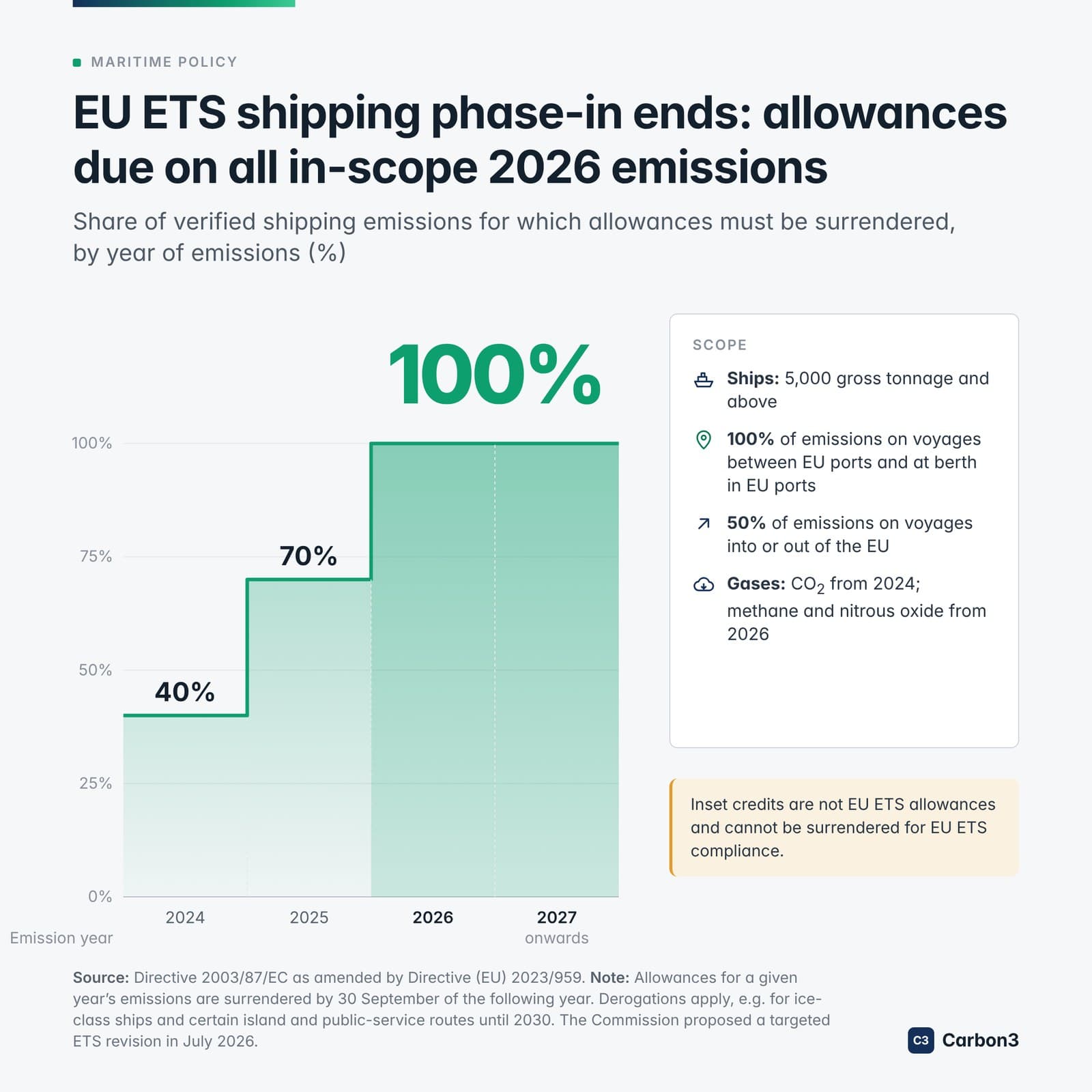
The EU ETS phase-in for shipping is over
Allowances are now due on 100% of in-scope 2026 shipping emissions.
Read the articleSector: Maritime
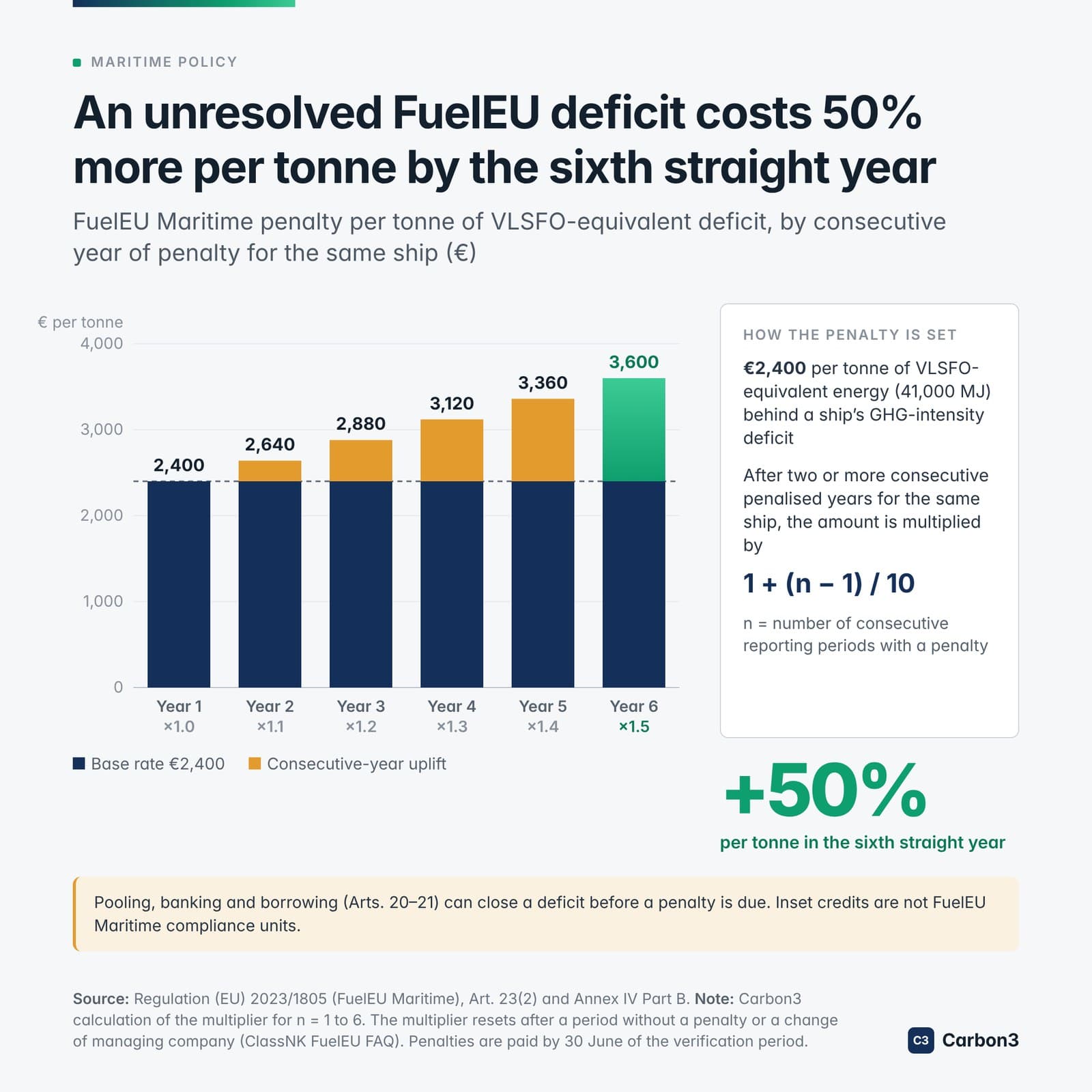
A FuelEU deficit does not stay the same price
FuelEU Maritime's €2,400 per tonne penalty rises by a tenth for each consecutive year in deficit, reaching €3,600 by the sixth.
Read the articleSector: Maritime
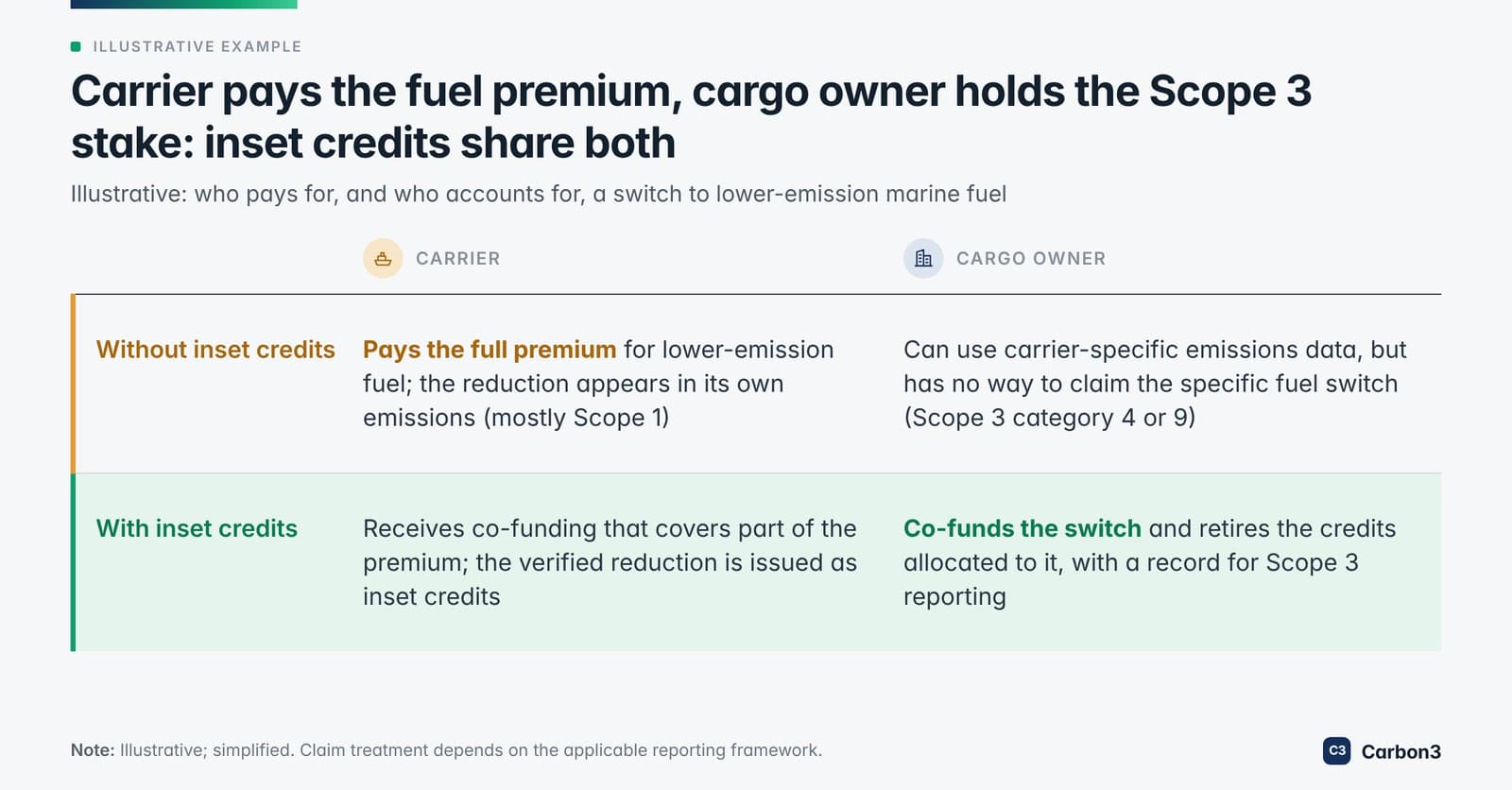
In shipping, the party paying for cleaner fuel is not the party holding the emissions
The carrier pays the fuel premium; the cargo owner reports the emissions in Scope 3.
Read the article
See the companies behind these figures in the Data Hub.
Look up your suppliers’ emissions and targets, free.