CBAM prices the tonne but does not fund removing it
The importer measures and pays, and the emissions stay. The verified data a CBAM declaration requires is the baseline an inset credit needs.
By Carbon3 team1 min read
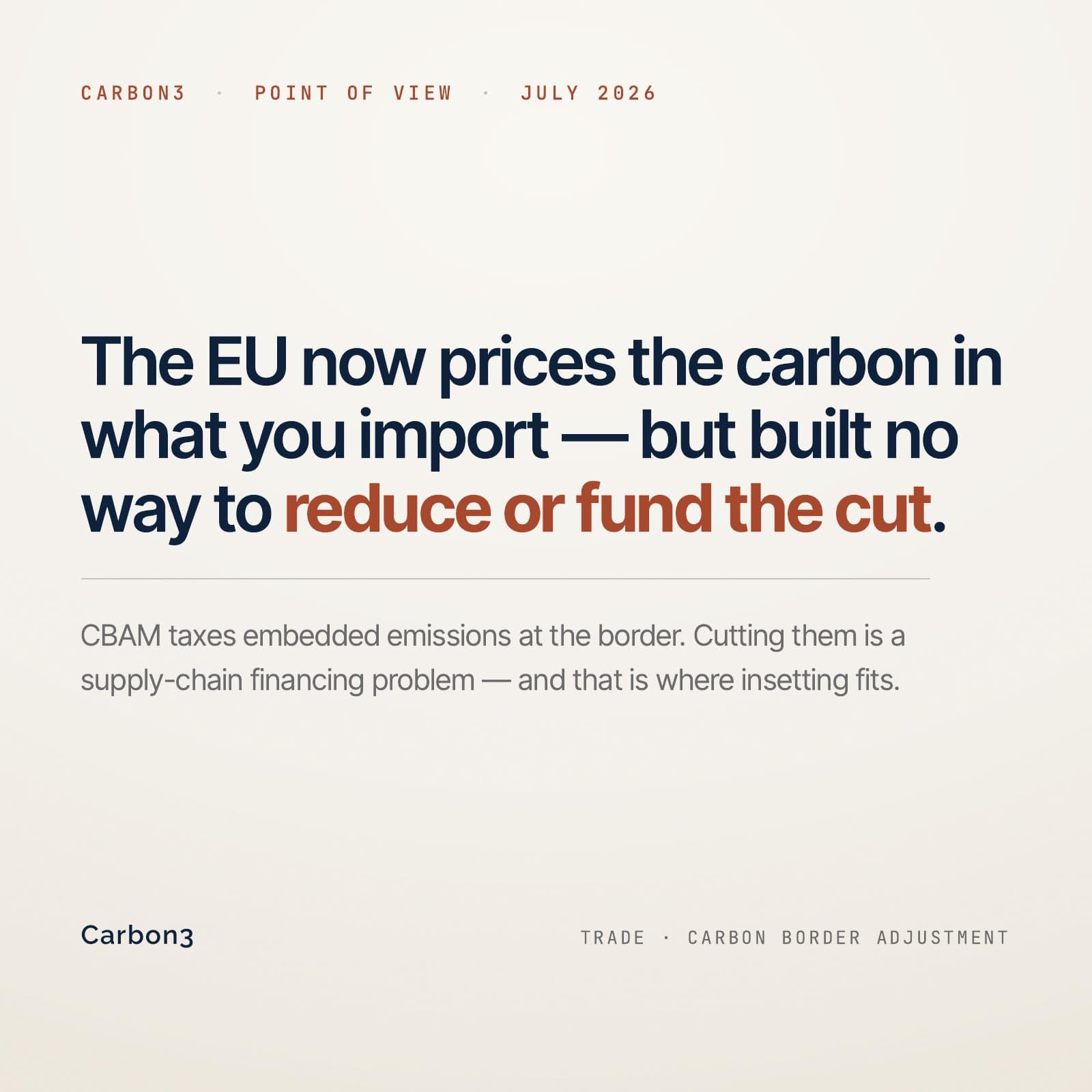
CBAM prices the carbon embedded in steel, cement, aluminum and more at the EU border. It puts a price on the tonne but provides no mechanism to fund taking it out.
So the importer measures and pays, and the emissions stay. There's no instrument to finance the supplier's reduction, and no way to recover the value of one. That missing half is a financing problem.
The verified embedded-emissions data a CBAM declaration already requires is the exact baseline an inset credit needs, letting importers and suppliers co-fund, allocate and recover the reduction across the chain.
We are looking for organizations to join and decarbonize through Carbon3's insetting platform. Learn more at carbon3.net/data and contact us carbon3.net
Document
The full document, as a PDF
Free to download once you have a free account. No payment details are needed.
Originally published on LinkedIn, 20 July 2026.
The Carbon3 Newsletter
Weekly analysis of industrial decarbonization and insetting across Scope 1 to 3, from the Carbon3 team.
Read more from the research team.
Policy
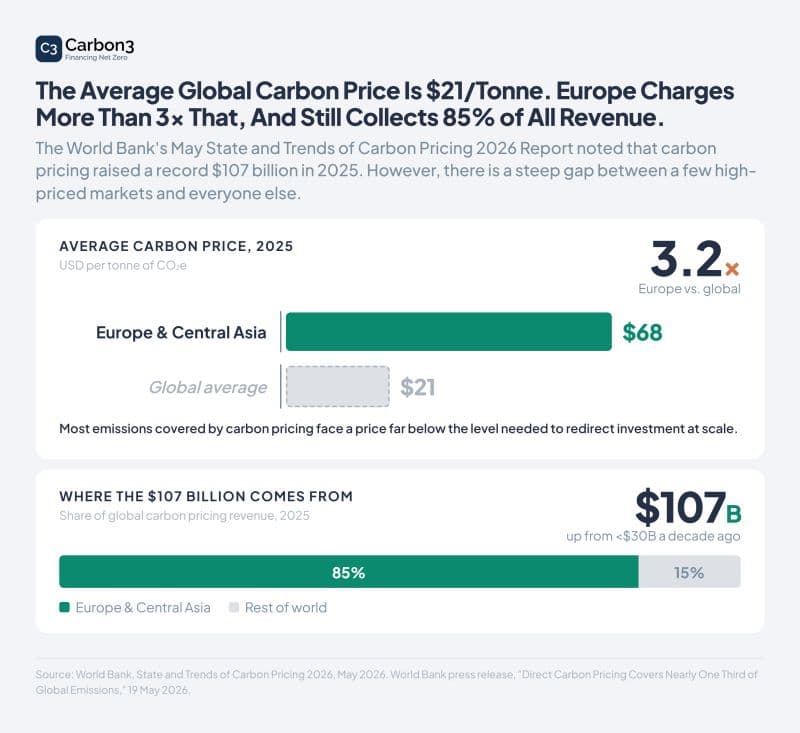
Outside Europe, the global average carbon price is $21 a tonne
Carbon pricing covers 29 percent of global emissions and raised $107 billion, but the average price is far below what redirects investment.
Read the articlePolicy
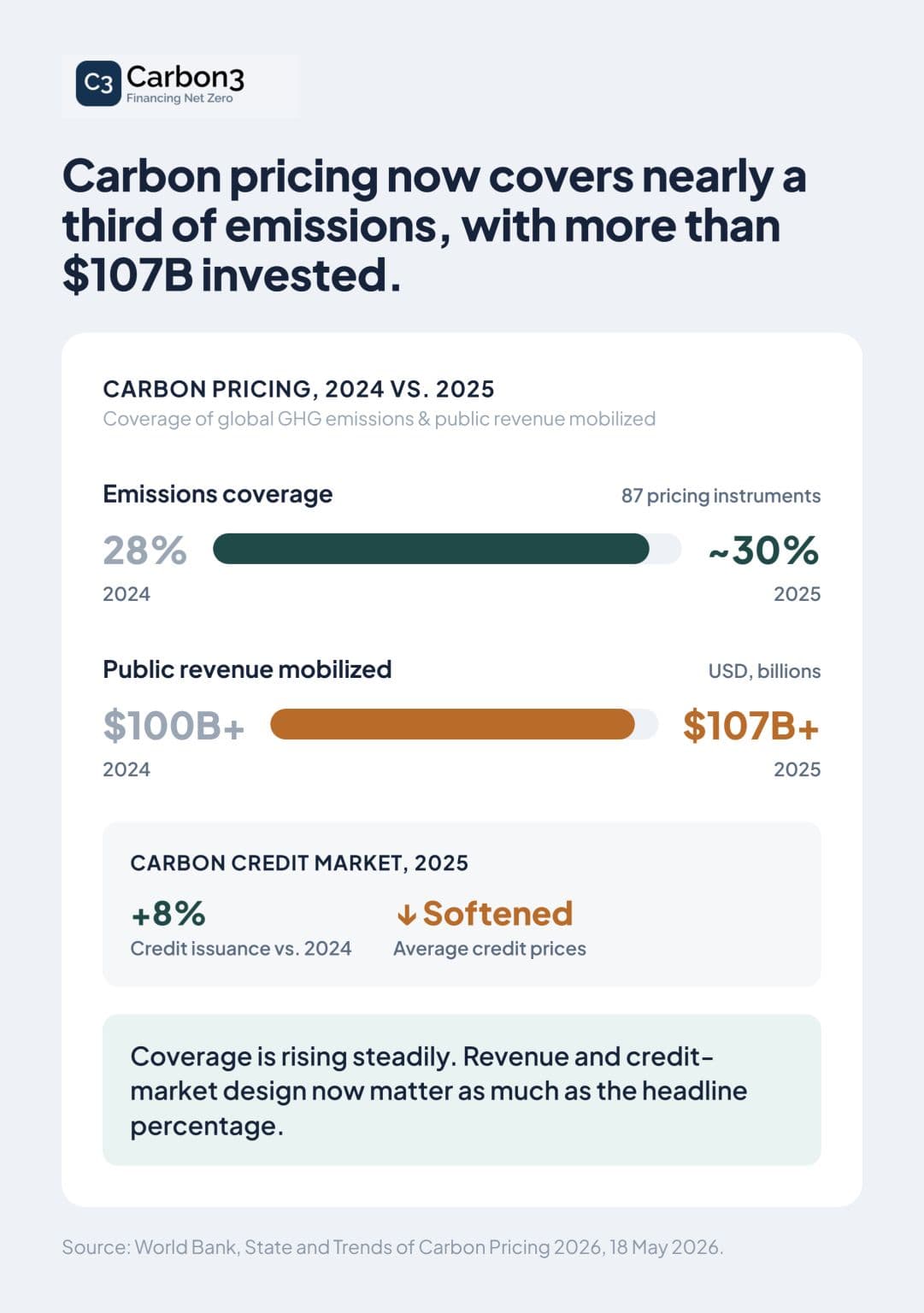
Carbon pricing covers nearly 30 percent of global emissions
Pricing systems raised more than $107 billion for public budgets in 2025.
Read the articleMarket structure
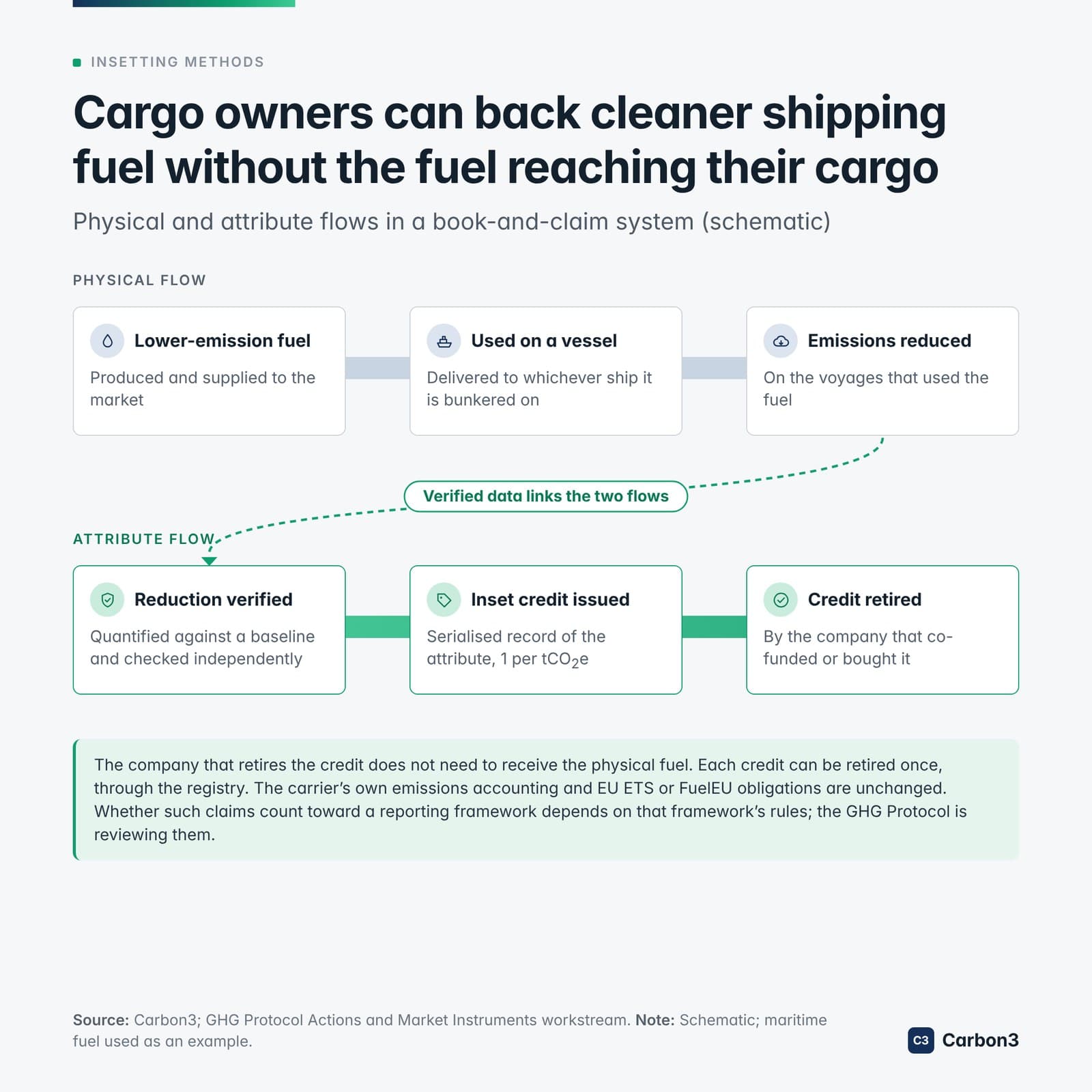
A cargo owner can back cleaner shipping fuel without the fuel reaching its cargo
Book and claim separates the physical flow of a lower-emission fuel from the record of its reduction.
Read the article
See the companies behind these figures in the Data Hub.
Look up your suppliers’ emissions and targets, free.