Carbon pricing covers nearly 30 percent of global emissions
Pricing systems raised more than $107 billion for public budgets in 2025. The next question is how those revenues are recycled.
By Carbon3 team1 min read
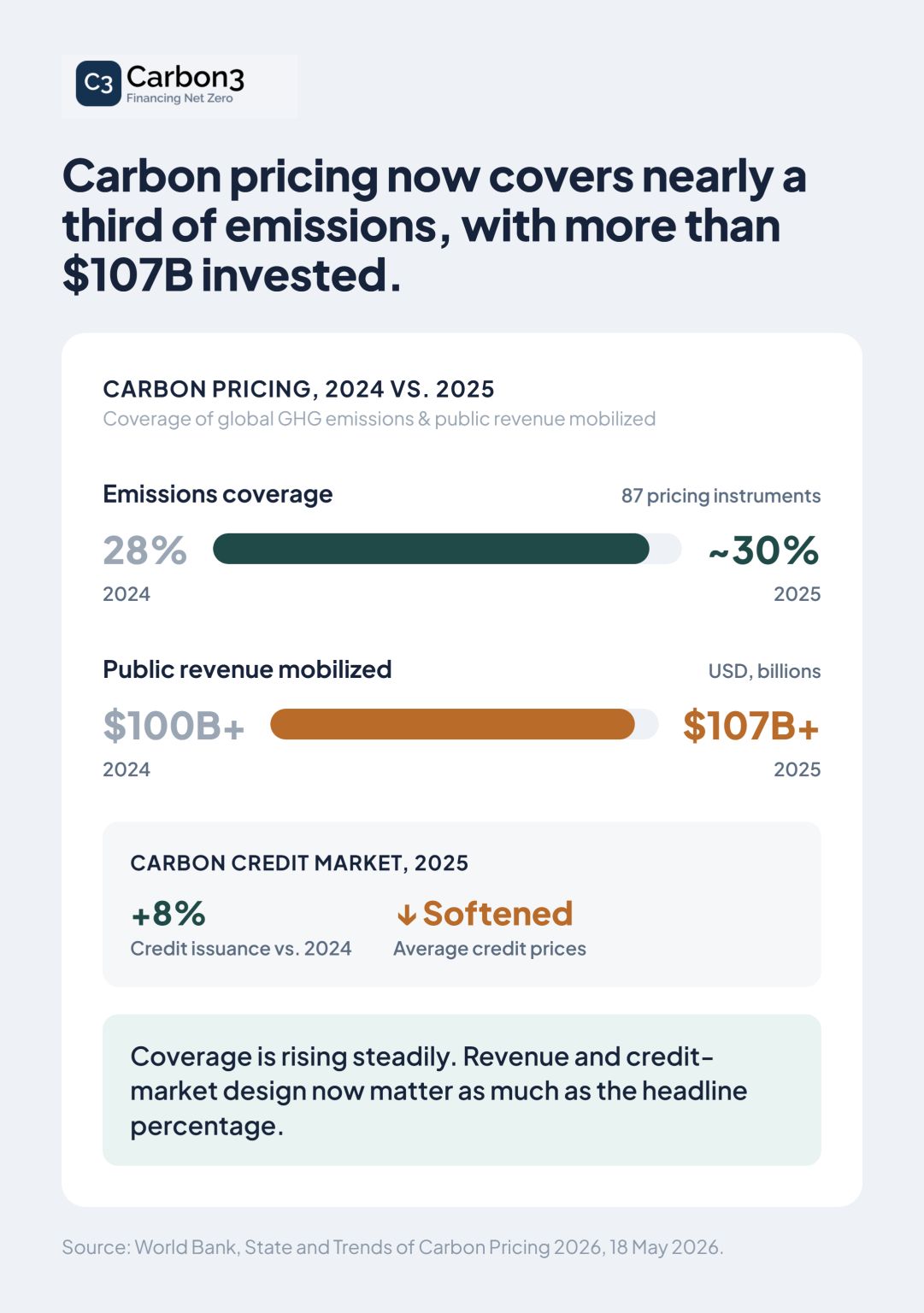
Carbon pricing now covers nearly 30% of global greenhouse gas emissions and raised more than $107 billion for public budgets in 2025. The next question is not just whether emissions are priced, but how those revenues are recycled into competitiveness, resilience and real-economy decarbonization.
Coverage and revenue are the two figures that get quoted, but the third question in the post is the one that decides whether pricing changes behavior. Revenue that is returned as compensation preserves the status quo. Revenue that is recycled into competitiveness and real-economy abatement changes the investment case for the industries being priced.
Recycling is also where corporate value chains can act without waiting for governments. A buyer facing a carbon cost on imported steel or cement has a financial reason to fund the supplier's reduction directly and to recover part of the value as a Scope 3 claim. That private recycling channel is what insetting provides.
Learn more
How the standards apply to inset credits
Originally published on LinkedIn, 20 July 2026.
Read more from the research team.
Policy
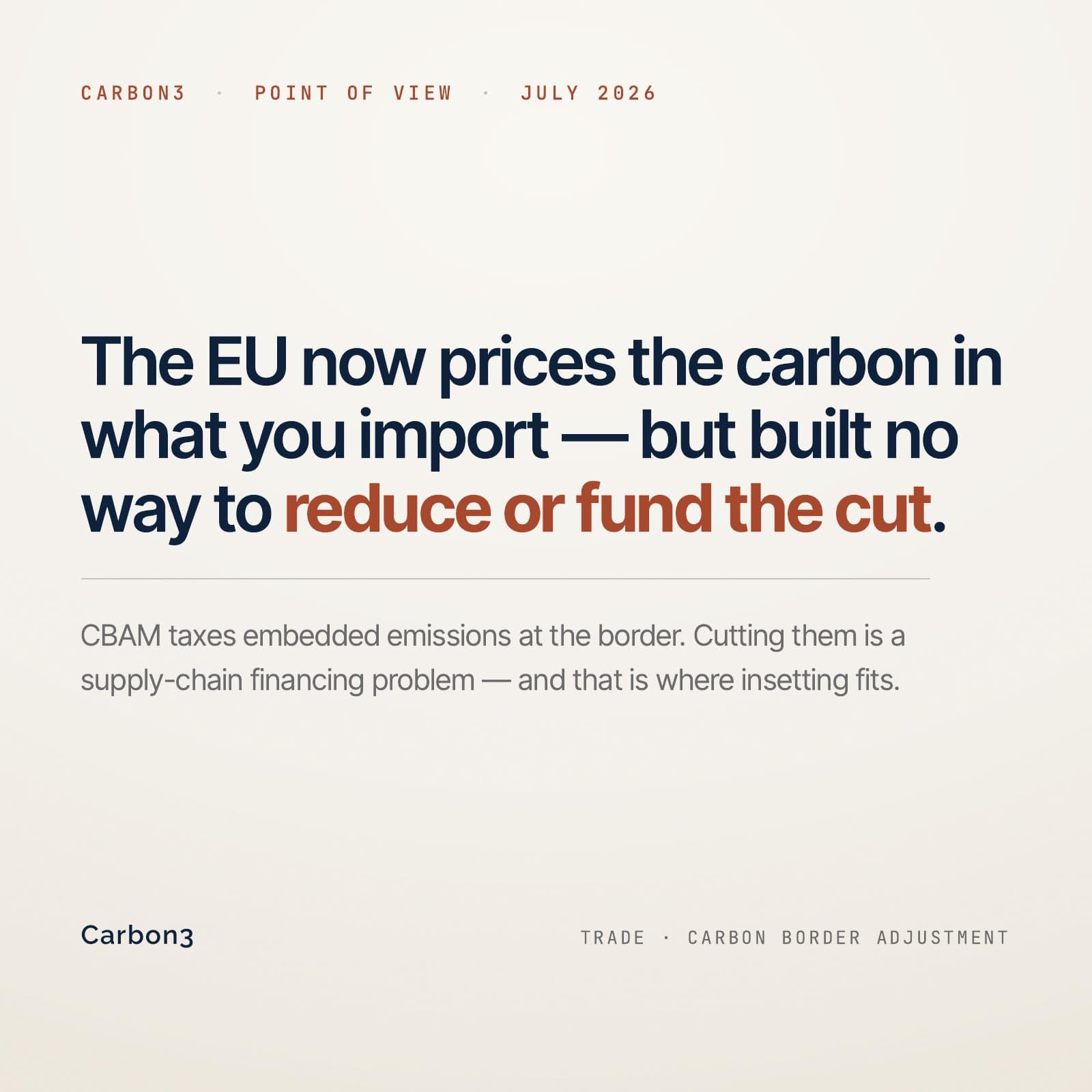
CBAM prices the tonne but does not fund removing it
The importer measures and pays, and the emissions stay.
Read the articlePolicy
Three signals from the last week of August 2026
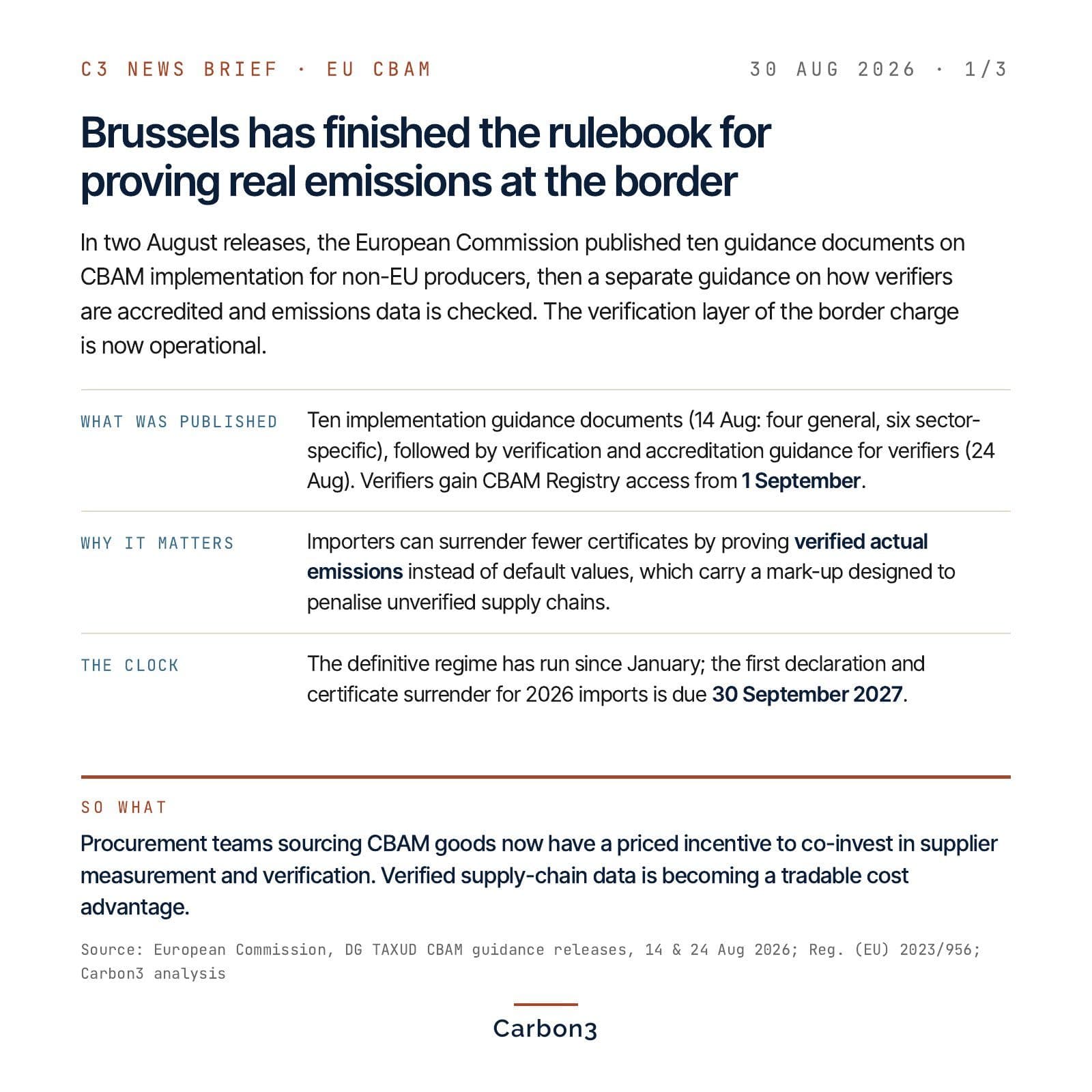
CBAM verification guidance, Japan's carbon market design and an EU ETS price above €80 all point the same way for procurement teams.
Read the articlePolicy
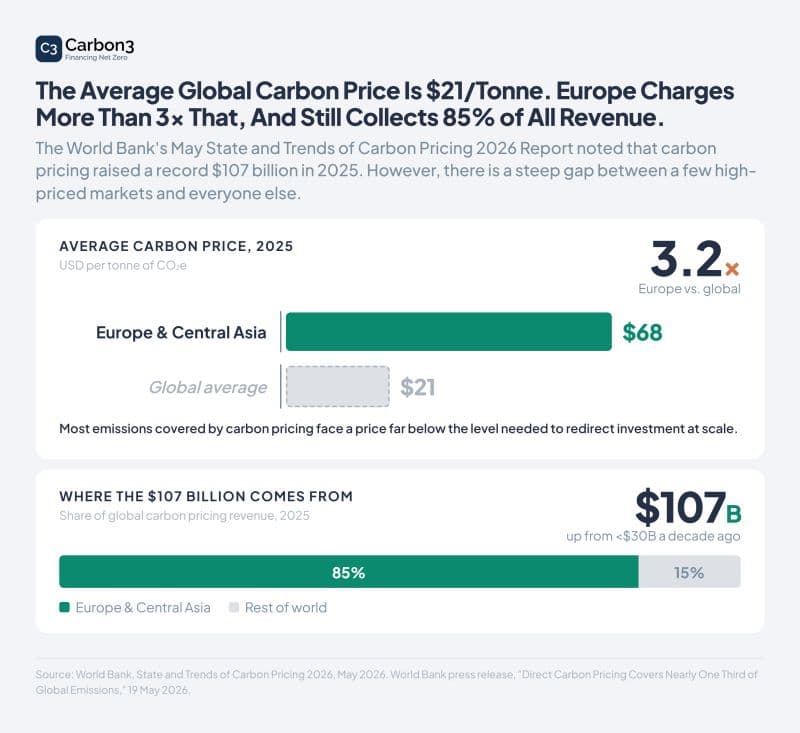
Outside Europe, the global average carbon price is $21 a tonne
Carbon pricing covers 29 percent of global emissions and raised $107 billion, but the average price is far below what redirects investment.
Read the article
See the companies behind these figures in the Data Hub.
Look up your suppliers’ emissions and targets, free.