Three numbers behind the insetting paradox
Most emissions sit in Scope 3, funding a supplier's emissions reduction recovers nothing today, and one inset credit changes that.
By Carbon3 team1 min read
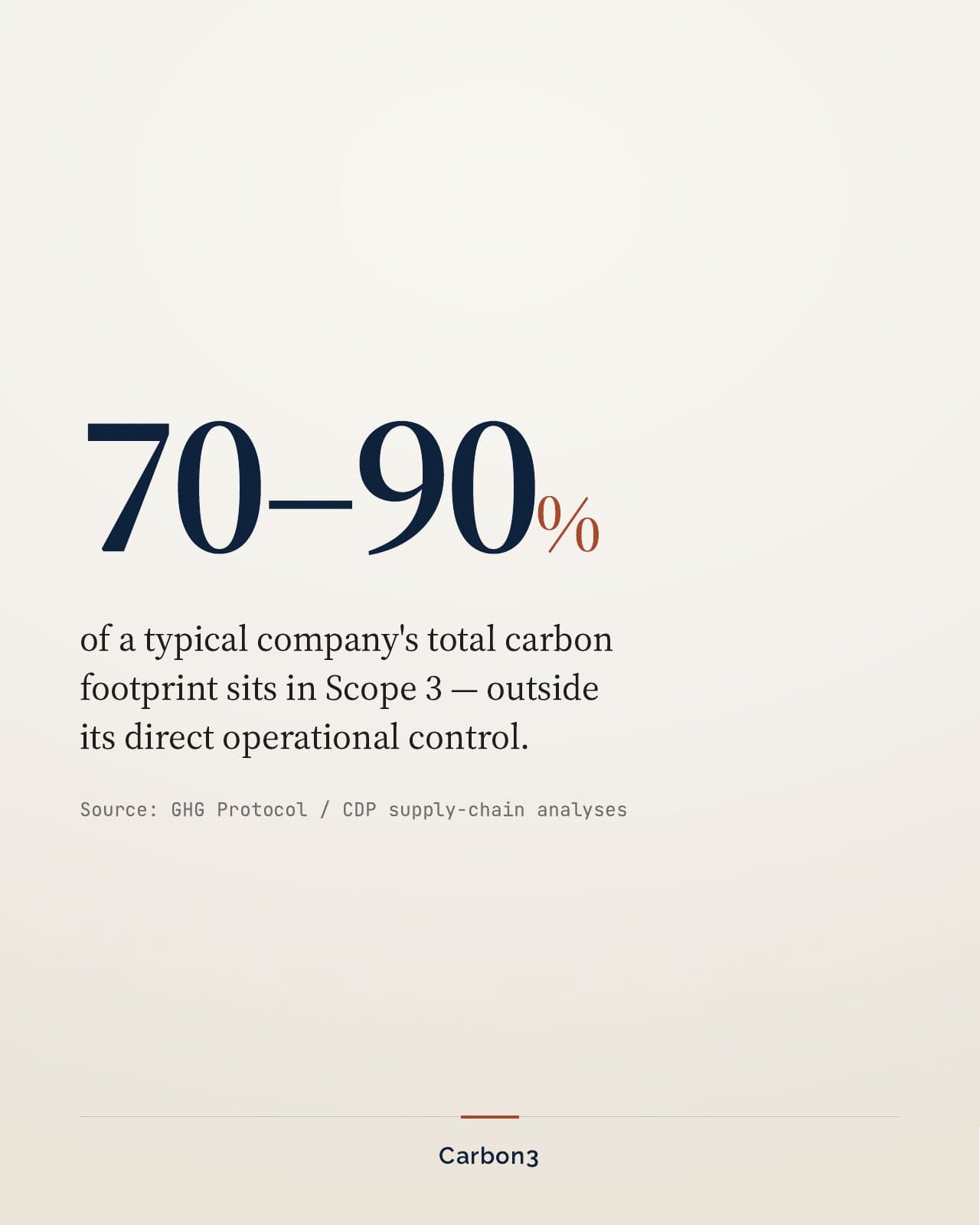
Three numbers explain why supply-chain decarbonization stays underfunded, and what would change it.
Between 70 and 90 percent of a typical company's carbon footprint sits in Scope 3, outside its direct operational control. That is where most of the emissions are, and it is where climate targets now point.
Today, a buyer who funds a supplier's abatement recovers nothing for it. The spend books as a pure expense, with no asset on either balance sheet.
An inset credit changes that equation. One credit stands for one tonne of CO2e verifiably reduced inside the value chain, checked independently and carried with a full audit trail. Because the problem is structural, the fix has to be market infrastructure.
Document
The full document, as a PDF
Free to download once you have a free account. No payment details are needed.
Originally published on LinkedIn, 16 July 2026.
The Carbon3 Newsletter
Weekly analysis of industrial decarbonization and insetting across Scope 1 to 3, from the Carbon3 team.
Read more from the research team.
Market structure
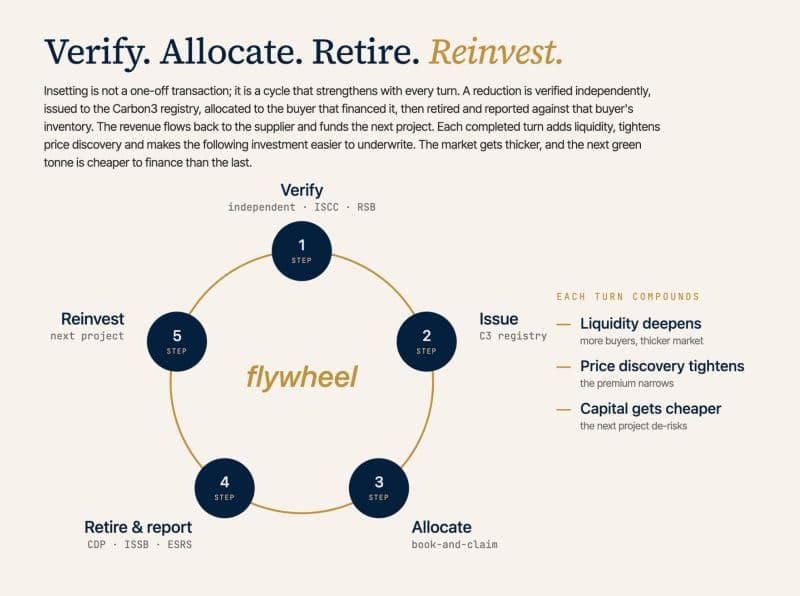
Insetting is a cycle, not a transaction
Each completed turn adds liquidity, tightens price discovery and makes the next green tonne cheaper to finance.
Read the articleMarket structure
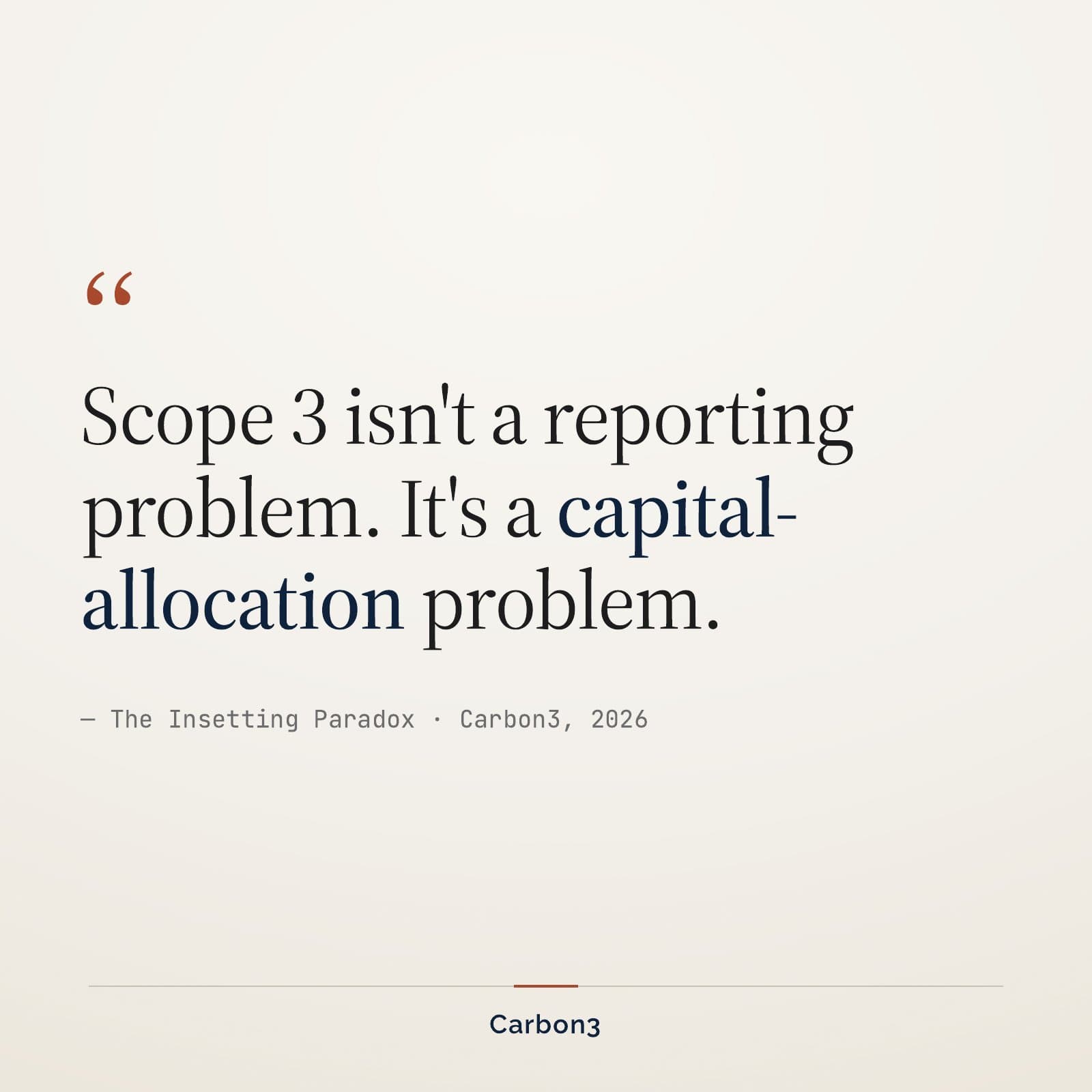
Scope 3 isn't a reporting problem. It's a capital-allocation problem.
Why supply-chain decarbonization stays unfunded, and what kind of fix it actually needs.
Read the articleProduct
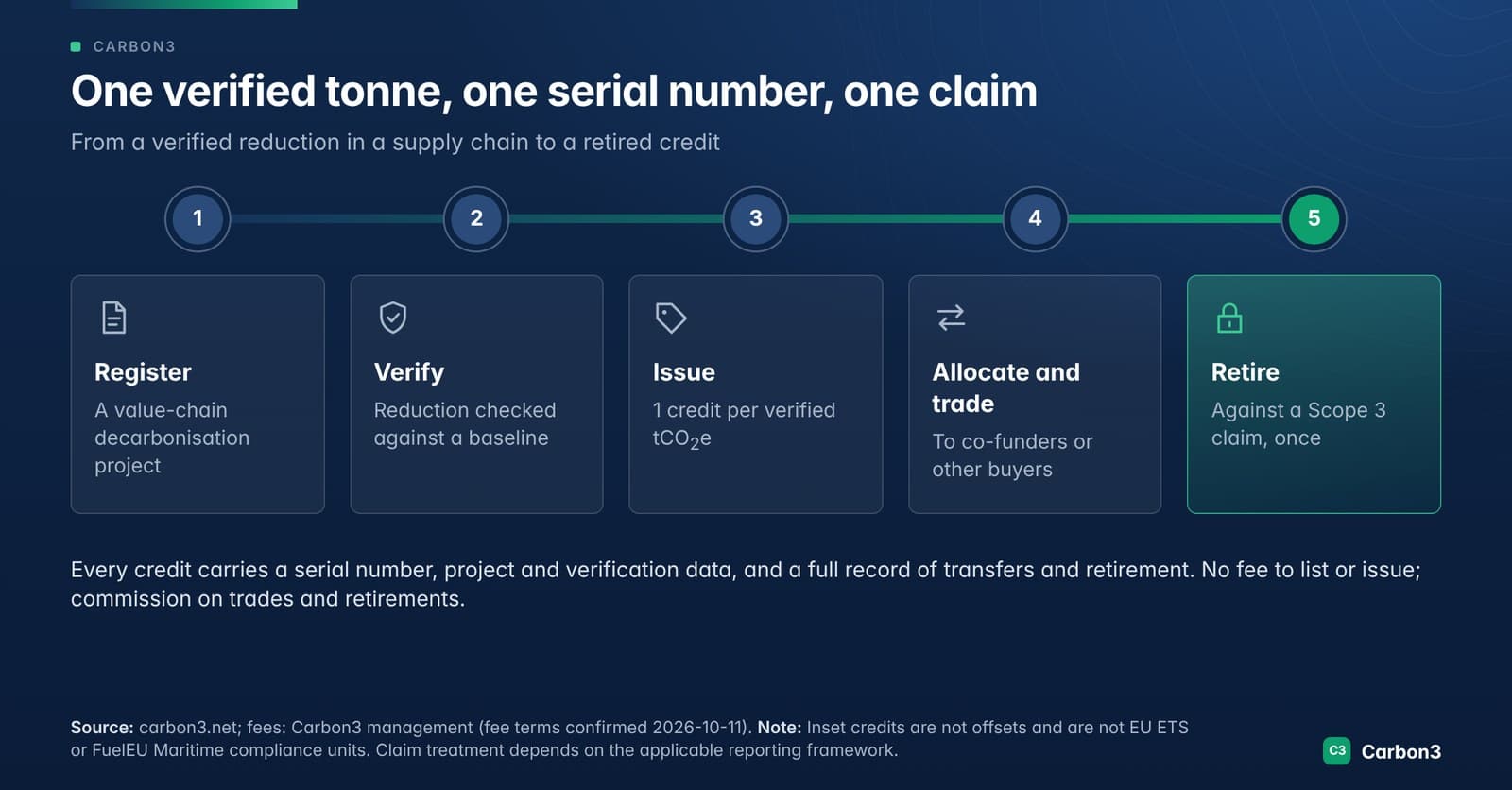
One verified tonne, one serial number, one claim
The five stages a reduction passes through on Carbon3, from supplier project to retired credit, and the record each stage leaves so the same tonne is never claimed twice.
Read the article
See the companies behind these figures in the Data Hub.
Look up your suppliers’ emissions and targets, free.