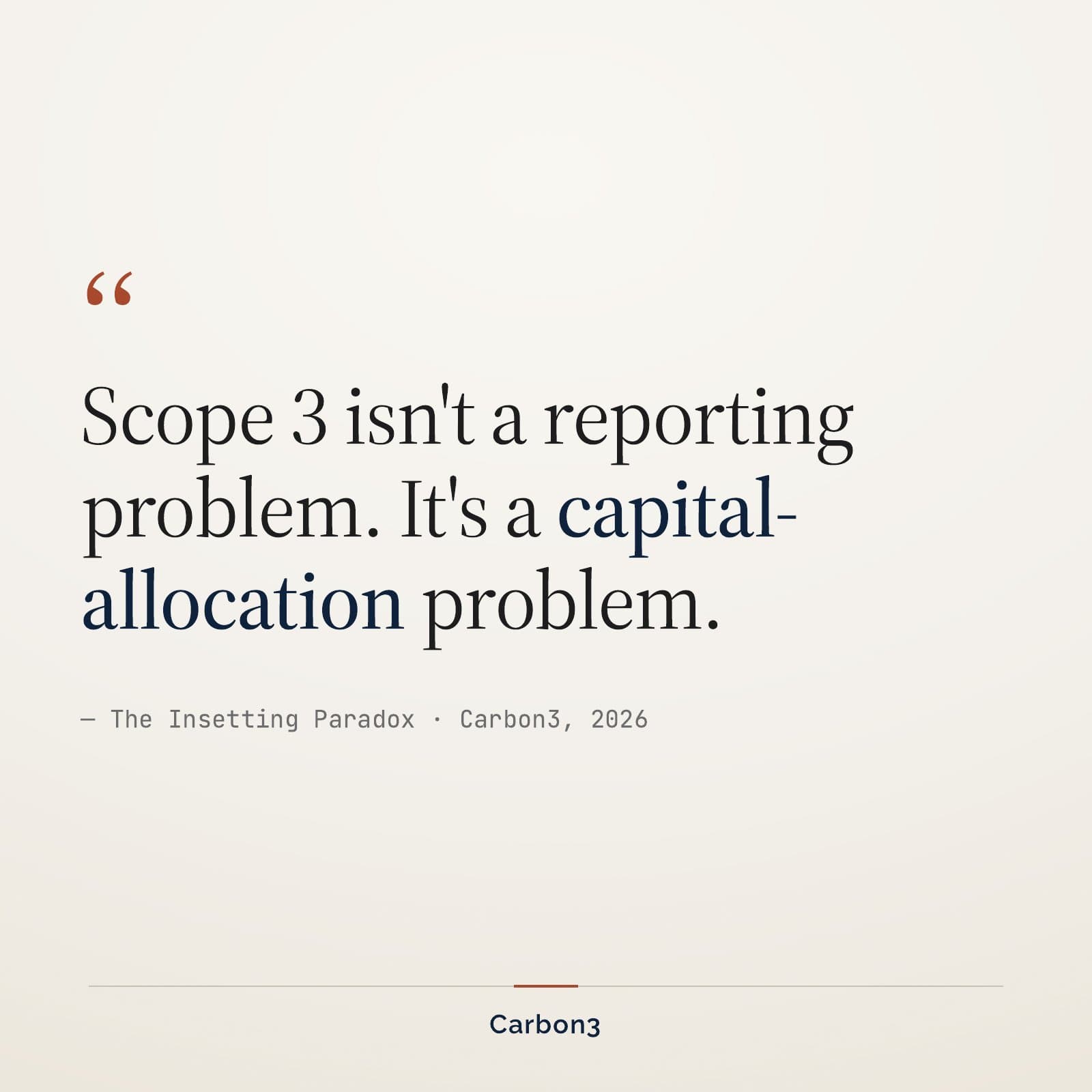
Scope 3 isn't a reporting problem. It's a capital-allocation problem.
Why supply-chain decarbonization stays unfunded, and what kind of fix it actually needs.
By Carbon3 team1 min read
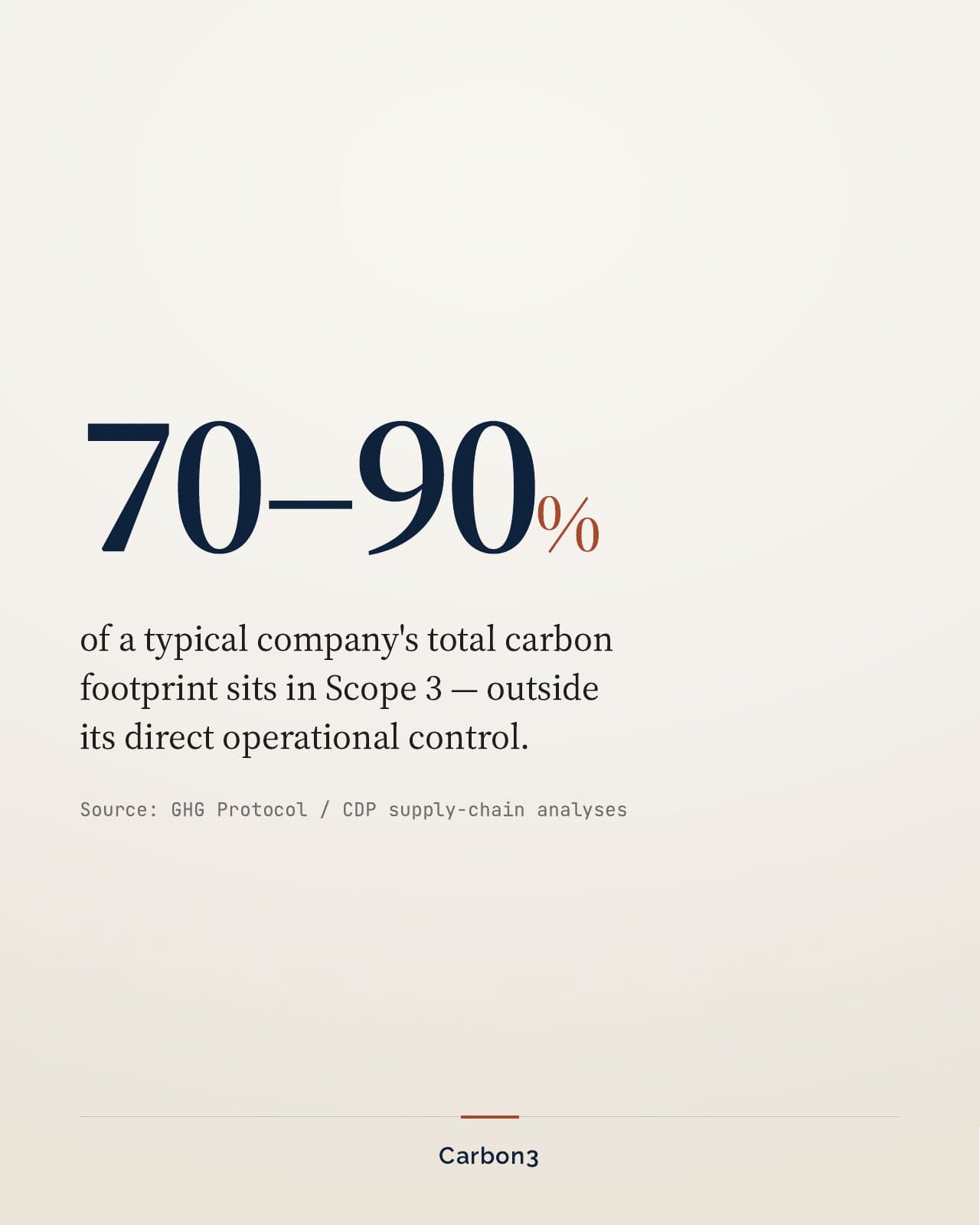
Most of a typical company's footprint sits in Scope 3, in a supply chain it is accountable for but does not control. Targets under SBTi, CSRD and IFRS S2 bind the buyer, while the levers to reduce emissions sit with its suppliers.
The trouble is how the money is booked. When a buyer funds a supplier's abatement, today's accounting treats it as a sunk cost on both sides of the transaction. The supplier who reduces its emissions earns nothing extra for doing so, so capital flows the wrong way or does not flow at all.
This carousel sets out the problem, the mechanism and why it matters now. The fix is not more disclosure. It is market infrastructure that turns a verified tonne reduced inside the value chain into a priced asset that can be allocated, traded and retired against a Scope 3 claim.
Document
The full document, as a PDF
Free to download once you have a free account. No payment details are needed.
Originally published on LinkedIn, 18 July 2026.
The Carbon3 Newsletter
Weekly analysis of industrial decarbonization and insetting across Scope 1 to 3, from the Carbon3 team.
Read more from the research team.
Market structure
Three numbers behind the insetting paradox
Most emissions sit in Scope 3, funding a supplier's emissions reduction recovers nothing today, and one inset credit changes that.
Read the articleMarket structure
Carbon markets 2026: flat on the surface, splitting underneath
Where the voluntary carbon market and corporate supply-chain climate action are heading, based on registry data, new standards and disclosed deals.
Read the articleTransition finance
Supply-chain decarbonization is a demand and financing problem
Global emissions rose 0.2% in the first half of 2026.
Read the article
See the companies behind these figures in the Data Hub.
Look up your suppliers’ emissions and targets, free.