Insetting is a cycle, not a transaction
Each completed turn adds liquidity, tightens price discovery and makes the next green tonne cheaper to finance.
By Carbon3 team1 min read
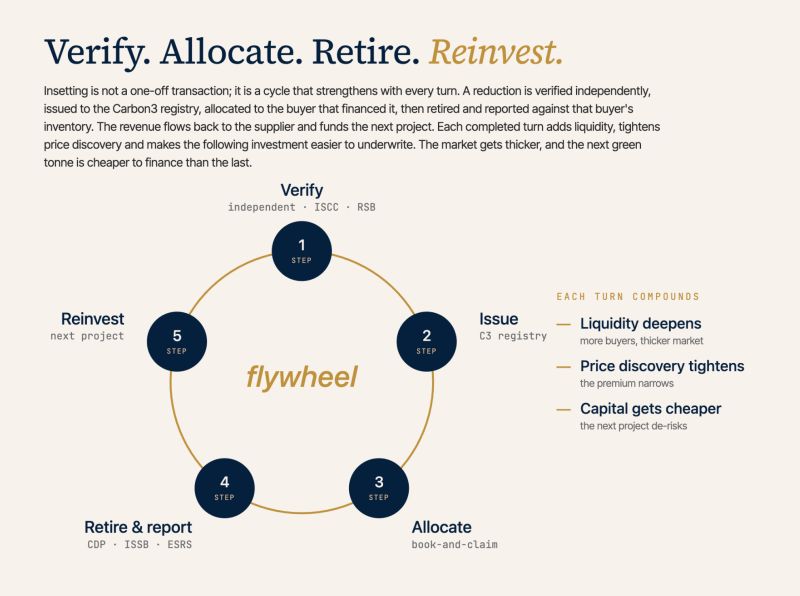
Unlike offsetting, insetting is not a one-off transaction, it is a cycle that strengthens with every turn
A reduction is checked against a verification report, registered in a public registry, shared with the partners that financed it, then retired and reported against each buyer's inventory. The revenue flows back to the supplier and funds the next project.
Each completed turn adds liquidity, tightens price discovery and makes the following investment easier to underwrite. The market gets thicker, and the next green tonne is cheaper to finance than the last.
Carbon3 provides the transactional infrastructure for collaboration and decarbonization of supply chains. Learn more in our latest 2026 Aviation Outlook report linkedin.com
Learn more
How insetting works, step by step
Originally published on LinkedIn, 28 May 2026.
Read more from the research team.
Market structure
Decarbonization is being reframed as energy security
The latest energy shock is a reminder that dependence on fossil supply carries geopolitical and commercial risk.
Read the articleMarket structure
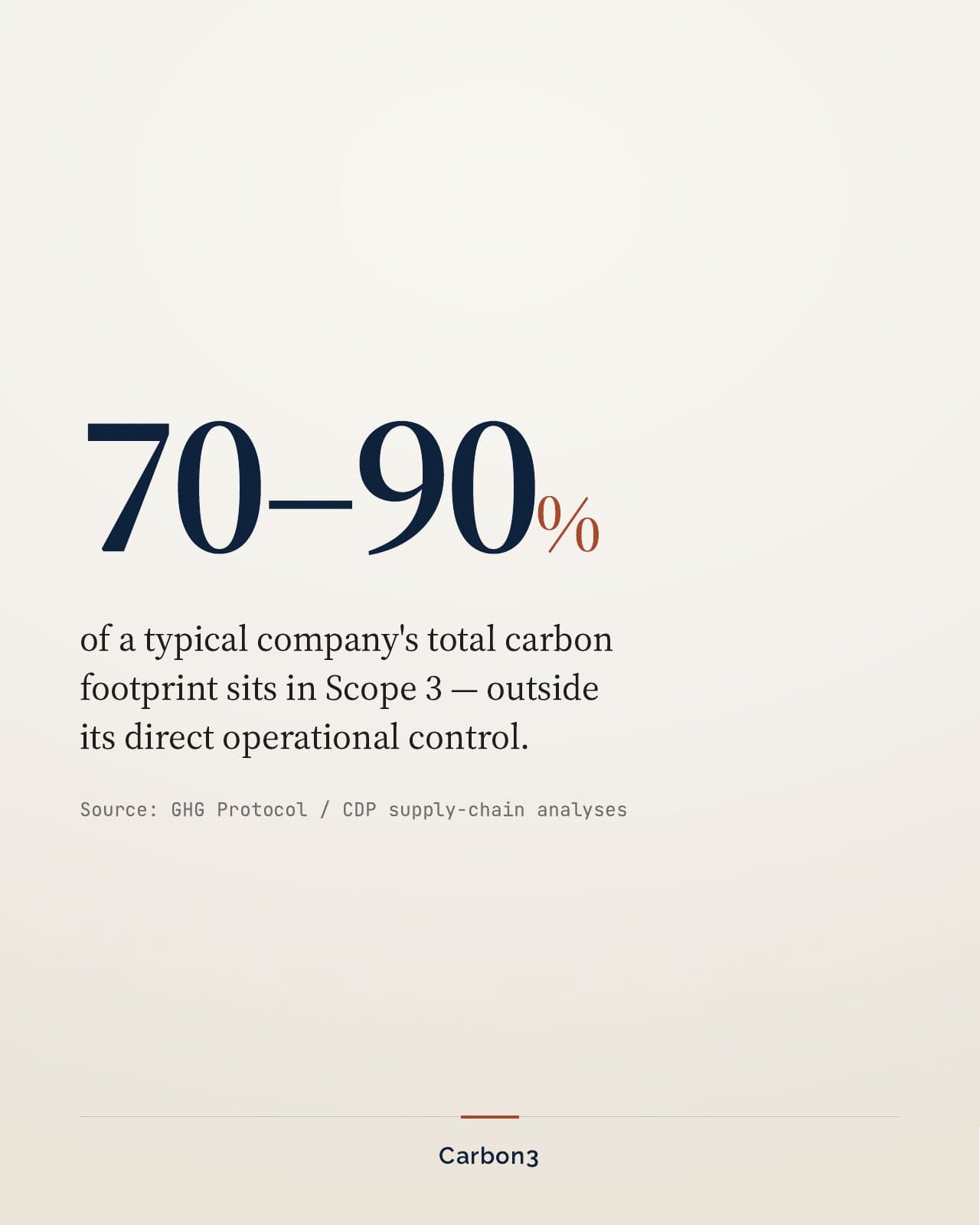
Three numbers behind the insetting paradox
Most emissions sit in Scope 3, funding a supplier's emissions reduction recovers nothing today, and one inset credit changes that.
Read the articleTransition finance
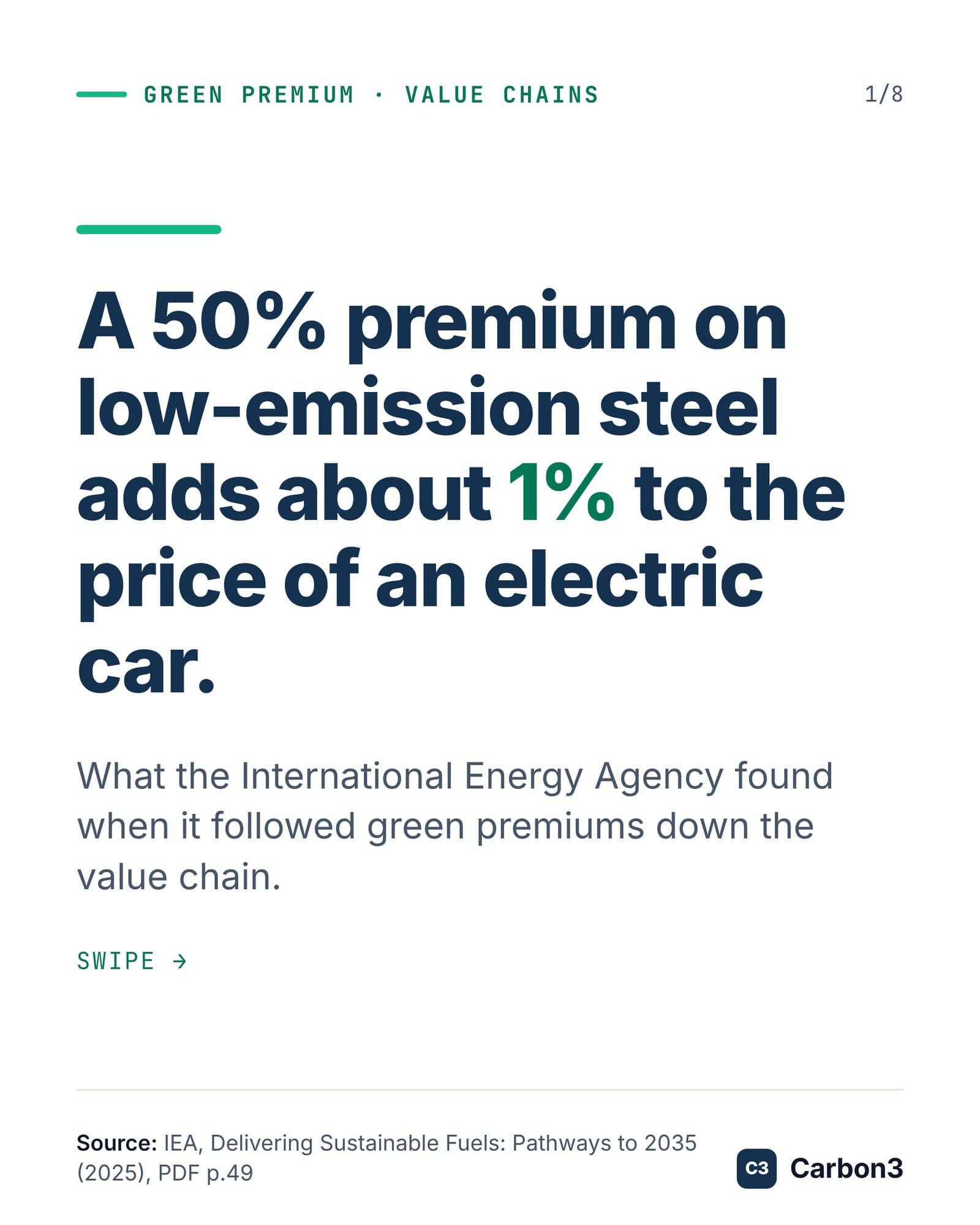
A 50% premium on low-emission steel adds about 1% to the price of an electric car
The International Energy Agency followed green premiums from steel to electric cars and from ship fuel to smartphones.
Read the article
See the companies behind these figures in the Data Hub.
Look up your suppliers’ emissions and targets, free.