The Europe Outlook 2026
Carbon costs at the EU border become a commercial reality. The challenge for supply chains is financing reductions further upstream.
By Carbon3 team1 min read
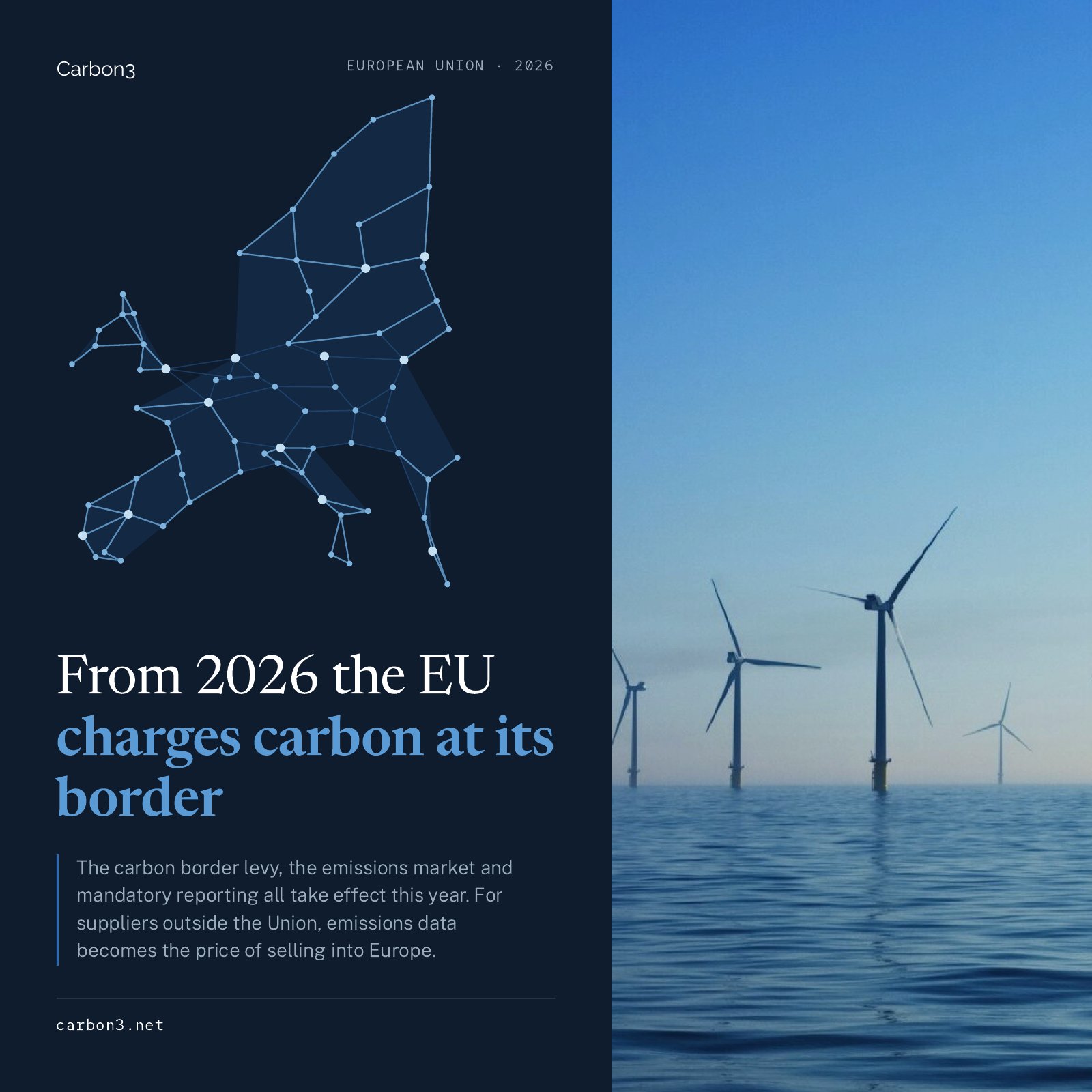
The Europe Outlook by Carbon3 is here. Carbon costs at the EU border become a commercial reality, and verified emissions data starts to shape market access. But the challenge for many supply chains is not just compliance, it is finding practical ways to finance reductions further upstream.
For companies and their suppliers, this creates both pressure and opportunity. Insetting provides a structure that can channel capital into verified reductions inside supply chains rather than treating the border levy as the only response. This report maps the landscape and the financing pathways that are emerging.
Document
The full document, as a PDF
Free to download once you have a free account. No payment details are needed.
Learn more
How insetting works, step by step
Originally published on LinkedIn, 13 August 2026.
Read more from the research team.
Outlook
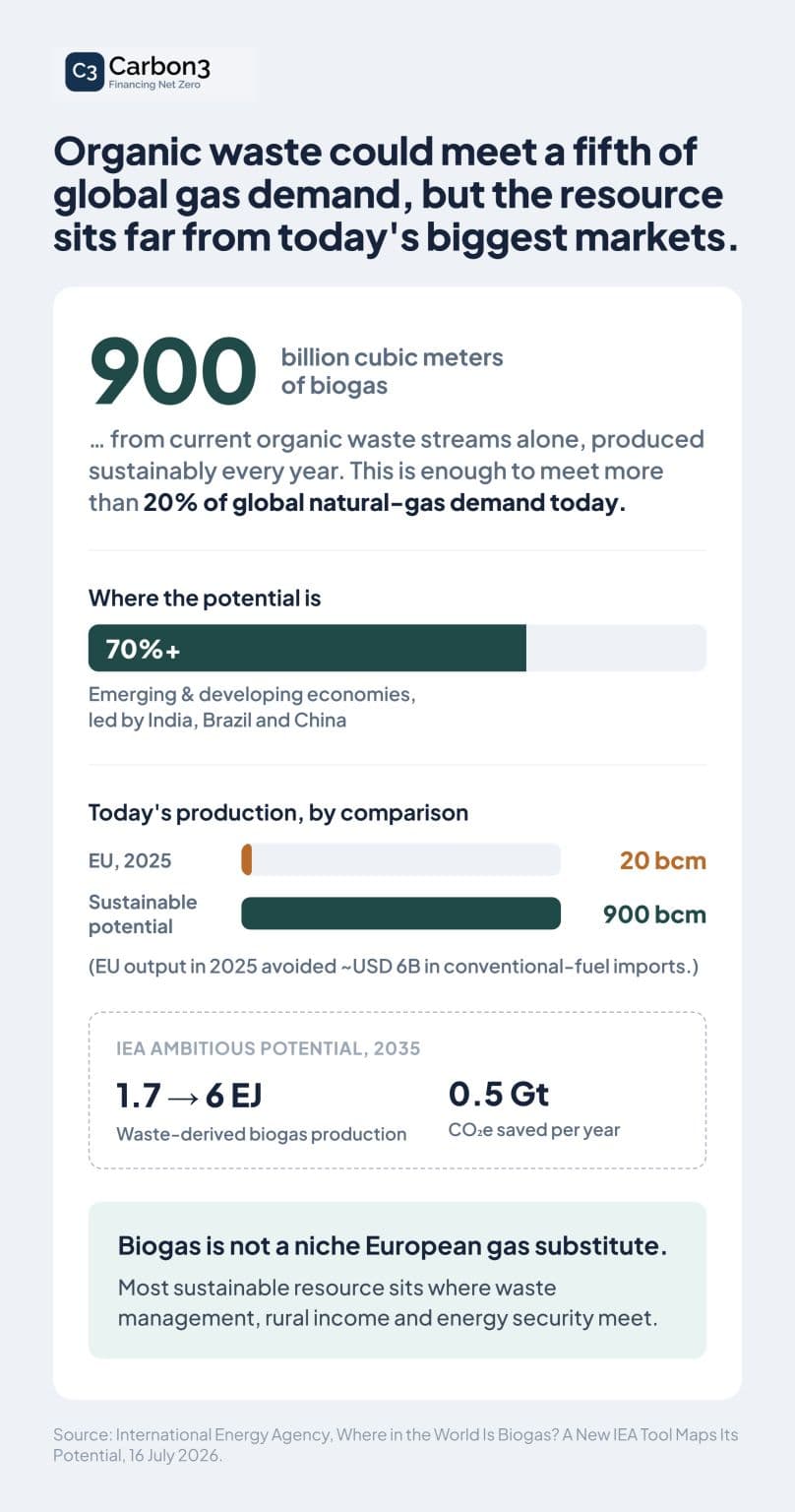
Organic waste could supply a fifth of today's natural gas demand
More than 70 percent of the potential resource sits in emerging and developing economies, which links waste management to local energy resilience.
Read the articleOutlook
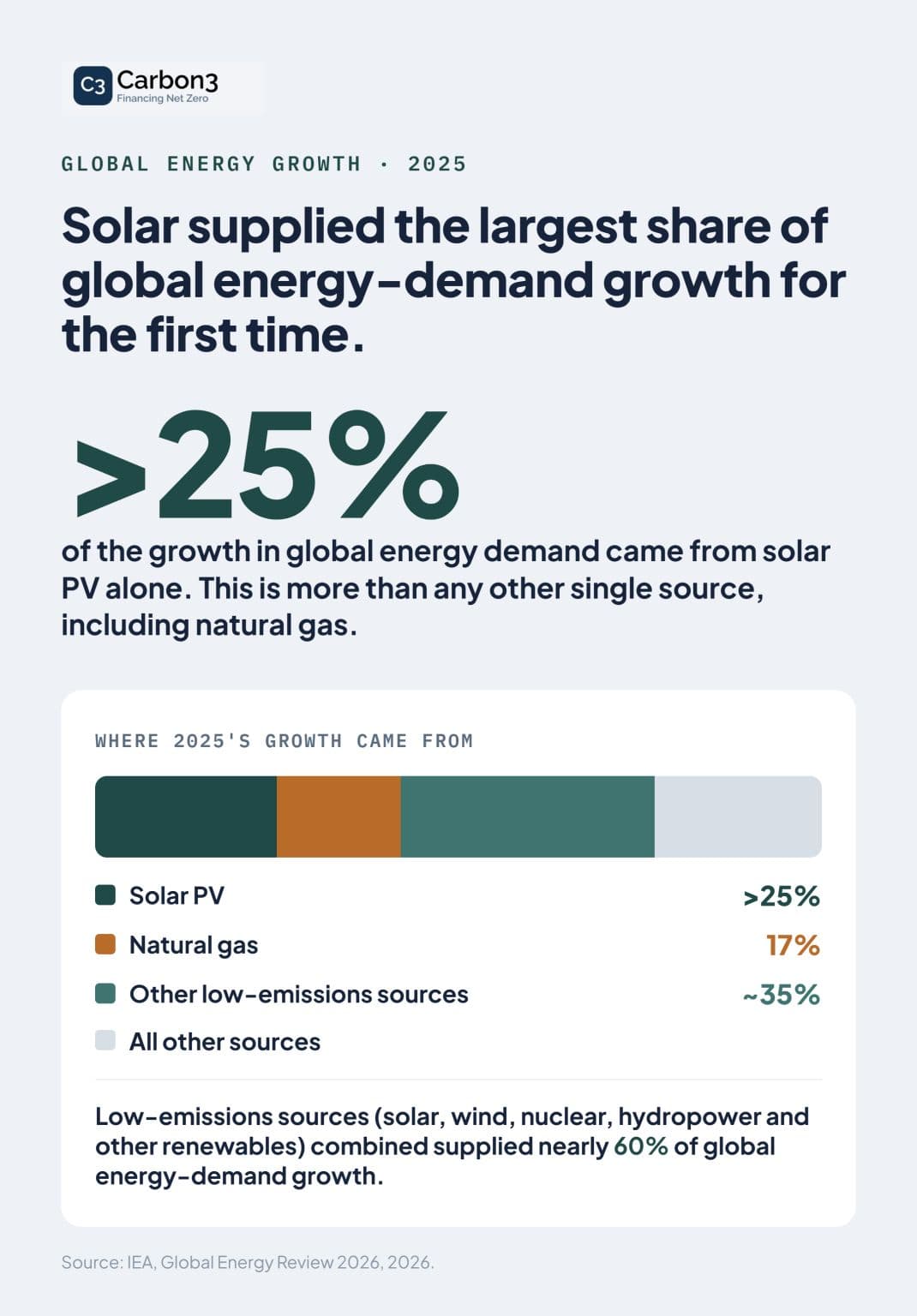
Solar is now the largest source of global energy-demand growth
For the first time solar supplied more than a quarter of the growth in global energy demand, and low-emissions sources together delivered nearly 60 percent.
Read the articleSector: Steel
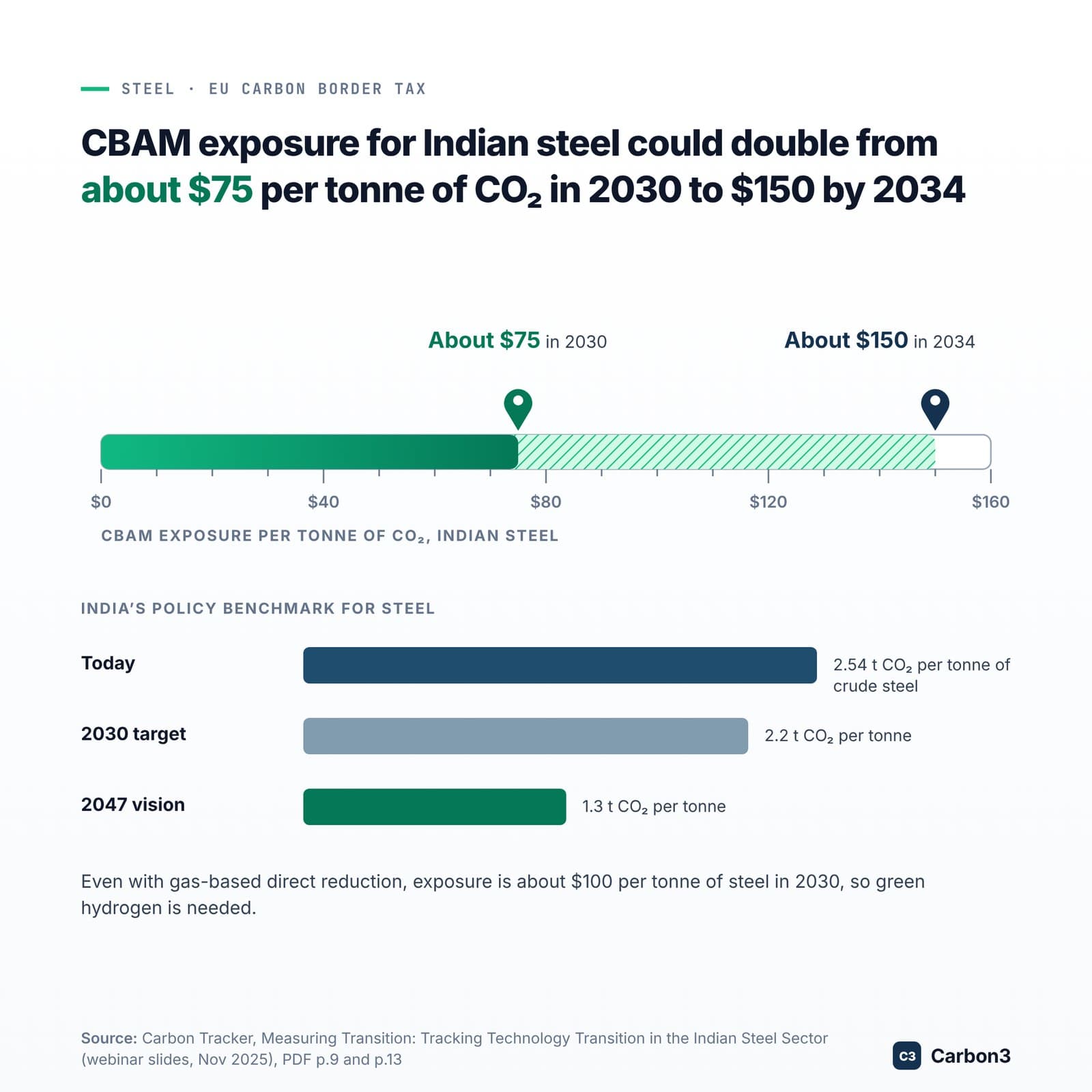
Europe's carbon border tax is about to get expensive for Indian steel
Carbon Tracker puts CBAM exposure for Indian steel at about $75 per tonne of CO2 in 2030, rising to about $150 by 2034, and European importers pay it.
Read the article
See the companies behind these figures in the Data Hub.
Look up your suppliers’ emissions and targets, free.