The Aviation Outlook 2026
Clean jet fuel is not a technology problem. The plants will not get built until buyers commit.
By Carbon3 team1 min read
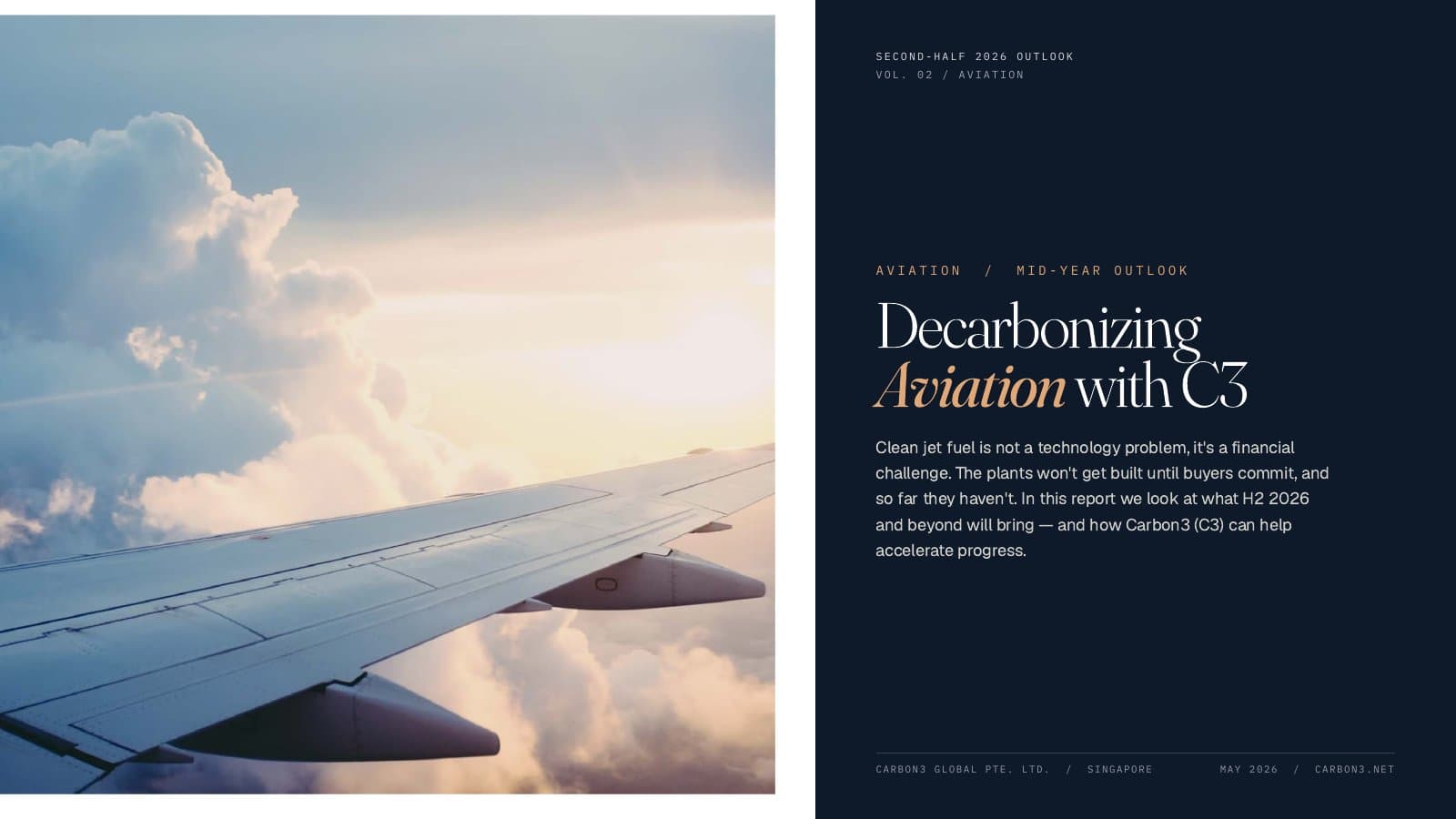
The 2026 (H2) Sustainable Aviation Outlook by Carbon3
Clean jet fuel (SAF) is not a technology problem, it's a financial challenge. The fuel plants won't get built until buyers commit, and so far they haven't. In this report we look at what H2 2026 and beyond will bring, and how Carbon3 (Carbon3) can help accelerate progress.
"The main barrier to reaching the airline industry's goal of net zero emissions by 2050 is the slow pace of technology rollout that would enable SAF to be produced from varied sources, and not the availability of feedstock." - International Air Transport Association (IATA)
In other words: there is enough raw material. What is missing is built factory capacity for the newer fuel routes, turning waste alcohol, captured CO₂ or biomass into jet fuel at scale. None of those plants get built until market signals arise and financial incentives become available. But there are solutions ...!
A special thanks to Gbemi Oluleye PhD FHEA and Licia Driscoll for contributing!
Document
The full document, as a PDF
Free to download once you have a free account. No payment details are needed.
Originally published on LinkedIn, 21 May 2026.
The Carbon3 Newsletter
Weekly analysis of industrial decarbonization and insetting across Scope 1 to 3, from the Carbon3 team.
Read more from the research team.
Outlook
The Maritime & Shipping Outlook 2026
Carbon just became a P&L line.
Read the articleOutlook
The Iron & Steel Outlook 2026
The furnace already works.
Read the articleSector: Aviation
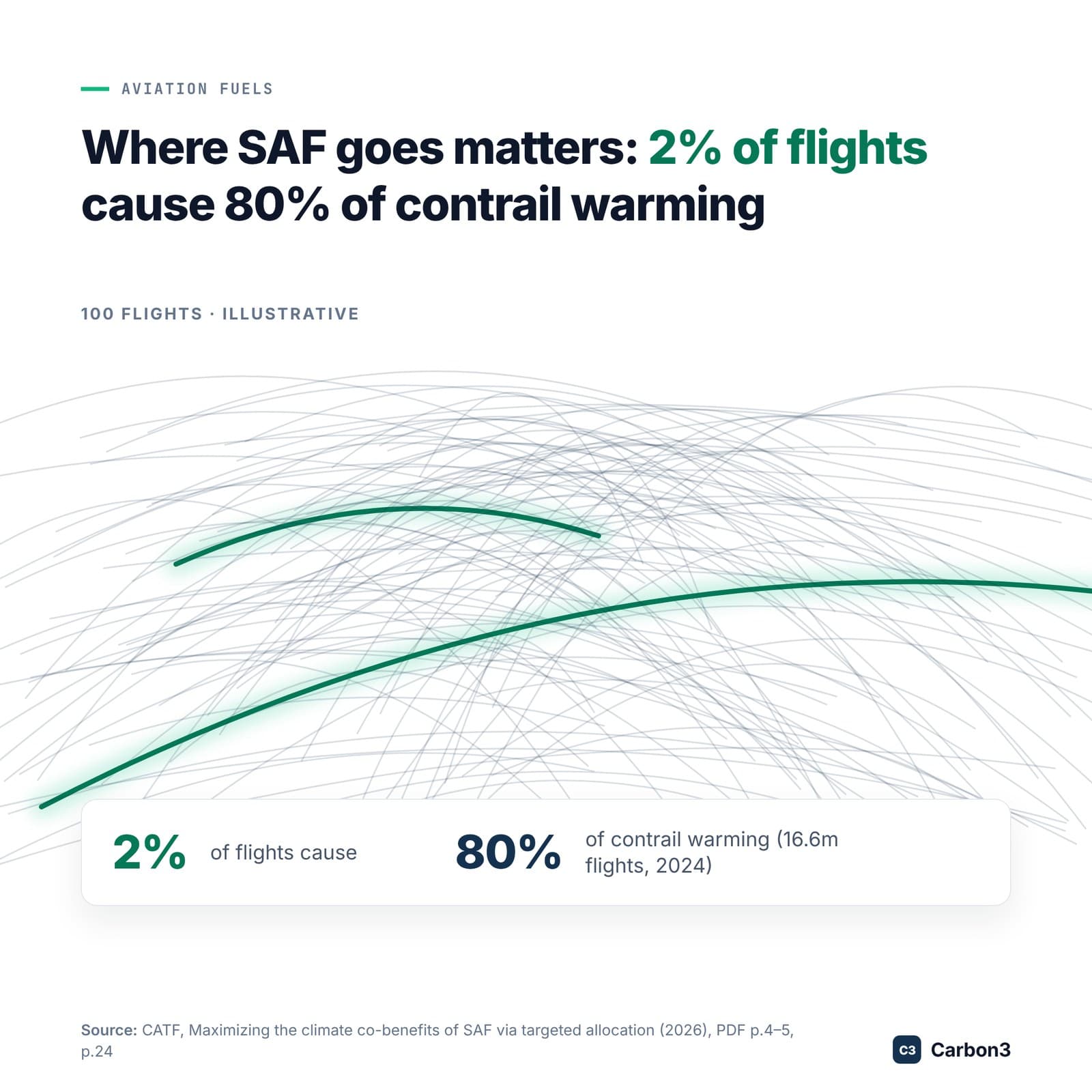
Not every liter of sustainable aviation fuel does the same climate work
Clean Air Task Force finds about 2% of flights cause 80% of contrail-related warming, which makes where scarce SAF is burned, and how it is traced, matter for Scope 3 buyers.
Read the article
See the companies behind these figures in the Data Hub.
Look up your suppliers’ emissions and targets, free.