87 carbon pricing schemes, and 'Scope 3' appears once
The World Bank's State and Trends of Carbon Pricing 2026 counts 87 schemes. In 76 pages, 'Scope 3' appears once.
By Carbon3 team2 min read
The World Bank's State and Trends of Carbon Pricing 2026 counts 87 carbon pricing schemes in operation. Across the report's 76 pages, the term 'Scope 3' appears once.
What the report covers
State and Trends is the standard annual reference on carbon pricing. It tracks emissions trading systems and carbon taxes around the world: where they operate, what they cover and what they raise. Its 2026 edition shows a policy tool that keeps spreading, with 87 schemes now in place.
What it leaves out
The single mention of Scope 3 is not an oversight so much as a reflection of how carbon pricing works. Carbon prices are levied on emitters: power plants, industrial facilities, fuel suppliers, in some cases ships. They price direct emissions at the point where they occur.
Scope 3 emissions are, by definition, someone else's direct emissions, seen from further along the value chain. A company buying steel, freight or chemicals carries those emissions in its Scope 3 inventory, but the carbon price, where there is one, lands on the producer.
Why the gap matters
For most companies, Scope 3 is the largest part of the footprint. Carbon pricing influences those emissions only indirectly, through whatever share of the cost a supplier passes on in its prices. Where a supplier sits outside a priced jurisdiction, or in a sector a scheme does not cover, there may be no price signal at all.
That leaves a large share of corporate emissions where the main driver of change is not a compliance system but the relationship between buyer and supplier: what the buyer asks for, what it is willing to pay for, and how the result is recorded.
Where value-chain action fits
This is the space Carbon3 works in. Carbon pricing remains essential for direct emissions. Alongside it, buyers can co-fund verified reductions at their suppliers and record them as inset credits, so the reduction is tied to the value chain where it happened and to the party that holds it.
Insetting is not offsetting, and it is not a carbon pricing instrument. It works on the emissions that the 87 schemes mostly do not reach.
A report on carbon pricing does not need to be about Scope 3. But one mention in 76 pages is a fair measure of how much of the value chain carbon pricing leaves to other tools.
Originally published on LinkedIn, 22 September 2026.
The Carbon3 Newsletter
Weekly analysis of industrial decarbonization and insetting across Scope 1 to 3, from the Carbon3 team.
Read more from the research team.
Policy
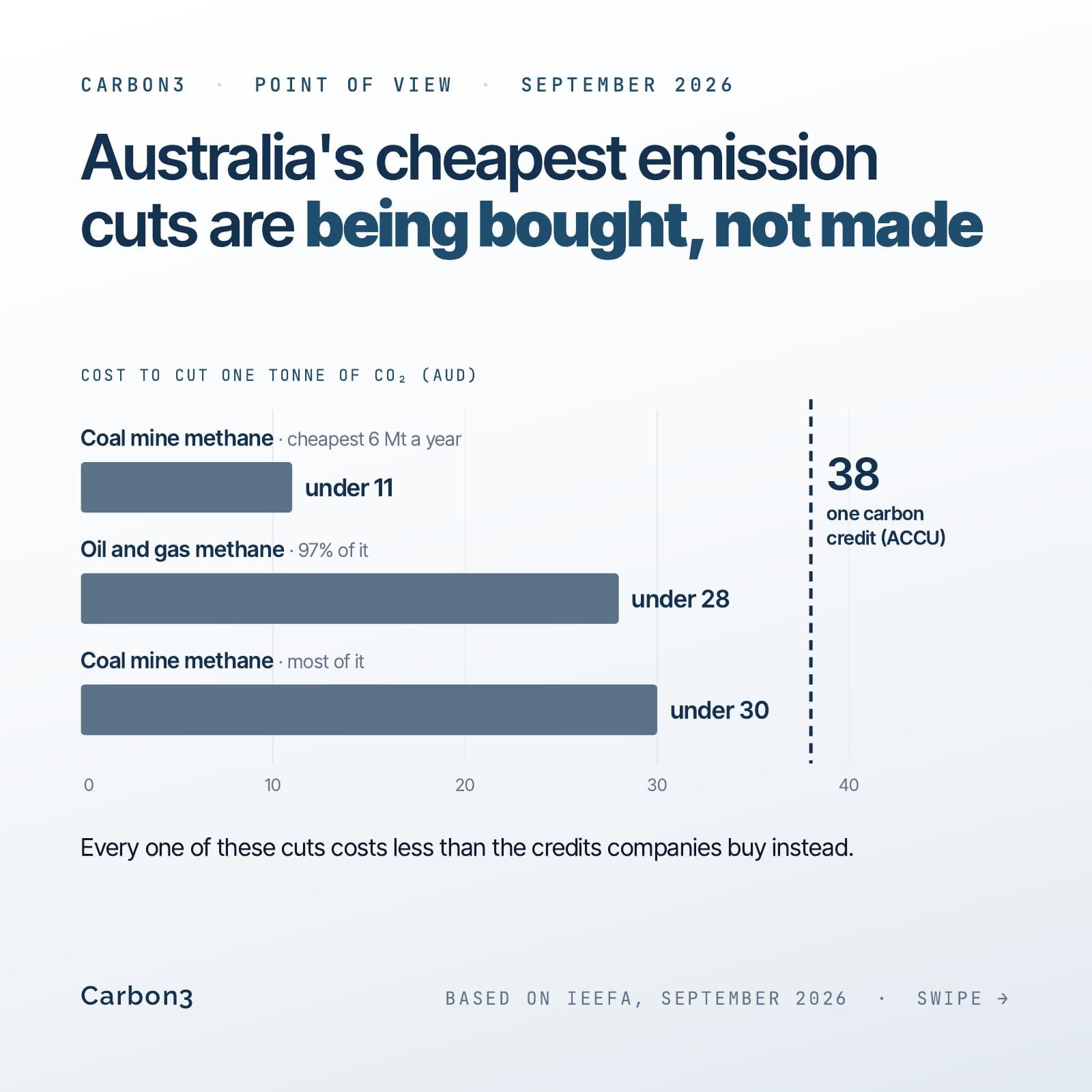
Australia's cheapest emissions reductions are being bought, not made
IEEFA finds capturing methane from coal and gas would cost less than A$30 a tonne, well under the price of a carbon credit.
Read the articlePolicy
CBAM in 2026: the bill accrues before certificates go on sale
No CBAM certificates can be bought in 2026, but 2026 imports are already priced.
Read the articleTransition finance
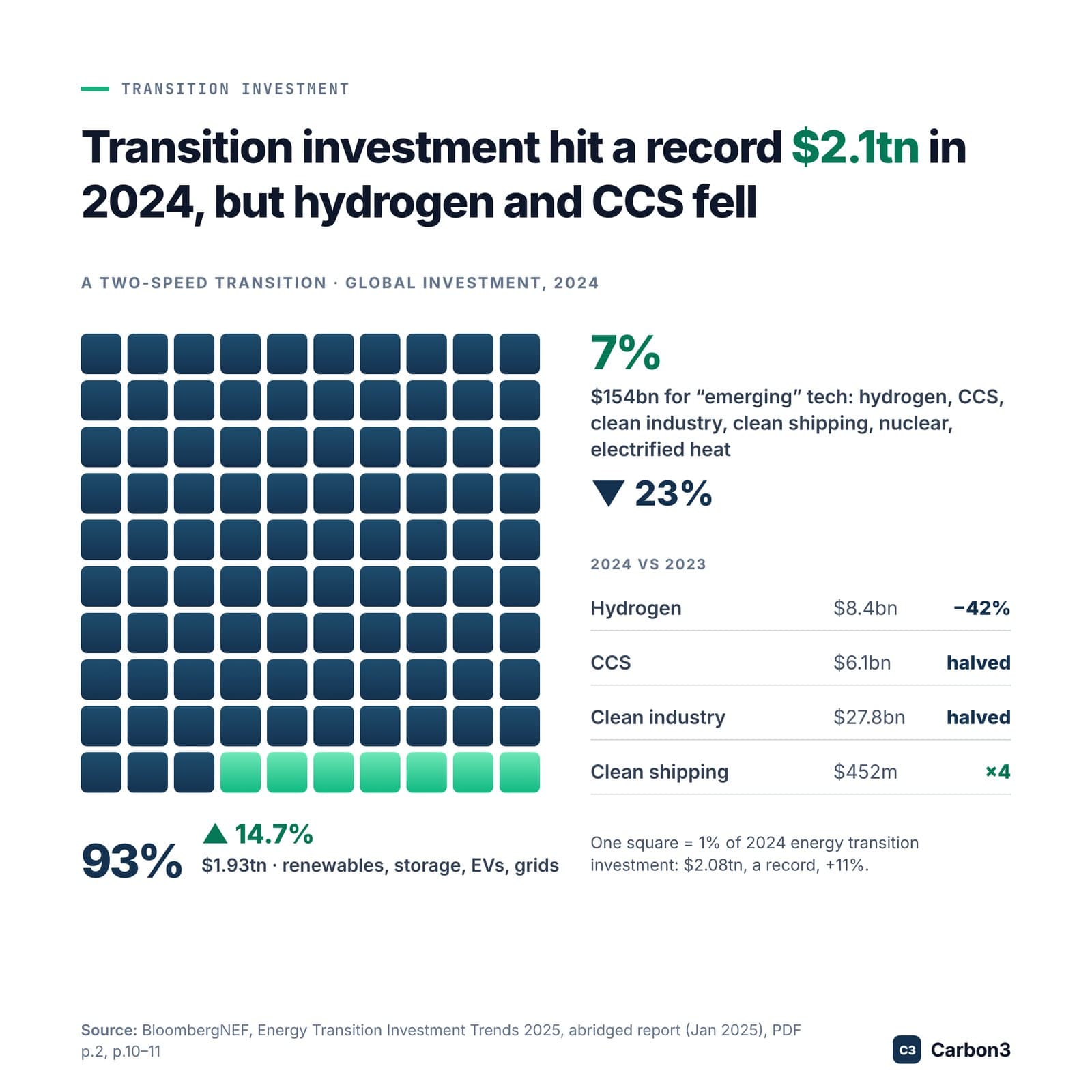
Transition investment hit a record, but not where heavy industry needs it
BloombergNEF counts a record $2.08 trillion in energy transition investment in 2024, yet hydrogen fell 42% and carbon capture and clean industry each roughly halved.
Read the article
See the companies behind these figures in the Data Hub.
Look up your suppliers’ emissions and targets, free.