Global electricity demand growth is accelerating again
After easing in 2025, the IEA expects demand growth to climb through 2027, adding more than the annual use of many major economies in two years.
By Carbon3 team1 min read
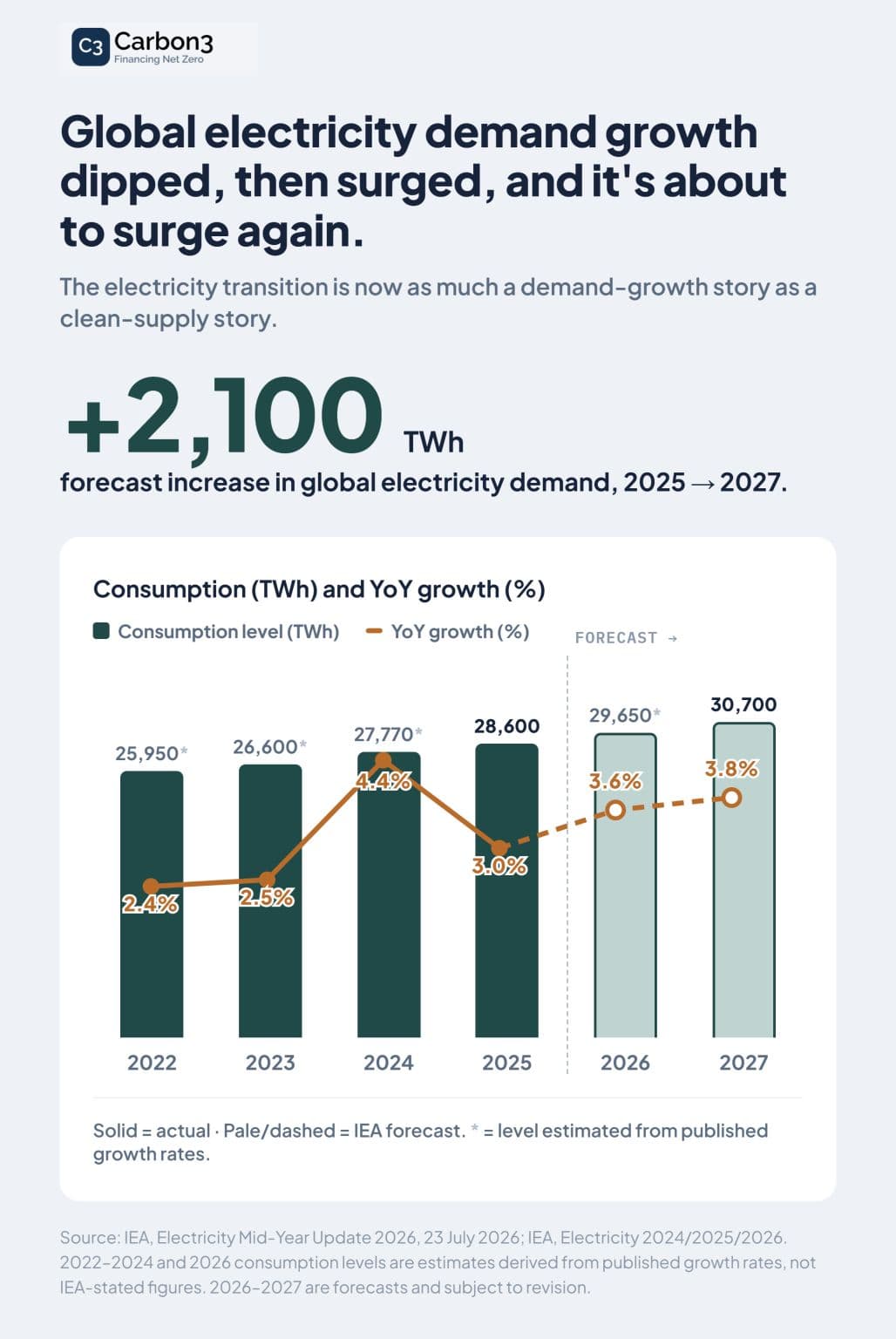
The growth rate of global electricity demand is accelerating. After easing to 3.0% in 2025, the IEA forecasts demand will jump to 3.6% in 2026 and 3.8% in 2027, adding 2,100 TWh in two years. This is more than the annual electricity use of many major economies.
Faster electricity growth changes the arithmetic of the transition. Every new terawatt-hour has to be met by something, and where it is met by coal or gas the emissions intensity of the grid stops falling. Where it is met by low-emissions sources, the same growth becomes the vehicle for decarbonizing industry, transport and heating at once.
For companies with large Scope 3 footprints, the practical question is which of their suppliers sit on grids that will absorb this growth cleanly and which will not. Co-financing renewable supply at supplier sites, and claiming the verified reduction inside the value chain, is one way to answer that question without waiting for the local grid to catch up.
Originally published on LinkedIn, 8 September 2026.
The Carbon3 Newsletter
Weekly analysis of industrial decarbonization and insetting across Scope 1 to 3, from the Carbon3 team.
Read more from the research team.
Outlook
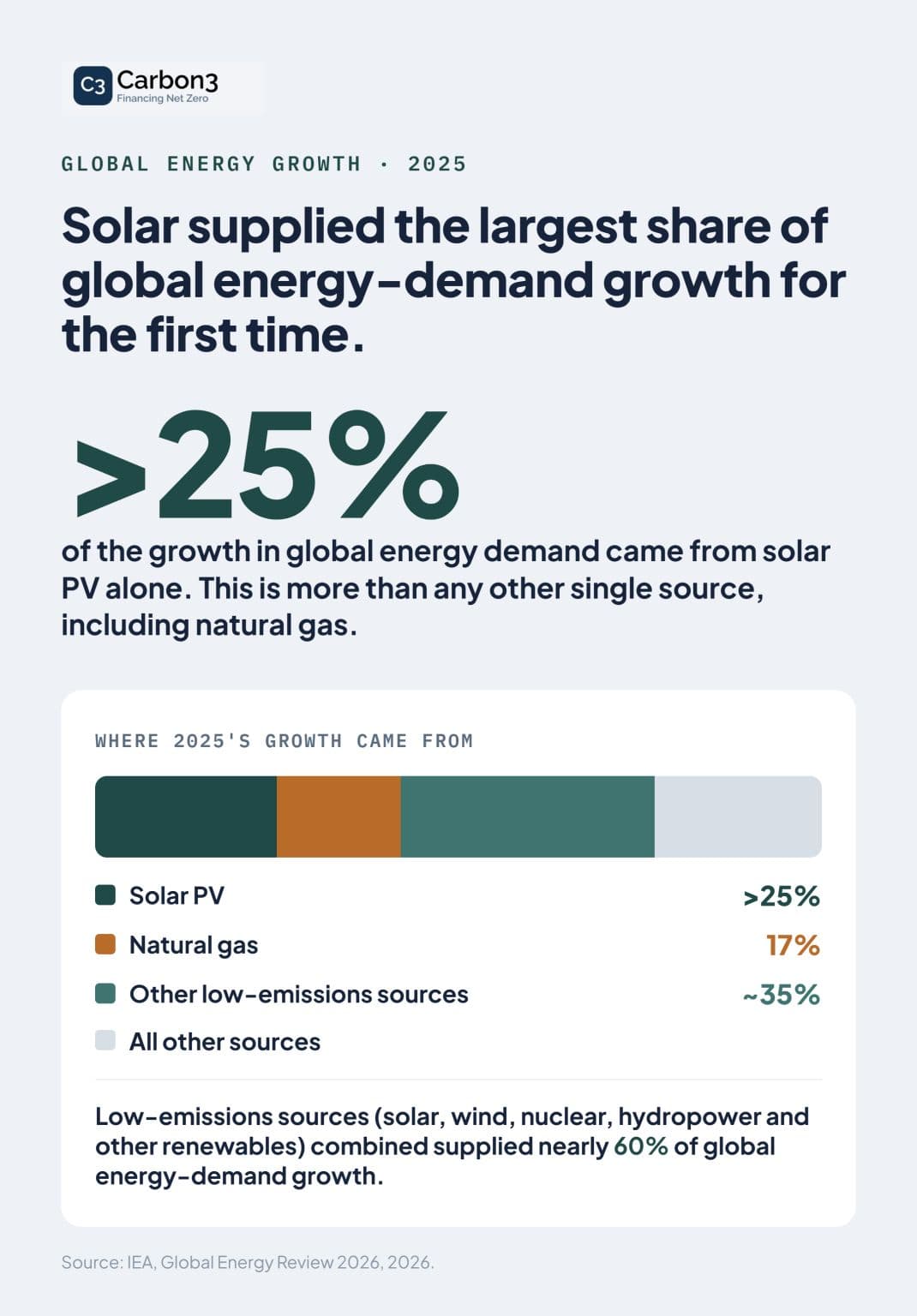
Solar is now the largest source of global energy-demand growth
For the first time solar supplied more than a quarter of the growth in global energy demand, and low-emissions sources together delivered nearly 60 percent.
Read the articleOutlook
Battery storage reaches 110 GW
Battery storage capacity has reached 110 GW, and storage is becoming part of how clean power is delivered rather than an add-on.
Read the articleTransition finance
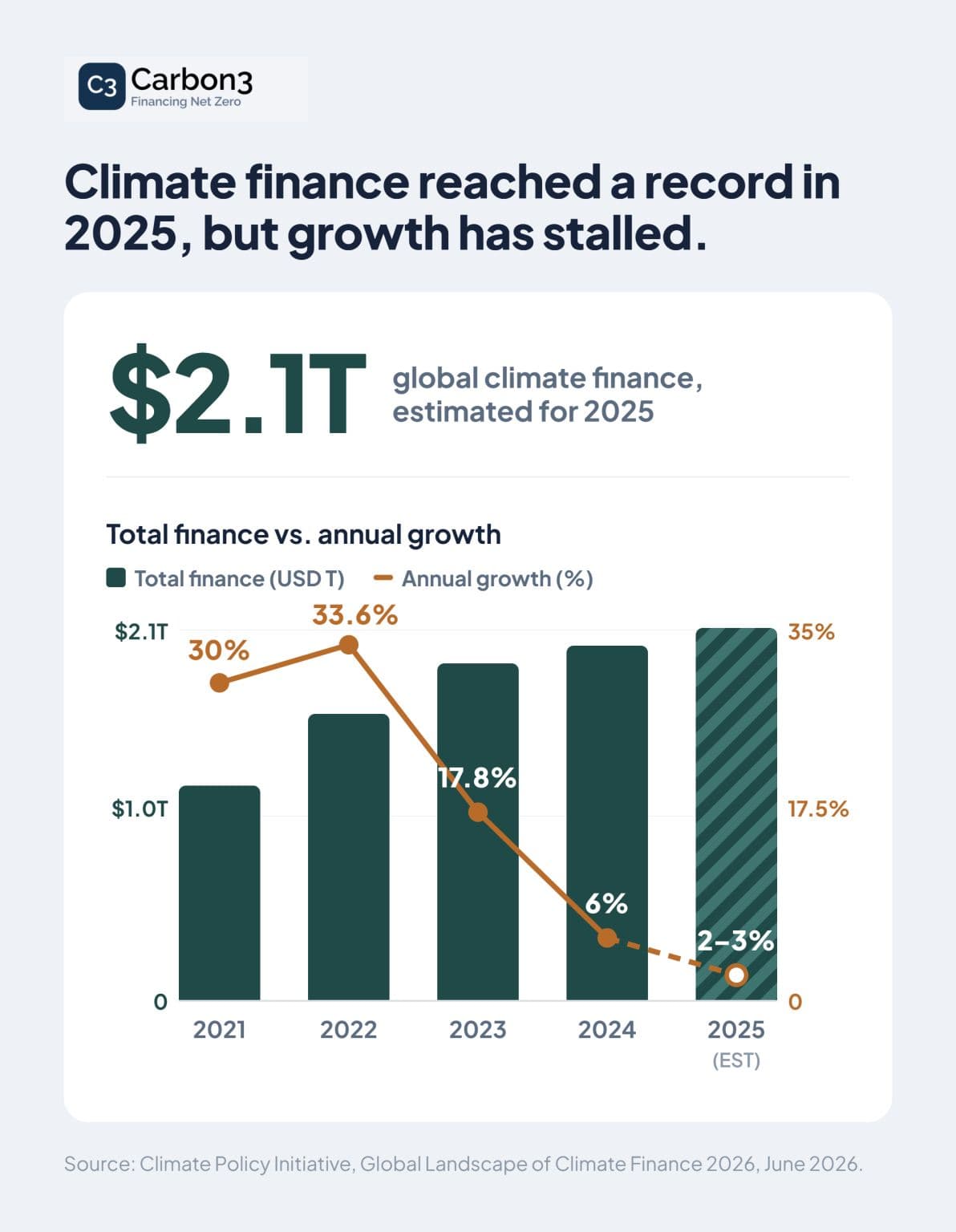
Global climate finance has crossed $2 trillion, but growth is slowing
Annual flows passed $2 trillion, while the growth rate fell from 30 percent in 2021 to an estimated 2 to 3 percent in 2025.
Read the article
See the companies behind these figures in the Data Hub.
Look up your suppliers’ emissions and targets, free.