Linking Scope 1 reductions to the buyers who need them
Upstream companies struggle to finance decarbonization. Downstream companies need credible Scope 3 progress. One model connects the two.
By Carbon3 team2 min read
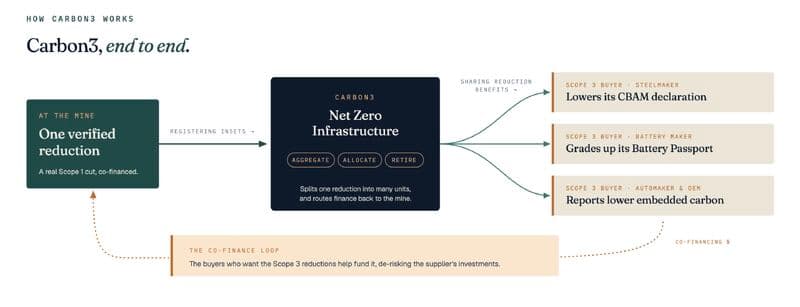
Many upstream companies struggle to finance decarbonization initiatives because the capital required is high and traditional funders see limited direct returns from Scope 1 reductions. At the same time, downstream companies face growing pressure to deliver credible Scope 3 improvements to meet regulatory requirements and stakeholder expectations, yet often lack effective ways to drive actual reductions in their supply chains.
By linking verified Scope 1 reductions directly to the buyers who need them, this model allows buyers to co-finance the emissions reductions that improve their own Scope 3 position. Project developers gain access to capital from the companies that benefit most from their emissions reductions, lowering financing barriers and risk. Buyers, in turn, secure traceable Scope 3 benefits that help lower carbon costs, strengthen product-level disclosures, and improve overall supply chain performance.
The result is a more efficient allocation of capital across the value chain. Reductions become easier to fund at source, and buyers gain a practical way to improve their regulatory and reporting position while actively supporting decarbonization where it matters most.
Downstream companies receive direct, auditable benefits:
- Steelmakers lower the carbon intensity declared under CBAM.
- Battery makers improve the grade of their Battery Passport.
- Automakers and OEMs report lower embedded carbon in their products.
Learn more in our 2026 Mining Industry Report linkedin.com
Pilot your project(s) with Carbon3 today: carbon3.net
Originally published on LinkedIn, 24 June 2026.
The Carbon3 Newsletter
Weekly analysis of industrial decarbonization and insetting across Scope 1 to 3, from the Carbon3 team.
Read more from the research team.
Transition finance
Cement could emit twice the remaining carbon budget
Around 30 to 45 carbon capture plants are needed by 2030.
Read the articleTransition finance
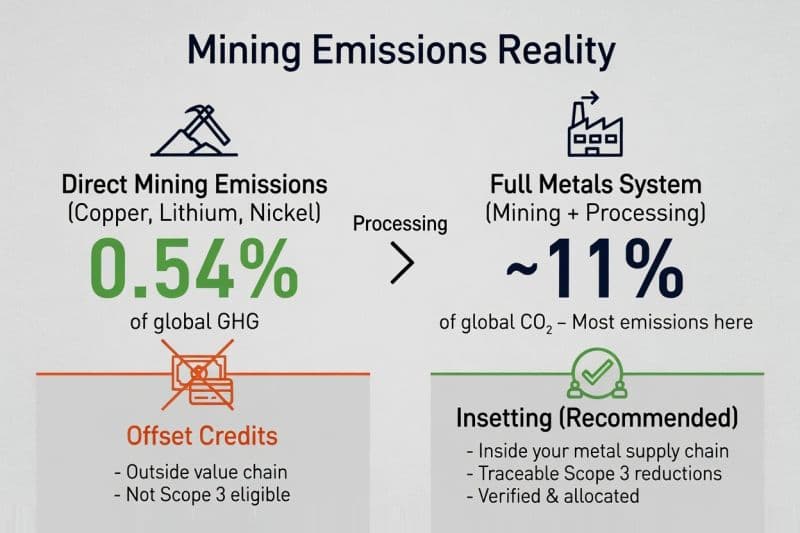
Where the emissions in critical metals actually sit
Direct mining emissions are small.
Read the articleOutlook
The Africa Outlook 2026
Critical minerals, exceptional solar potential and some of the lowest-cost real reductions in the world.
Read the article

See the companies behind these figures in the Data Hub.
Look up your suppliers’ emissions and targets, free.