Cement could emit twice the remaining carbon budget
Around 30 to 45 carbon capture plants are needed by 2030. The barrier is finance, not technology.
By Carbon3 team1 min read

By 2050, cement could release nearly 100 billion tonnes of CO₂ if we stay on our current path. That’s roughly twice the entire remaining carbon budget for limiting global warming to 1.5C.
We urgently need 30~45 carbon capture plants running by 2030 just to stay on track. The biggest challenges aren’t technology or storage, it is finance: paying the extra cost and connecting buyers who want low-carbon cement with the producers who can make it.
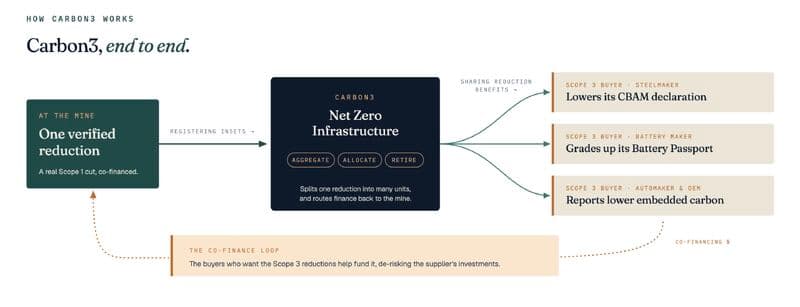
We bridge the gap: cleaner cement gets poured locally, while the verified carbon reductions are traded and shared as Scope 3 insetting claims for companies with climate targets. New approaches like this can turn company climate promises into real funding for cleaner cement production and speed things up.
2026 is a key year to build momentum. Early leaders in Asia (using LC3) and global carbon capture projects are already getting ahead.
Read more in our latest Sustainable Cement & Concrete Outlook report linkedin.com
Originally published on LinkedIn, 17 June 2026.
The Carbon3 Newsletter
Weekly analysis of industrial decarbonization and insetting across Scope 1 to 3, from the Carbon3 team.
Read more from the research team.
Transition finance
Heavy industry has a pipeline, not yet a committed build
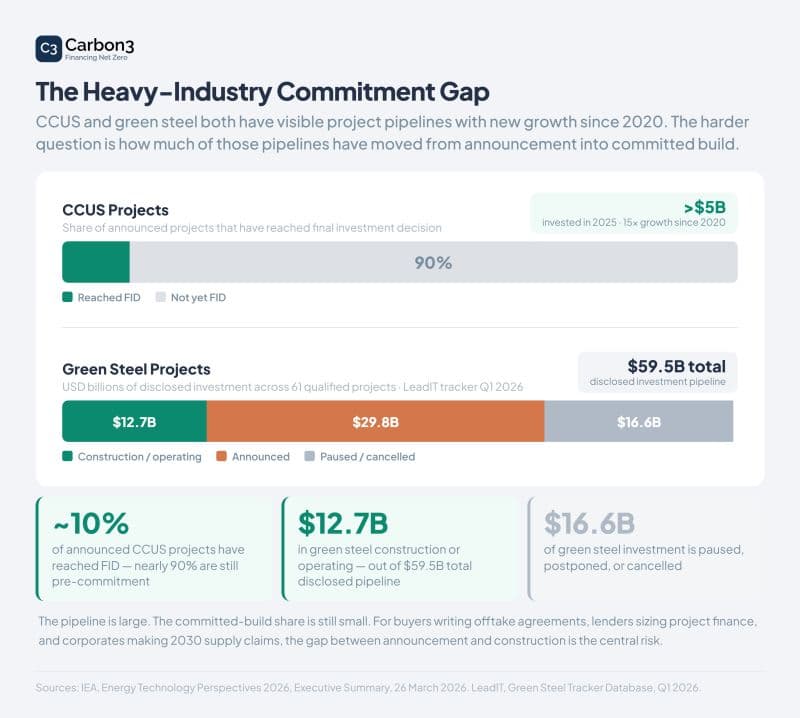
CCUS investment has grown more than fifteen-fold since 2020, yet almost 90 percent of announced projects have not reached final investment decision.
Read the articleTransition finance
Linking Scope 1 reductions to the buyers who need them
Upstream companies struggle to finance decarbonization.
Read the articlePolicy
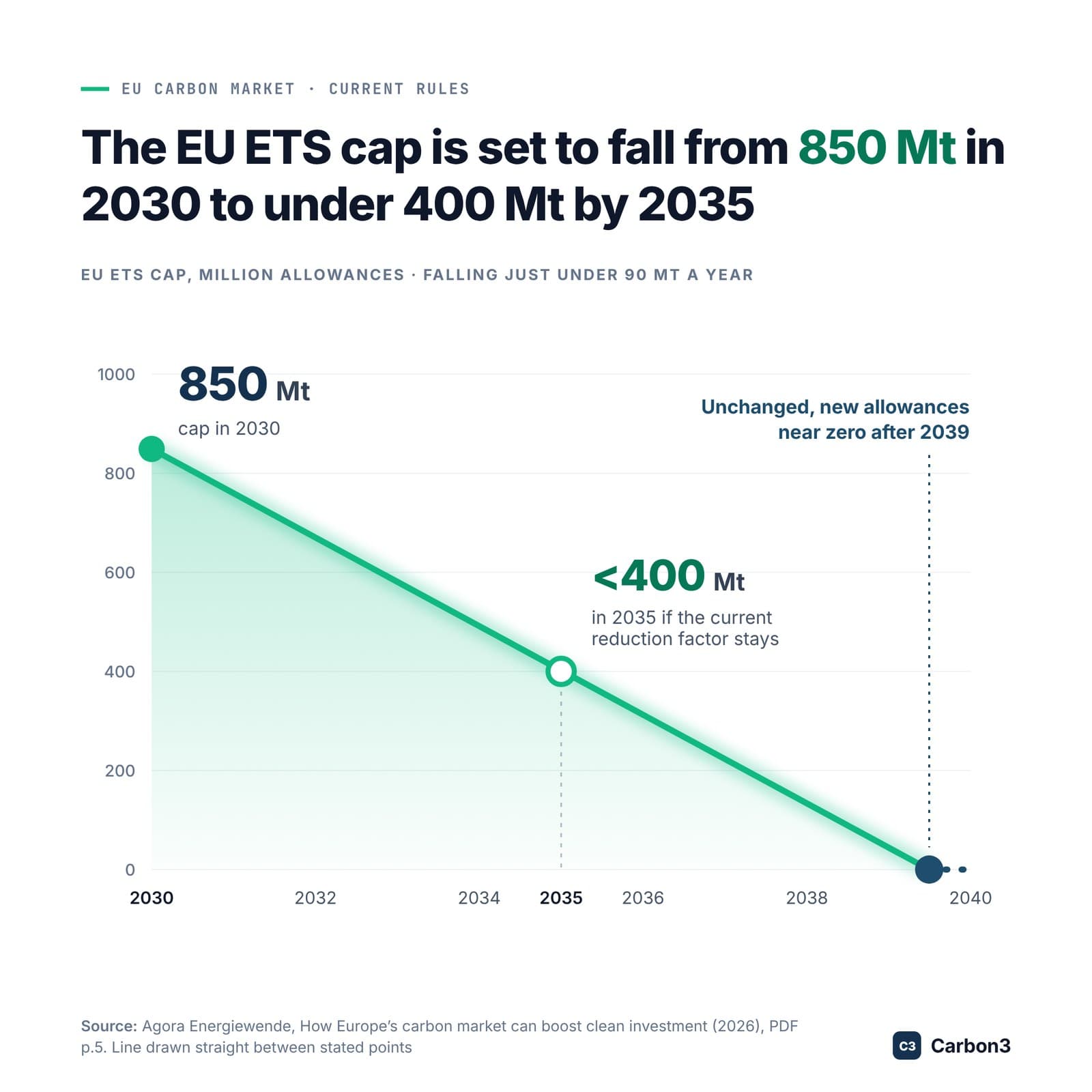
The EU carbon market is running out of allowances on a published schedule
Agora Energiewende shows the EU ETS cap falling from 850 Mt in 2030 to just below 400 Mt in 2035, a cost that buyers of steel, cement and chemicals will feel through their suppliers.
Read the article
See the companies behind these figures in the Data Hub.
Look up your suppliers’ emissions and targets, free.