LNG could add 300 bcm of export capacity by 2030 that demand may not absorb
Under the IEA's Stated Policies Scenario, renewables, nuclear and efficiency leave a potential 65 bcm overhang.
By Carbon3 team1 min read
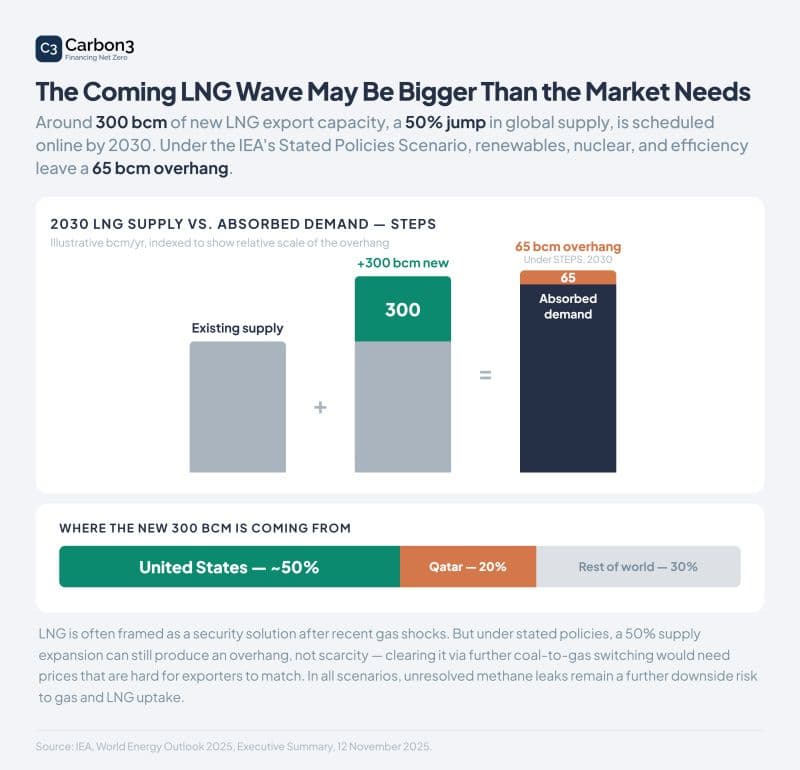
By 2030, the LNG market could add around 300 bcm of new annual export capacity, increasing available global supply by roughly 50%. But under the IEA’s Stated Policies Scenario, demand may not absorb it all, leaving a potential 65 bcm overhang as renewables, nuclear and efficiency limit gas upside in key markets.
A supply overhang of that size would have consequences beyond gas markets. It would lower the price of the fossil alternative that green fuels compete against, and it would leave investors holding assets that were financed on demand assumptions that did not materialize. Both effects widen the premium that lower-carbon fuels have to clear.
For shipping and industrial buyers, the lesson is that waiting for the green premium to disappear on its own is not a strategy. The premium has to be shared across the value chain by the parties who benefit from the reduction. That is the role of an inset credit, and it works regardless of where the gas price settles.
Originally published on LinkedIn, 13 July 2026.
The Carbon3 Newsletter
Weekly analysis of industrial decarbonization and insetting across Scope 1 to 3, from the Carbon3 team.
Read more from the research team.
Outlook
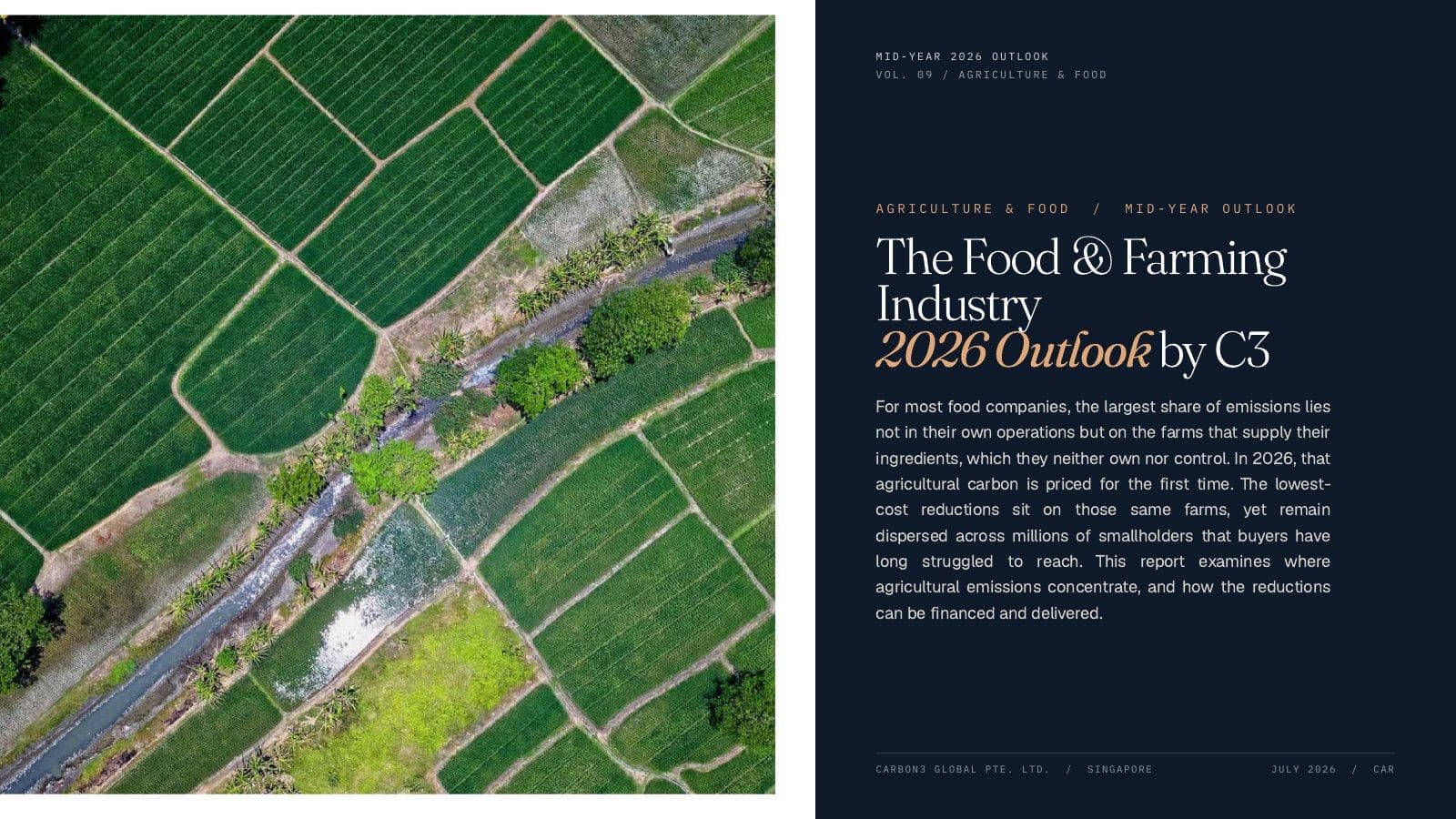
The Agriculture & Food Outlook 2026
Nine in ten tonnes of a food company's carbon sit on farms it does not own.
Read the articleOutlook
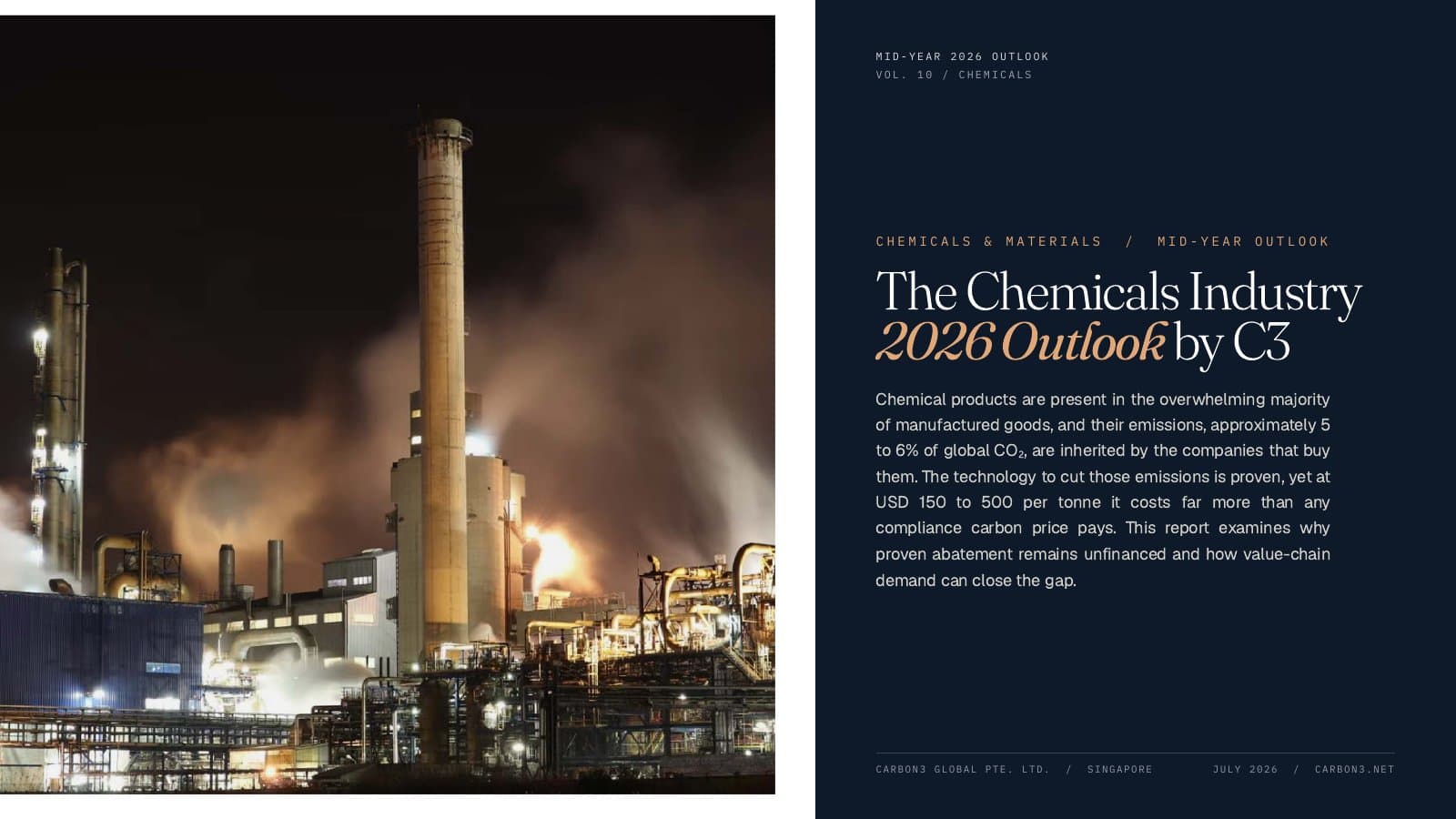
The Chemicals Outlook 2026
The sector accounts for 5 to 6 percent of global emissions and faces a $850 to $900 billion capital gap to 2030.
Read the articleOutlook
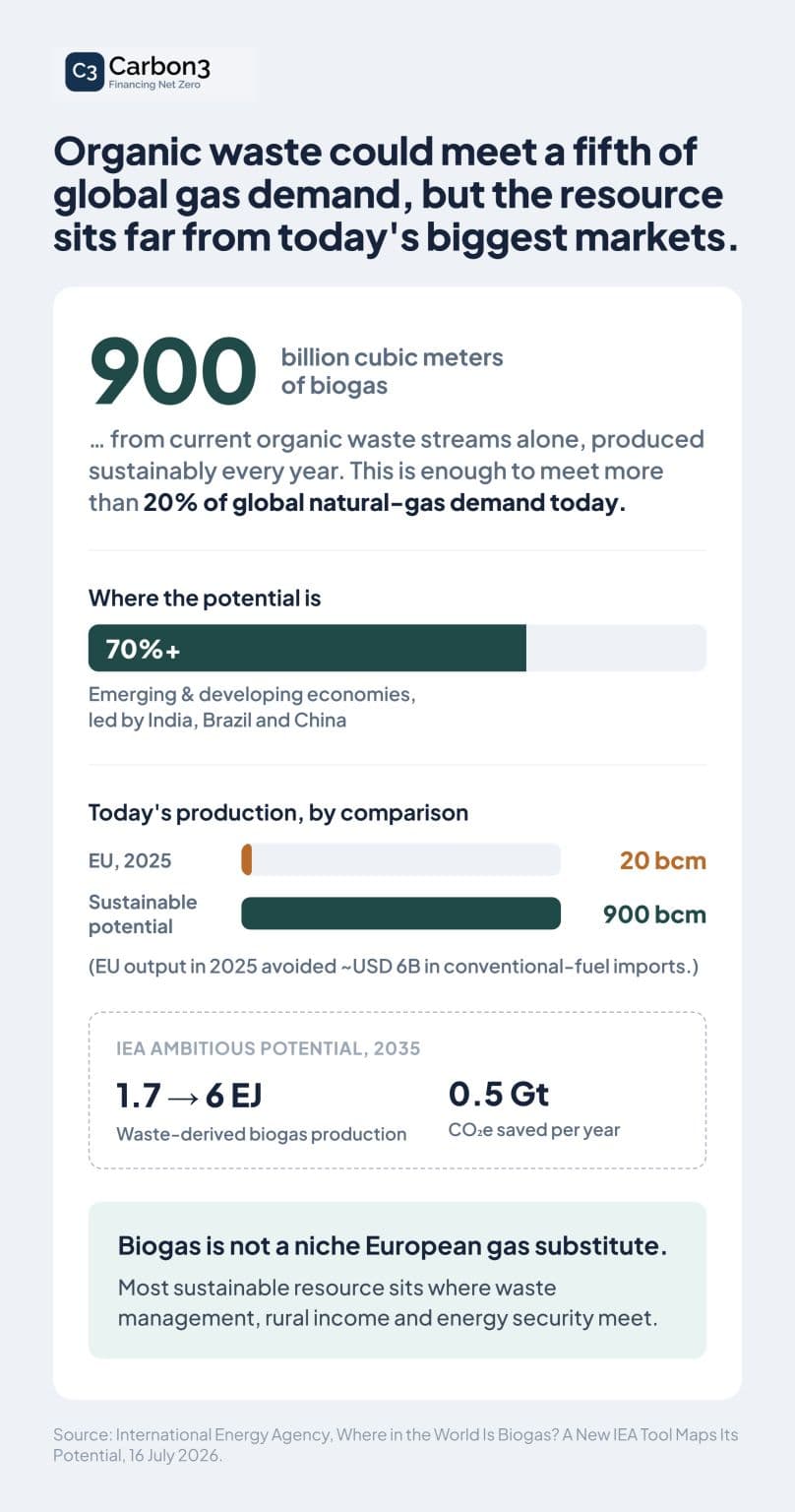
Organic waste could supply a fifth of today's natural gas demand
More than 70 percent of the potential resource sits in emerging and developing economies, which links waste management to local energy resilience.
Read the article
See the companies behind these figures in the Data Hub.
Look up your suppliers’ emissions and targets, free.