Offsetting sends money sideways. Insetting sends it to the source.
Producers will not build without buyers; buyers will not commit without supply. Financing reductions from the value chain breaks the standoff.
By Carbon3 team1 min read
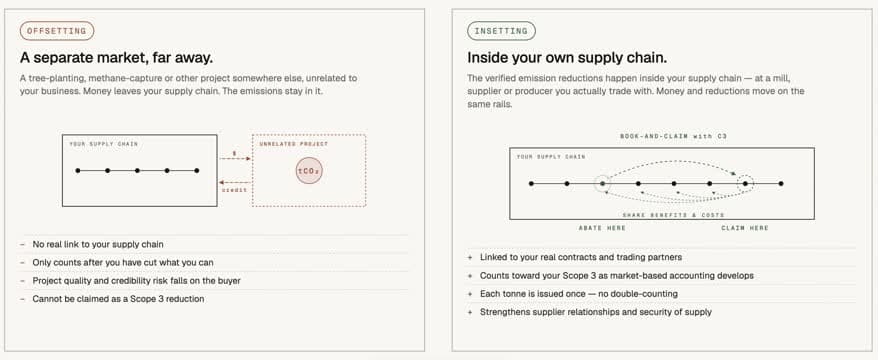
Offsetting sends climate money sideways Insetting sends it to the source
For years those two have been stuck in a chicken-and-egg. The producer won't build a hydrogen plant without committed buyers; the buyer won't commit without supply and a price it can plan around. Nobody moves, because nobody alone will carry a 50-70% premium
Financing Scope 3 reductions from value-chain players breaks that, and it does something offsets never could: it brings the capital to the root cause. A downstream buyer's budget flows upstream, to the exact step where the carbon is made, and pays to take it out there
Money flows to where the molecule is created sustainably, not in a project on the other side of the world. That's the difference between buying down a number and funding the actual transition.
Originally published on LinkedIn, 5 June 2026.
The Carbon3 Newsletter
Weekly analysis of industrial decarbonization and insetting across Scope 1 to 3, from the Carbon3 team.
Read more from the research team.
Integrity
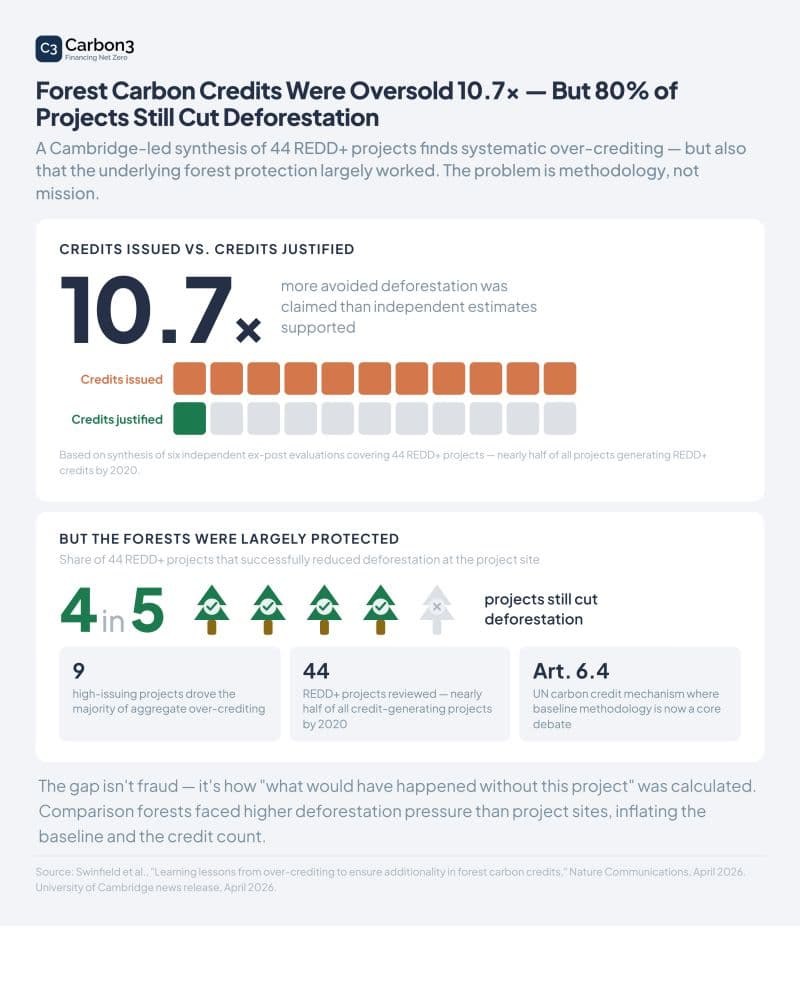
REDD+ credits were oversold, but most projects cut deforestation
A peer-reviewed study of 44 projects found credits oversold by a factor of more than ten, while four in five projects genuinely reduced forest loss.
Read the articleIntegrity
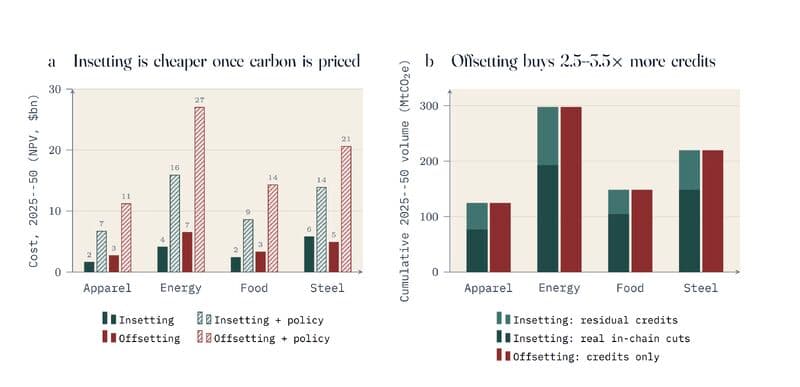
Offsetting is not the cheap option
Offsetting purchases 2.5 to 3.5 times more credits over time, and each extra credit is an emission the company has not addressed.
Read the articleProduct
We built a global insetting market and simulated it end to end
Supply-chain decarbonization is a financing problem.
Read the article
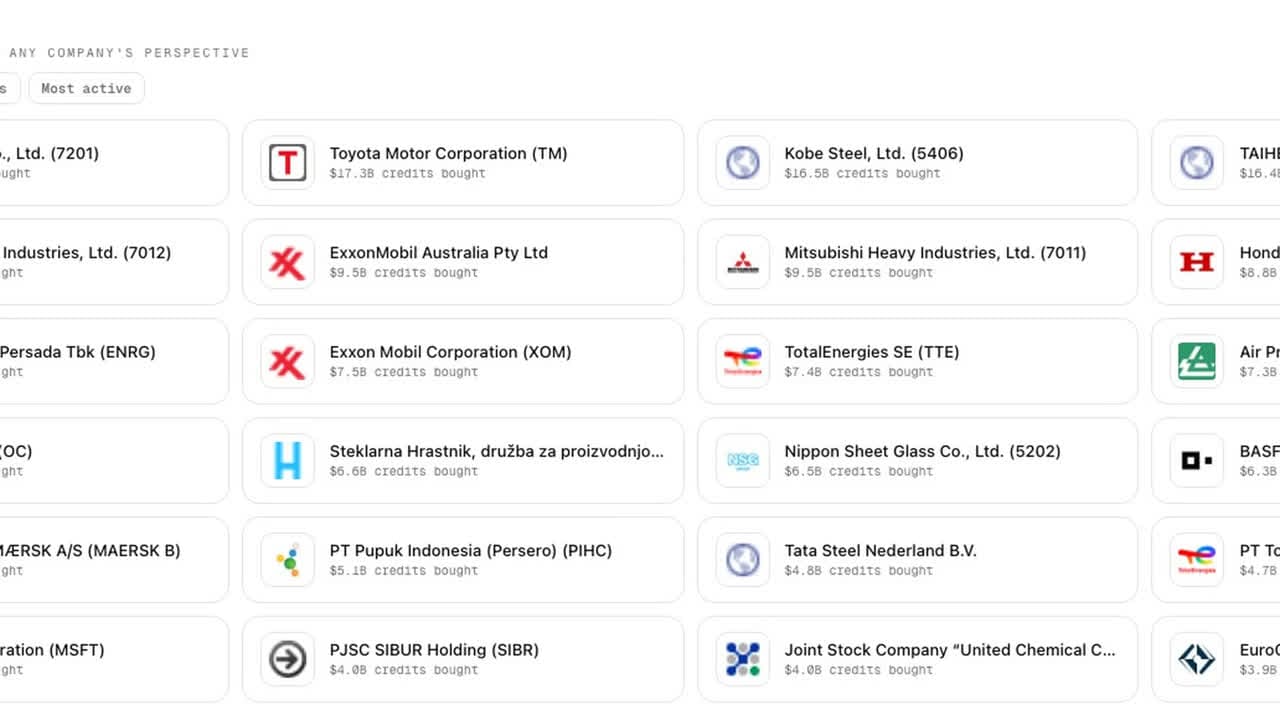
See the companies behind these figures in the Data Hub.
Look up your suppliers’ emissions and targets, free.