Offsetting is not the cheap option
Offsetting purchases 2.5 to 3.5 times more credits over time, and each extra credit is an emission the company has not addressed.
By Carbon3 team1 min read
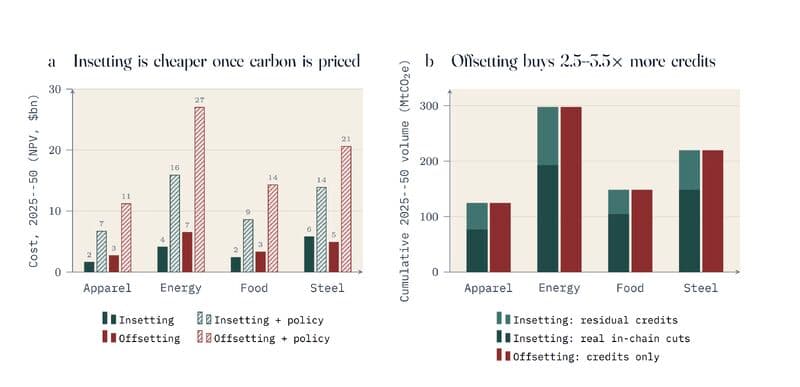
The idea that offsetting is the cheap option turns out to be wrong in most of the economy, and more wrong over time. Meanwhile insetting primarily focuses on genuine reductions and strategic investments.
Offsetting does not implement real emissions reductions and purchases approximately 2.5 to 3.5 times more credits over time: for energy and power, this amounts to 297 million tonnes compared to 104 million tonnes. Each additional credit tonne represents an actual emission that the company has not addressed, leaving it vulnerable to future increases in carbon prices or stricter credit regulations.
From our latest report on Insetting vs Offsetting: linkedin.com
Originally published on LinkedIn, 14 July 2026.
The Carbon3 Newsletter
Weekly analysis of industrial decarbonization and insetting across Scope 1 to 3, from the Carbon3 team.
Read more from the research team.
Integrity
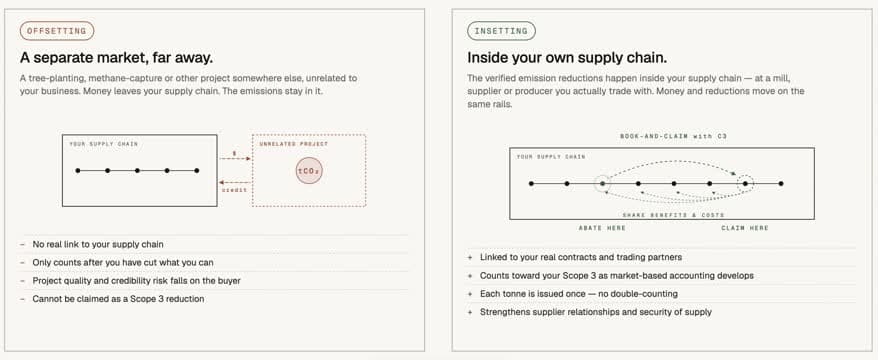
Offsetting sends money sideways. Insetting sends it to the source.
Producers will not build without buyers; buyers will not commit without supply.
Read the articleIntegrity
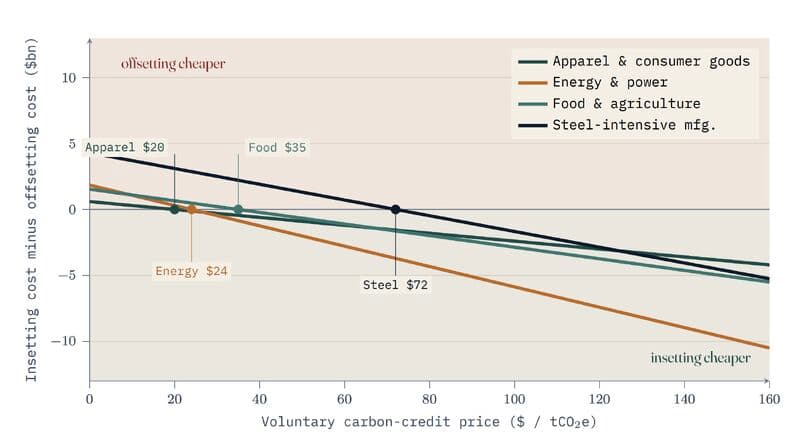
The price at which insetting beats offsetting
In all four cases studied, the tipping point is already at or below where credit prices are expected to go.
Read the articleSector: Maritime
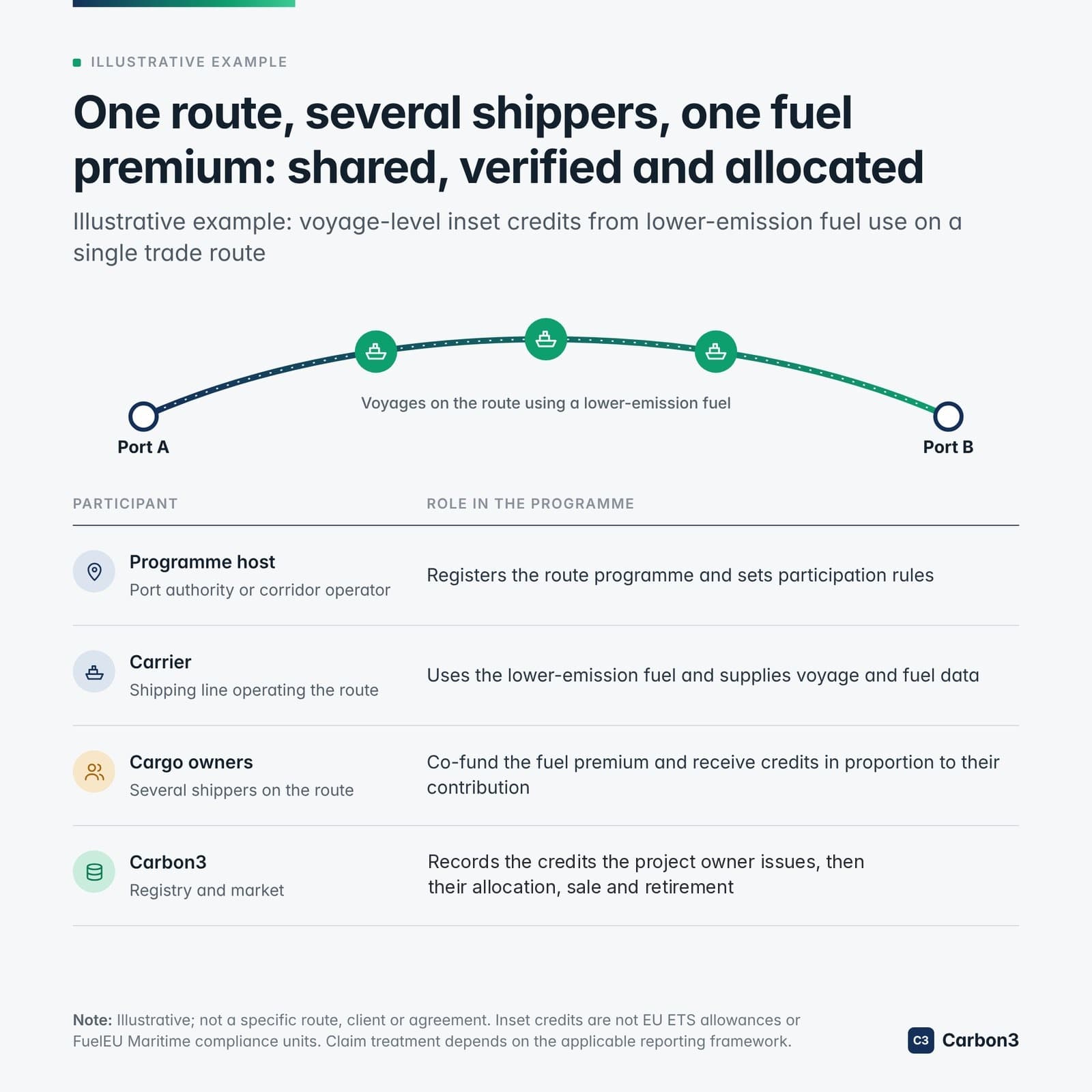
One trade route, several shippers, one fuel premium, shared and verified
An illustrative route program: cargo owners co-fund a carrier's lower-emission fuel, voyage-level inset credits are issued after verification, and each shipper receives its share.
Read the article
See the companies behind these figures in the Data Hub.
Look up your suppliers’ emissions and targets, free.