The price at which insetting beats offsetting
In all four cases studied, the tipping point is already at or below where credit prices are expected to go.
By Carbon3 team1 min read
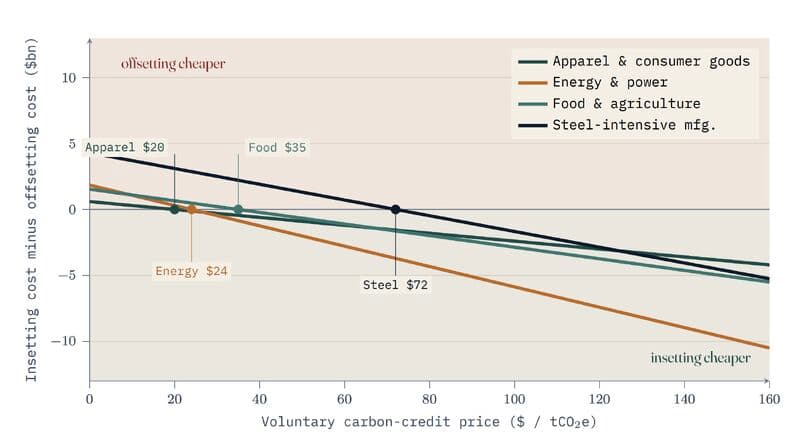
At what carbon credit price does it become cheaper for a company to reduce its own emissions (insetting) than to buy offsets from someone else? That tipping point is simply the cost of making those emissions reductions inside the company or its supply chain.
Current forecasts show that high-quality carbon credit prices are rising. In all four cases studied, the price at which insetting becomes cheaper is already at or below where credit prices are expected to go, and well below the carbon prices governments are introducing.
This creates a double push toward insetting: carbon credits are getting more expensive to buy, and governments are starting to put a real price on carbon. What looks like a close call at today’s low credit prices becomes the clear winner when you look ahead.
From our latest report on Insetting vs Offsetting: linkedin.com
Originally published on LinkedIn, 15 July 2026.
The Carbon3 Newsletter
Weekly analysis of industrial decarbonization and insetting across Scope 1 to 3, from the Carbon3 team.
Read more from the research team.
Integrity
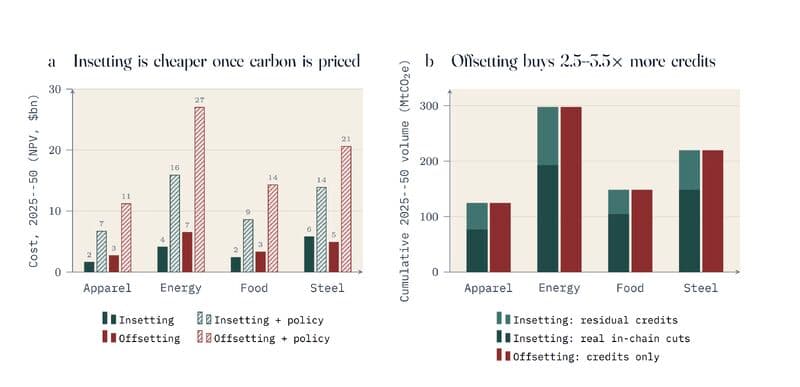
Offsetting is not the cheap option
Offsetting purchases 2.5 to 3.5 times more credits over time, and each extra credit is an emission the company has not addressed.
Read the articleIntegrity
We asked the smartest AI models about insetting
Is insetting the best route to decarbonizing supply chains and tackling Scope 3?
Read the articleTransition finance
When cutting beats buying: the balance-sheet case for insetting
Our 2026 white paper models four value chains to 2050 and finds reducing emissions in-house already cheaper than buying credits in most sectors.
Read the article
See the companies behind these figures in the Data Hub.
Look up your suppliers’ emissions and targets, free.