Seven fashion houses back a shared renewable power deal for textile suppliers in Como
Burberry, CHANEL, Kering, Prada Group and three other houses are backing a study of a collective power purchase agreement for suppliers in Italy's Como textile district, where energy is about 40% of operating costs.
By Carbon3 team2 min read
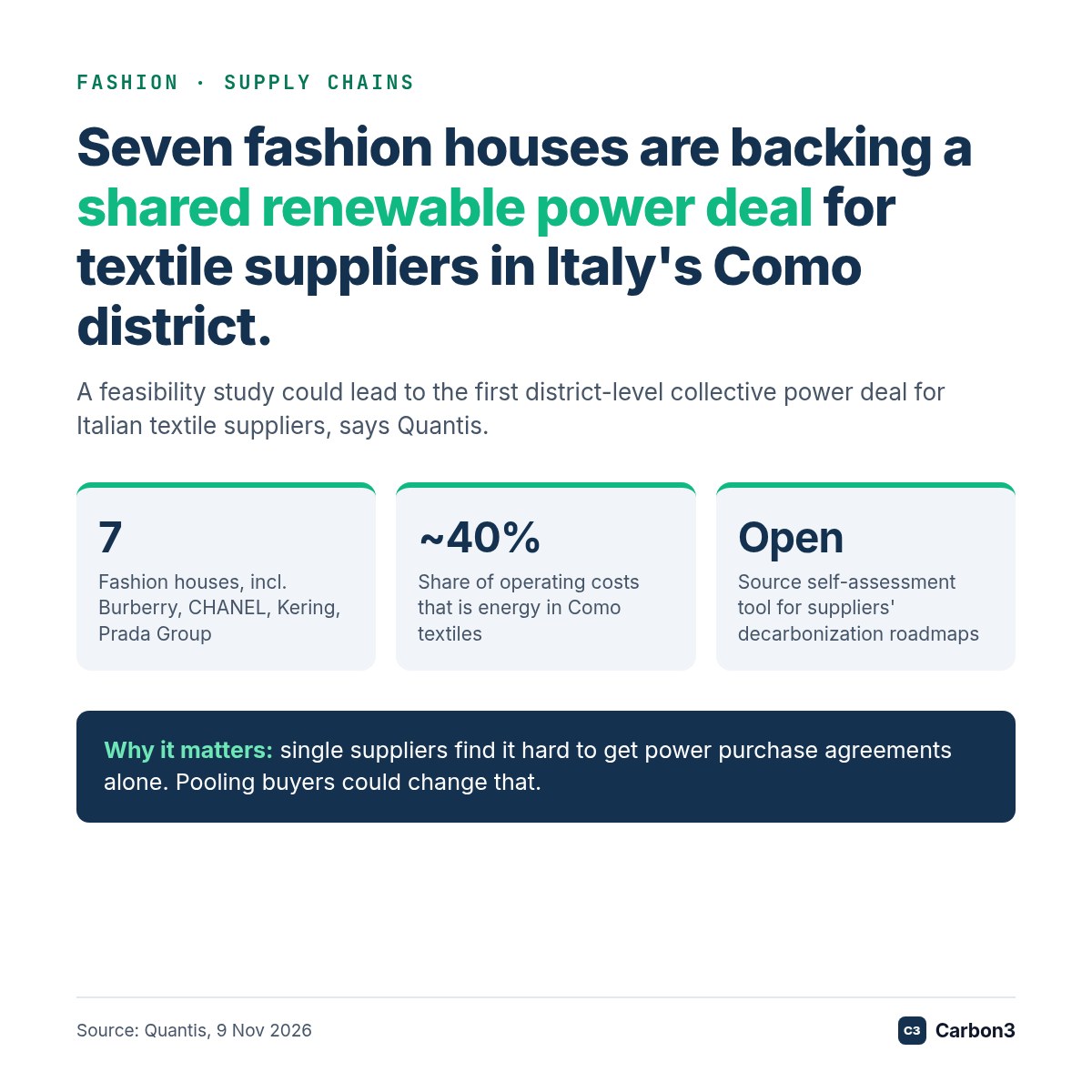
Seven fashion houses, including Burberry, CHANEL, Kering and Prada Group, are backing a feasibility study of a shared renewable power deal for textile suppliers in Italy's Como district, according to Quantis on 9 November 2026. The work runs through The Fashion Pact's European Accelerator.
Energy is the biggest bill
Energy is estimated at about 40% of operating costs for textile companies in Como, according to the Confindustria Como Textile Group, as cited by Quantis. That makes the price and source of electricity one of the most important decisions a supplier makes, both for its margins and for its emissions.
Yet single suppliers find it hard to sign power purchase agreements on their own. Most are too small to negotiate the long-term contracts that large energy users get, and too small to carry that risk alone. A district-level deal pools demand across many suppliers, so the group can buy renewable power on terms none of them could reach separately. Quantis says the study could lead to the first district-level collective deal of its kind for Italy's textile supply chain.
A tool for suppliers to plan their own steps
Alongside the study, the group is releasing an open-source self-assessment tool that suppliers can use voluntarily to map their own decarbonization roadmap. The aim is for suppliers to choose next steps that fit their own operations rather than wait for each brand's separate requirements.
Why buyers acting together matters
For fashion brands, much of the footprint sits with suppliers, in the mills and dye houses that spin, weave and finish their materials. Brands often talk about supplier engagement, but few help suppliers with their largest cost. Buyers acting together can help suppliers move faster than each brand acting alone, because a shared deal gives suppliers one clear route instead of many competing ones.
That shared approach also raises the question of how the resulting reductions are recorded when several buyers support the same supplier. Each reduction should be traceable to the supplier that delivered it and claimed only once. Carbon3 describes how buyers and suppliers can work together on value-chain emissions on its suppliers page.
Where else could buyers back a shared power deal for their suppliers?
Learn more
How insetting works, step by step
Originally published on LinkedIn, 10 November 2026.
Read more from the research team.
Field notes
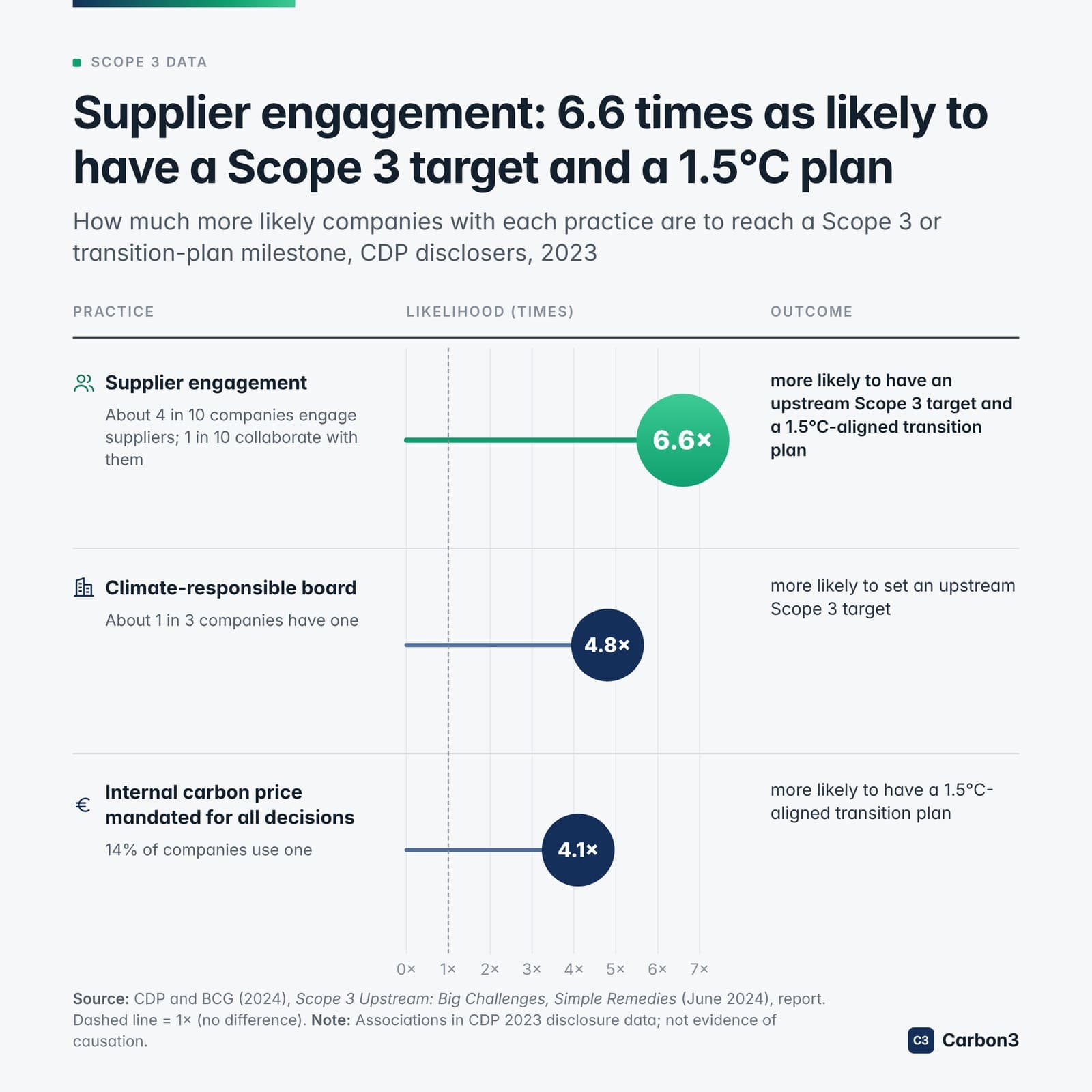
Companies that engage suppliers are 6.6 times as likely to have an upstream Scope 3 target
CDP and BCG examined more than 20 factors.
Read the articleField notes
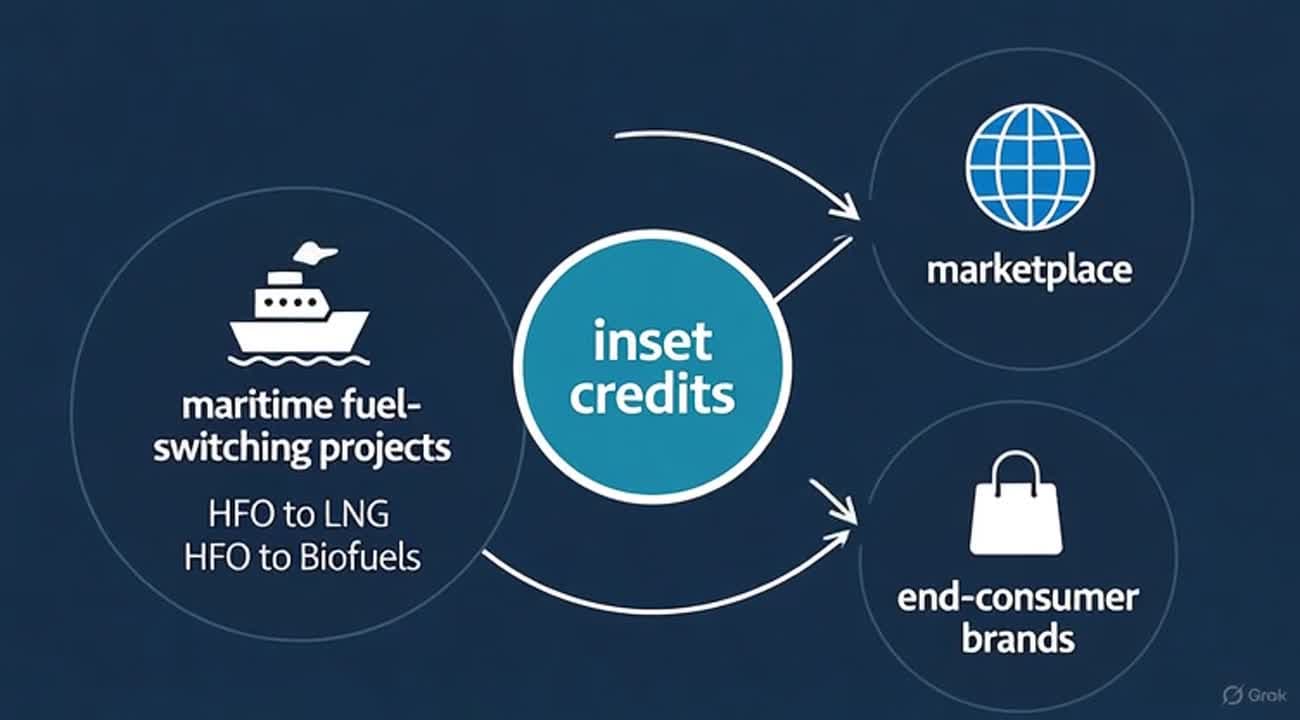
How AI companies and maritime can team up for net zero
NVIDIA, Apple and AMD carry massive Scope 3.
Read the articleMarket structure
Scope 3 is about pulling everyone forward with shared rewards
Big buyers impose requirements without financing or shared incentives.
Read the article
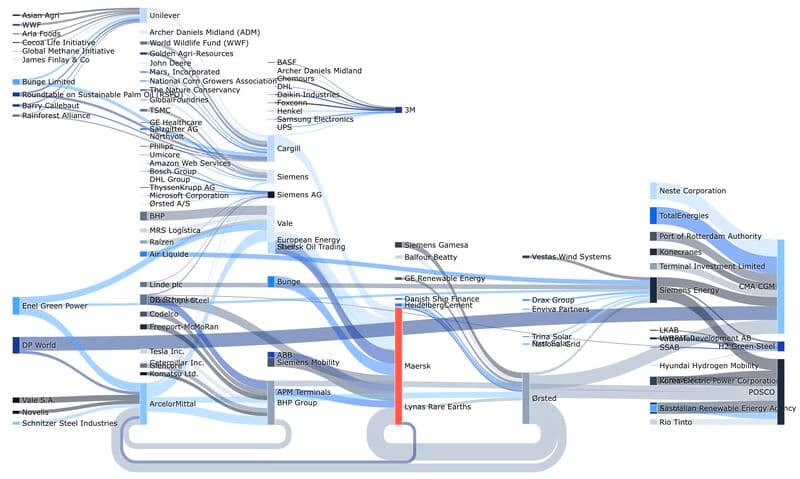
See the companies behind these figures in the Data Hub.
Look up your suppliers’ emissions and targets, free.