Companies that engage suppliers are 6.6 times as likely to have an upstream Scope 3 target
CDP and BCG examined more than 20 factors. Supplier engagement, a climate-responsible board and an internal carbon price stood out.
By Carbon3 team2 min read
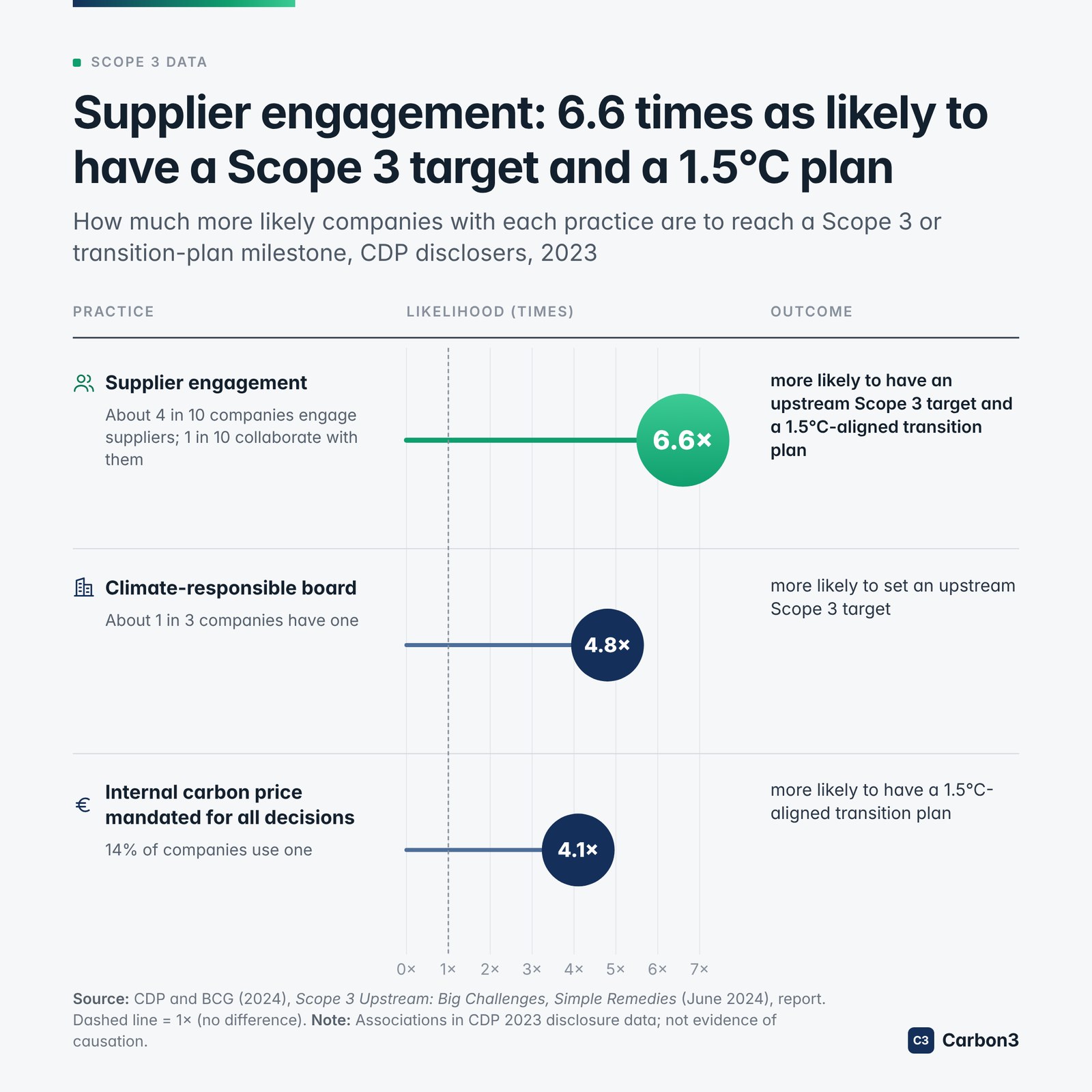
Companies that engage their suppliers are 6.6 times as likely to have an upstream Scope 3 target and a 1.5°C-aligned transition plan.
That is a finding from CDP and BCG's report "Scope 3 Upstream: Big Challenges, Simple Remedies", published in June 2024.
Three factors that stood out
The report examined more than 20 factors to see which were associated with companies having both an upstream Scope 3 target and a 1.5°C-aligned transition plan. Three stood out:
- Supplier engagement: 6.6 times as likely.
- A climate-responsible board: 4.8 times as likely.
- An internal carbon price used in decisions: 4.1 times as likely.
Associations, not causation
These are associations, not causation. A company that engages its suppliers may also differ in other ways: size, sector, resources or how long it has been working on climate. The figures do not show that starting a supplier program will, on its own, produce a target and a transition plan.
But they do point to where Scope 3 progress tends to start. Upstream emissions sit with suppliers, and a target on those emissions is hard to set credibly without knowing what suppliers emit and what they can change.
Why supplier engagement matters
For most companies, upstream Scope 3 is the part of the footprint they understand least and control least. Engagement is how that changes. It turns an estimate built from spend data into a working relationship with the businesses that actually produce the emissions.
The other two factors fit the same picture. A board that takes climate seriously gives supplier programs the mandate and budget to continue. An internal carbon price used in decisions makes the cost of emissions visible in procurement and investment choices, including which suppliers to work with and what to co-fund.
From engagement to reductions
Engagement is the starting point, not the end. Once a company knows where the emissions sit, the next question is who pays for the change. Co-funding verified supplier reductions is one way to move from surveys to tonnes, and insetting records those reductions inside the value chain. Insetting is not offsetting.
The CDP and BCG findings suggest that the companies furthest ahead on Scope 3 tend to be those already talking to their suppliers.
Learn more
How insetting works, step by step
Originally published on LinkedIn, 13 October 2026.
Read more from the research team.
Field notes
Low-carbon supply is a procurement problem
In the Scope 3 Peer Group's survey of 180+ suppliers, 43% say low-carbon options cost more, yet contracts are still awarded on unit price.
Read the articleField notes
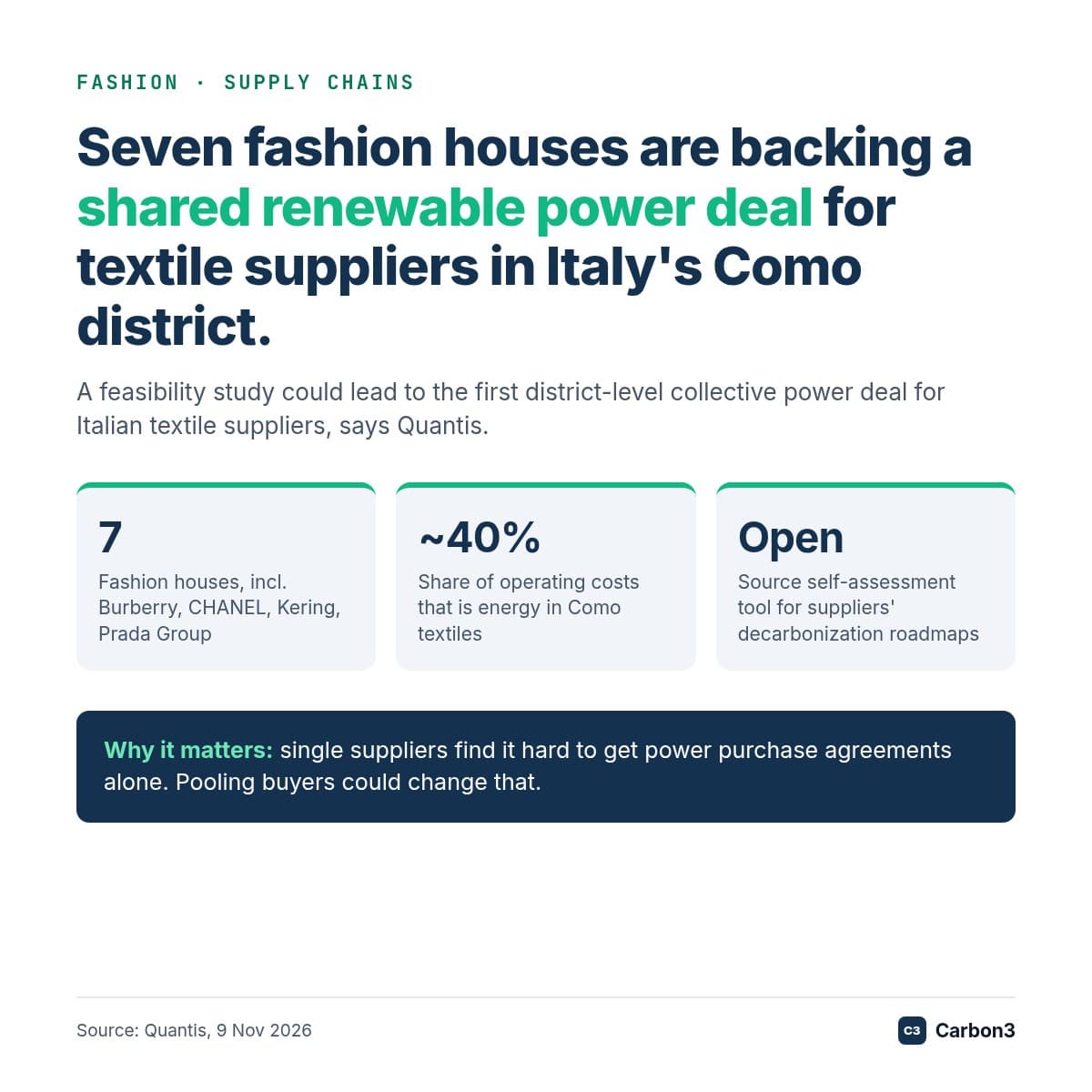
Seven fashion houses back a shared renewable power deal for textile suppliers in Como
Burberry, CHANEL, Kering, Prada Group and three other houses are backing a study of a collective power purchase agreement for suppliers in Italy's Como textile district, where energy is about 40% of operating costs.
Read the articlePolicy
EU importers can now deduct a supplier's home carbon price from their CBAM bill
Commission Implementing Regulation (EU) 2026/2498 lets importers deduct carbon prices already paid outside the EU, and admits international credits only if they are authorized and issued under Article 6.
Read the article
See the companies behind these figures in the Data Hub.
Look up your suppliers’ emissions and targets, free.