28,000 companies, one open record
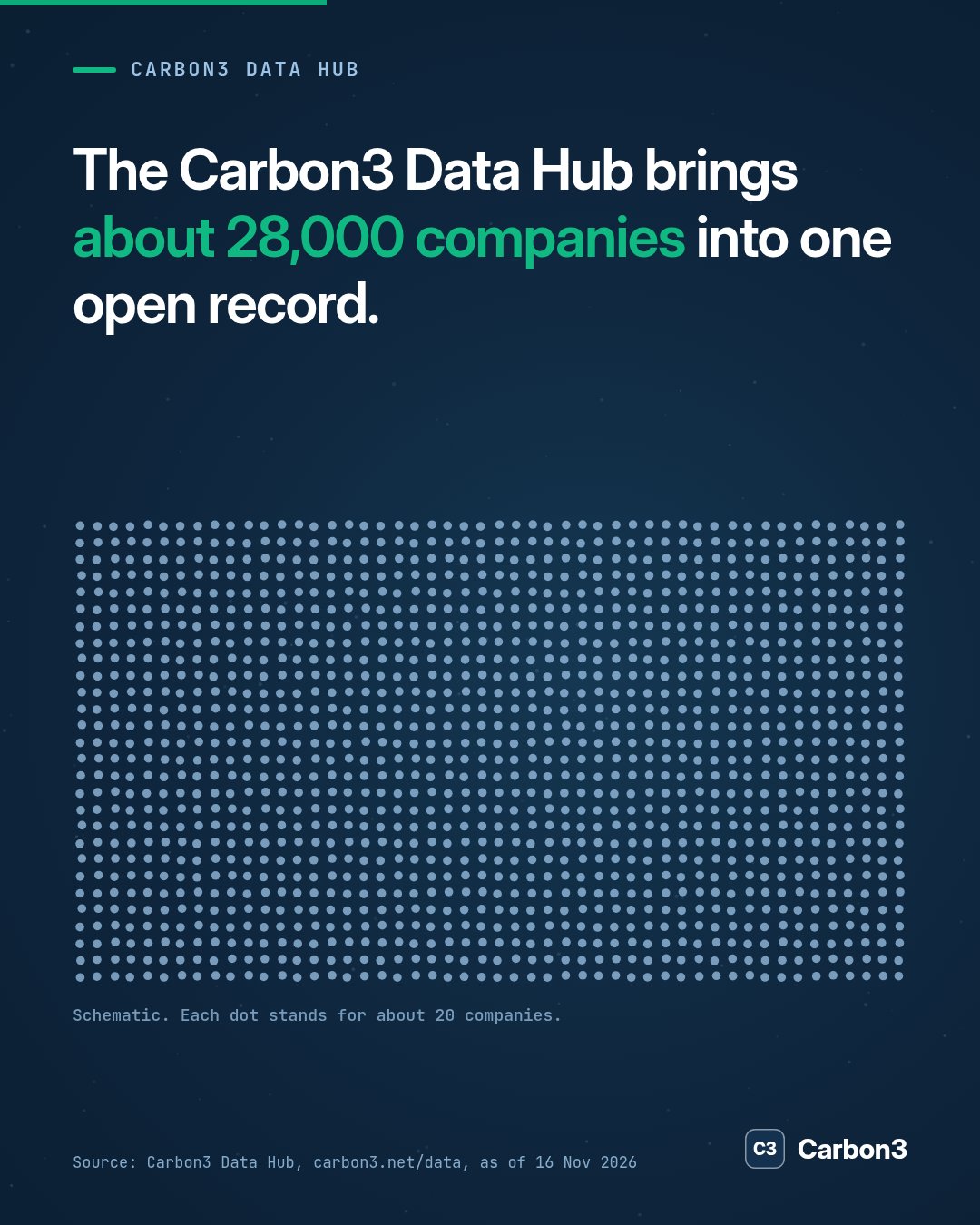
The Carbon3 Data Hub brings about 28,000 companies into one open record.
By Carbon3 team2 min read
A company that wants to understand its suppliers' climate footprints usually starts with a search engine and a stack of PDFs. The numbers exist. Thousands of companies publish them every year. They are just spread across annual reports, sustainability statements, registries and websites, each in its own format and each with its own definitions.
The Carbon3 Data Hub puts that public record in one place. As of 16 November 2026 it covers about 28,000 companies, and it is free to search at carbon3.net/data.
What the record holds
| What | How many (as of 16 Nov 2026) |
|---|---|
| Companies | about 28,000 |
| Reported company footprints (one company, one year) | about 4,200 |
| Science Based Targets initiative (SBTi) target records | about 7,800 |
| Industry reports | about 1,400 |
| Emerging decarbonization projects | about 2,900 |
Source: Carbon3 Data Hub, carbon3.net/data, as of 16 November 2026.
A reported footprint is split into three scopes under the Greenhouse Gas Protocol. Scope 1 covers the emissions a company produces directly, from its own sites and vehicles. Scope 2 covers the energy it buys. Scope 3 covers everything else in its value chain, from the raw materials it purchases to what happens to its products after they are sold.
The SBTi is the body that checks whether a company's climate target is in line with climate science. The Data Hub shows each company's SBTi status beside its reported emissions, so a target and the footprint it applies to can be read together.
Every figure points to its source
Each footprint in the Data Hub is linked to the company report it came from. A procurement lead looking at a supplier, or a sustainability team building a Scope 3 baseline, can open the original disclosure in one click and check the figure there. Where no matched disclosure exists for a year, the Data Hub says so rather than filling the gap.
Why one record matters
The largest emissions reductions available to most companies sit with their suppliers and customers, outside their own fence. Acting on them starts with knowing where they are. A shared, open record makes that first step a lookup rather than a research project.
It also matters for what comes next. Carbon3 is an insetting platform: companies finance emissions reductions inside their own value chains, and Carbon3 records the resulting credits so each tonne is claimed only once. The project developer issues credits on the Carbon3 registry once a verification report is on file. That record works best when it starts from the same public footprints everyone can see.
Try it
Search any company in the free Data Hub at carbon3.net/data.
Learn more
How insetting works, step by step
Originally published on LinkedIn, 18 November 2026.
Read more from the research team.
Product
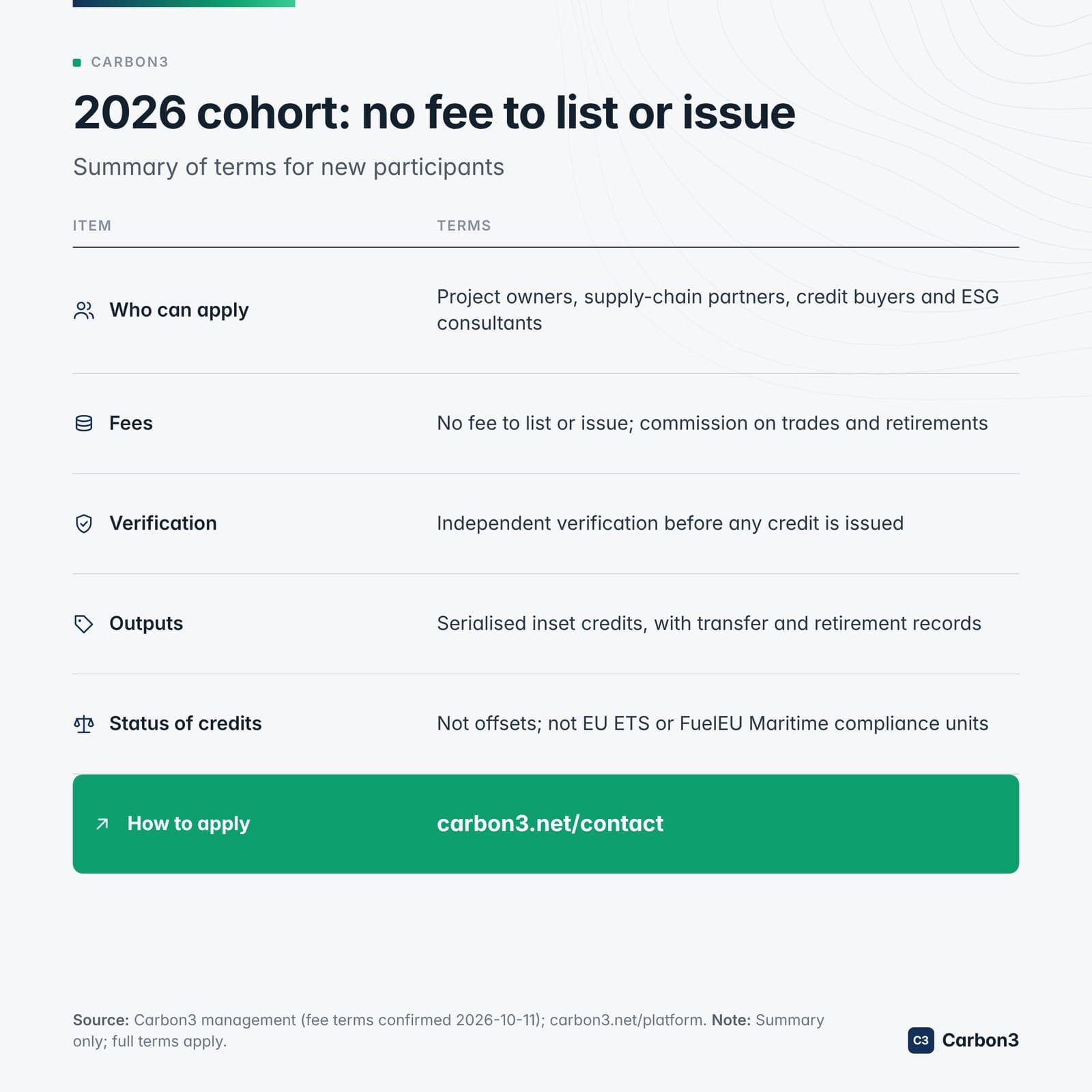
Applications are open for the Carbon3 2026 cohort, with no fee to list or issue
The 2026 cohort is open to project developers, supply-chain partners, credit buyers and ESG consultants.
Read the articleProduct
How Carbon3 turns verified reductions into inset credits
Upstream suppliers seeking co-financing and downstream brands seeking allocated Scope 3 reductions, on one platform.
Read the articleProduct
What the data shows about the Scope 3 market
Across 1,248 registry companies, 558 projects and 1,065 opportunities, only 127 firms appear to be moving from exploration into execution.
Read the article
See the companies behind these figures in the Data Hub.
Look up your suppliers’ emissions and targets, free.