Under Australia's Safeguard Mechanism, credit use is growing faster than emissions reductions
IEEFA finds coal, oil and gas producers used more than two-thirds of the credits surrendered in FY2024-25, while covered facilities reduced emissions by only 0.4%.
By Carbon3 team2 min read
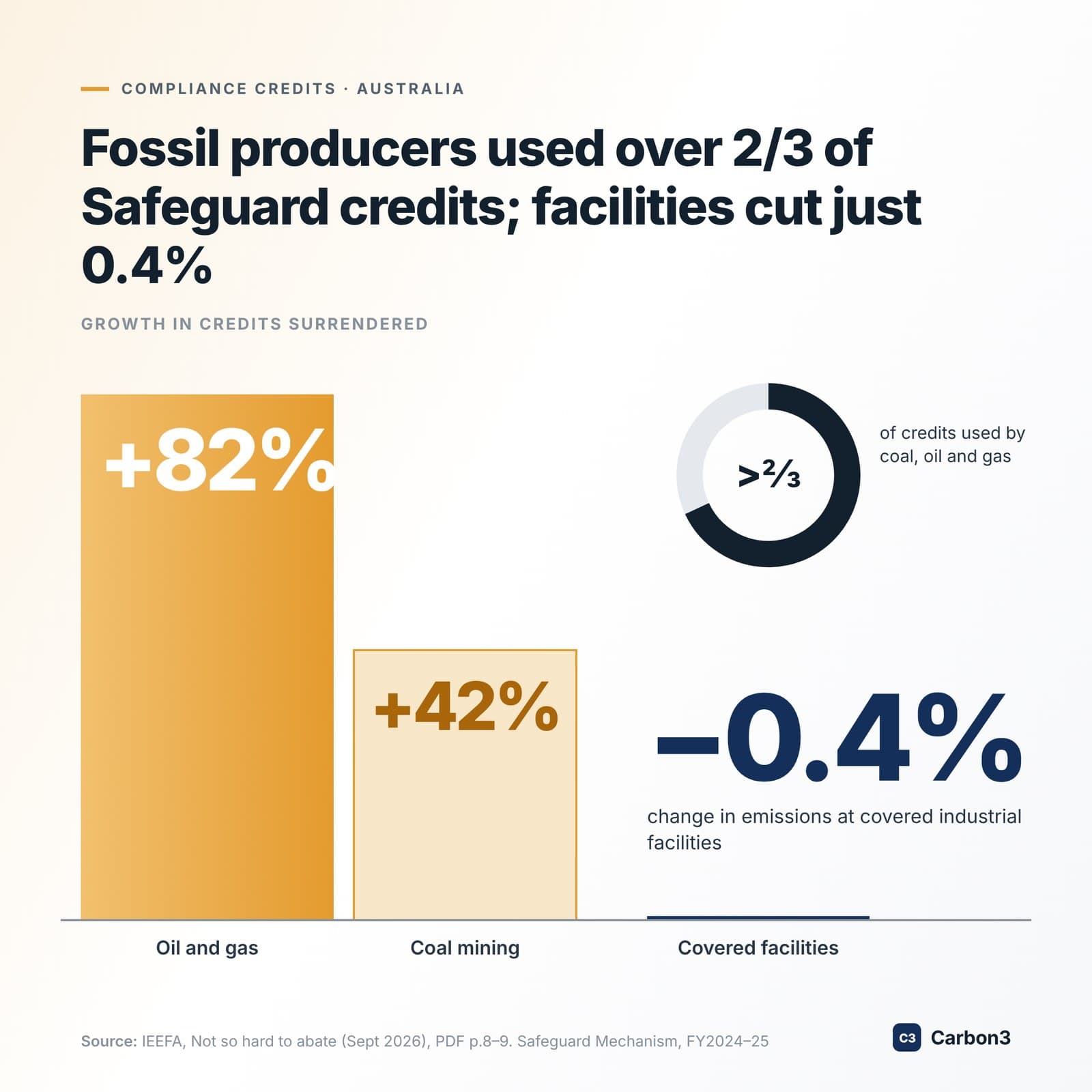
Under Australia's Safeguard Mechanism, credit use is growing faster than emissions reductions.
That is a central finding of IEEFA's September 2026 report, Not so hard to abate. Looking at the carbon credits surrendered by facilities covered by the Safeguard Mechanism in FY2024-25, IEEFA finds that coal, oil and gas producers used more than two-thirds of them.
Surrenders are rising, reductions are not
The year-on-year change is striking. Credit surrenders grew 42% for coal mining and 82% for oil and gas. Over the same period, covered industrial facilities reduced their emissions by only 0.4%.
The Safeguard Mechanism lets covered facilities use credits to meet their baselines. That flexibility is part of the scheme's design. But when surrenders climb this quickly while on-site emissions barely move, compliance increasingly rests on certificates rather than on changes at the facilities themselves.
What this means for Scope 3 buyers
Many companies outside the resources sector carry these producers in their own footprint. Coal, oil and gas show up in Scope 3 through purchased energy, materials and logistics.
For those buyers, the distinction is important. A supplier surrendering credits to meet its own compliance obligation does not change the supplier's emissions. The tonnes the buyer reports through its value chain stay where they were.
What does change them is a verified reduction inside the value chain: a change at the supplier's operations that lowers the emissions attached to the goods and services the buyer actually purchases.
Asking suppliers for reductions, not certificates
Procurement teams have a lever here. Instead of accepting a supplier's credit use as a sign of progress, buyers can ask for reductions at source, and can co-fund them where the economics need help.
On Carbon3, a reduction like this can be measured, independently verified and recorded once as an inset credit, linked to the supplier and the project that delivered it. The buyer holds a single, serialized record of a reduction in its own supply chain, which others can check and which cannot be counted twice.
Insetting is not offsetting. The reduction happens inside the value chain the buyer already reports, not in an unrelated project elsewhere.
Claim treatment depends on the applicable reporting framework.
Source: IEEFA, Not so hard to abate (September 2026).
Originally published on LinkedIn, 22 October 2026.
The Carbon3 Newsletter
Weekly analysis of industrial decarbonization and insetting across Scope 1 to 3, from the Carbon3 team.
Read more from the research team.
Policy
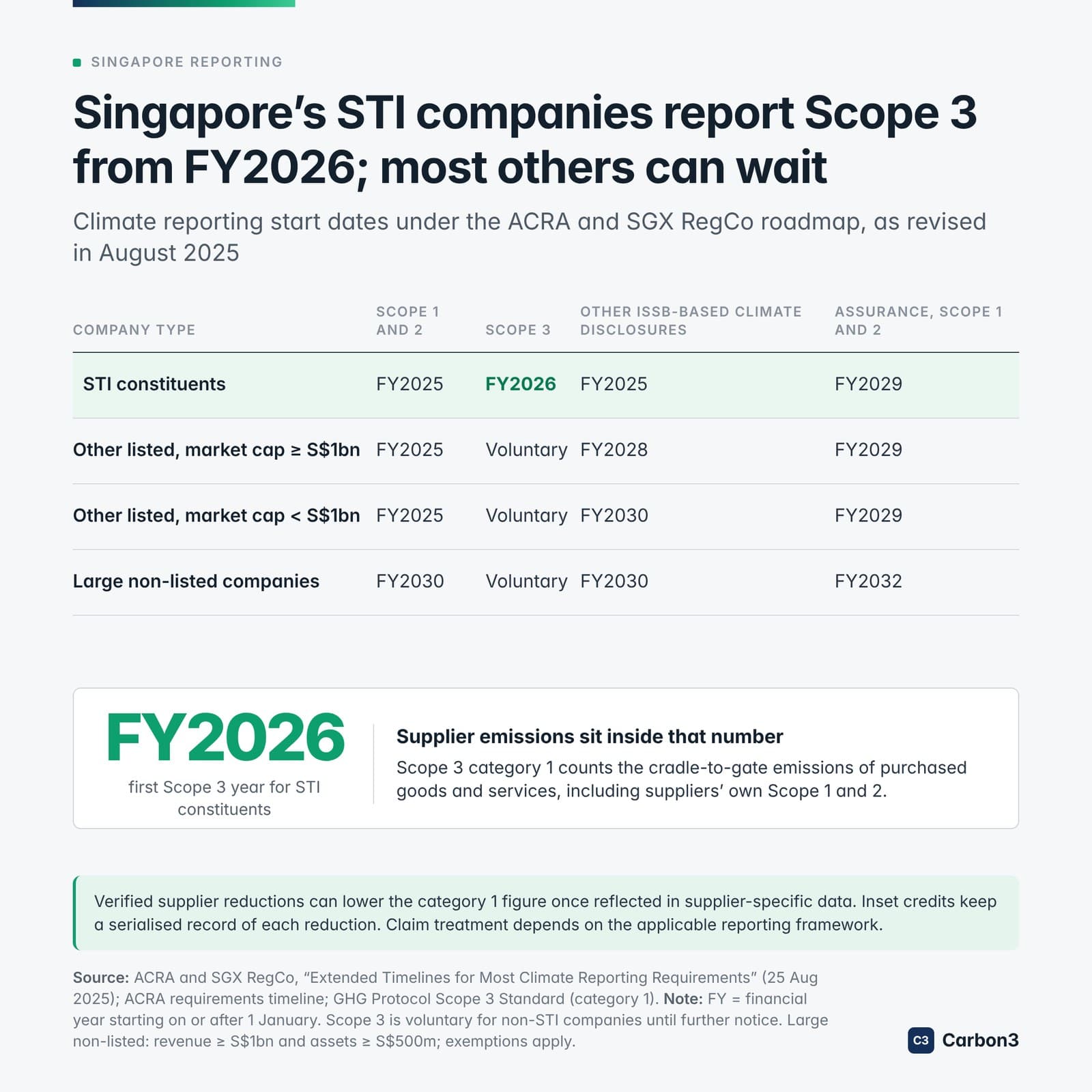
For Singapore's largest listed companies, FY2026 is the first Scope 3 year
Under the ACRA and SGX RegCo roadmap revised in August 2025, STI constituents report Scope 3 from FY2026, while other companies can wait.
Read the articlePolicy
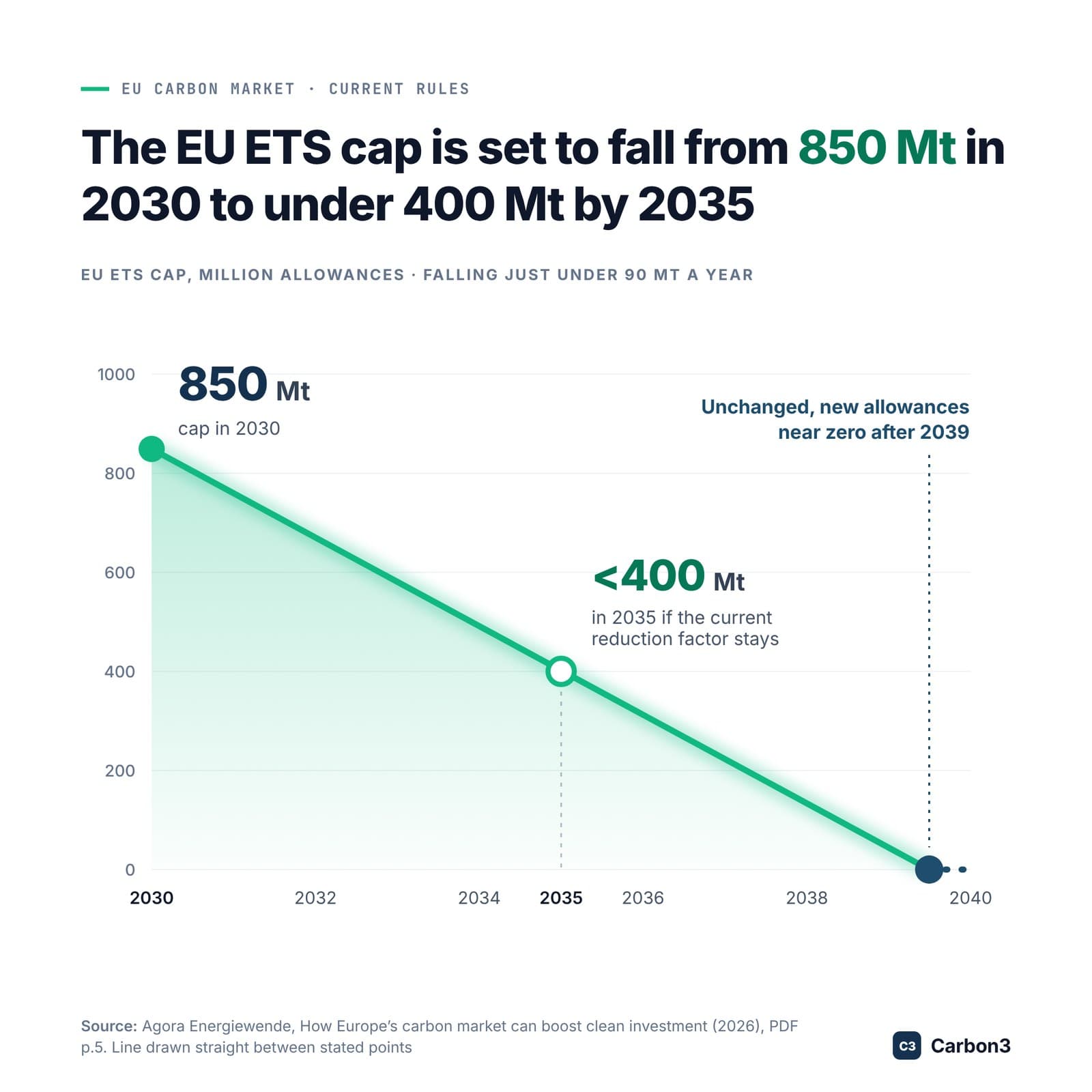
The EU carbon market is running out of allowances on a published schedule
Agora Energiewende shows the EU ETS cap falling from 850 Mt in 2030 to just below 400 Mt in 2035, a cost that buyers of steel, cement and chemicals will feel through their suppliers.
Read the articlePolicy
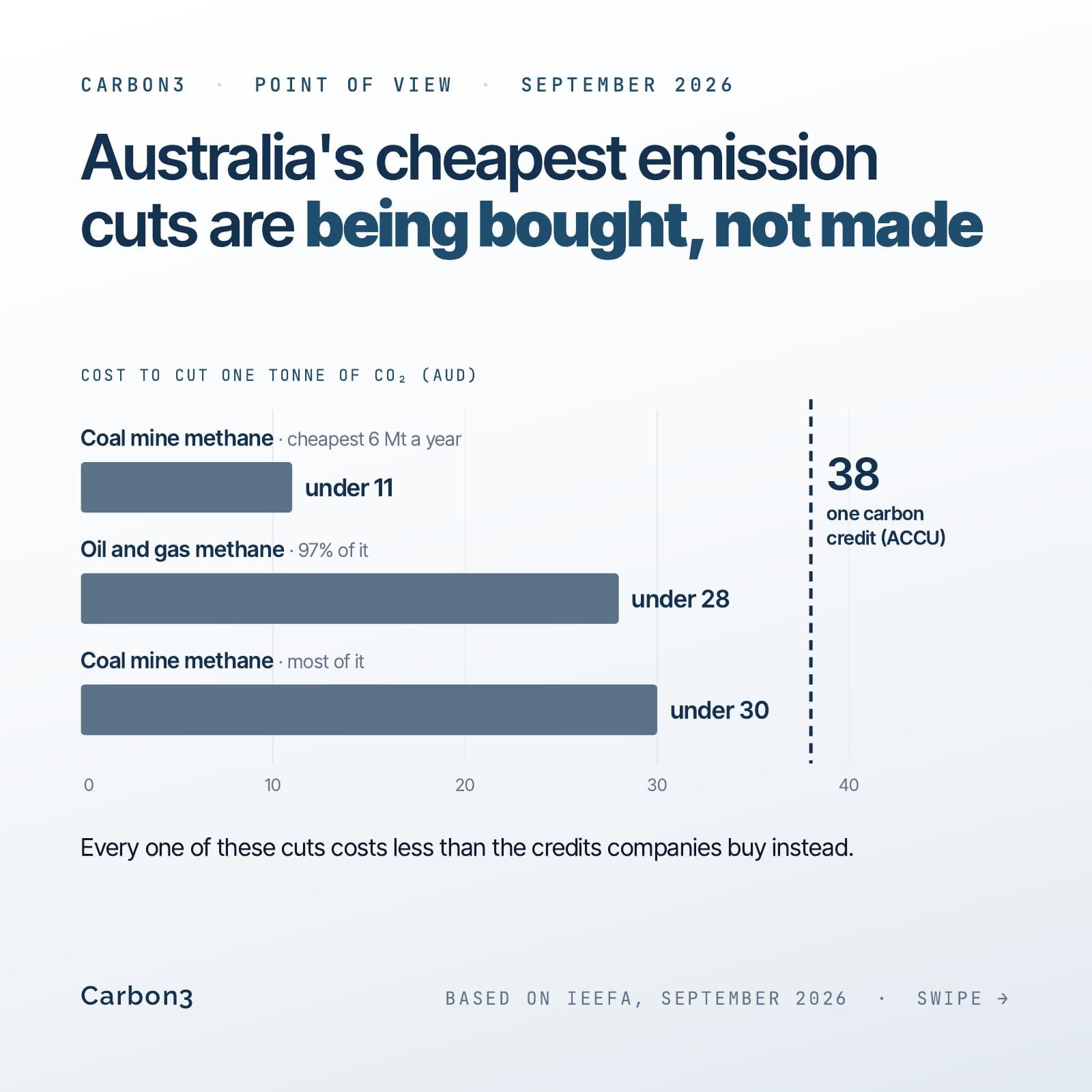
Australia's cheapest emissions reductions are being bought, not made
IEEFA finds capturing methane from coal and gas would cost less than A$30 a tonne, well under the price of a carbon credit.
Read the article
See the companies behind these figures in the Data Hub.
Look up your suppliers’ emissions and targets, free.