For Singapore's largest listed companies, FY2026 is the first Scope 3 year
Under the ACRA and SGX RegCo roadmap revised in August 2025, STI constituents report Scope 3 from FY2026, while other companies can wait. Supplier emissions sit inside that number.
By Carbon3 team2 min read
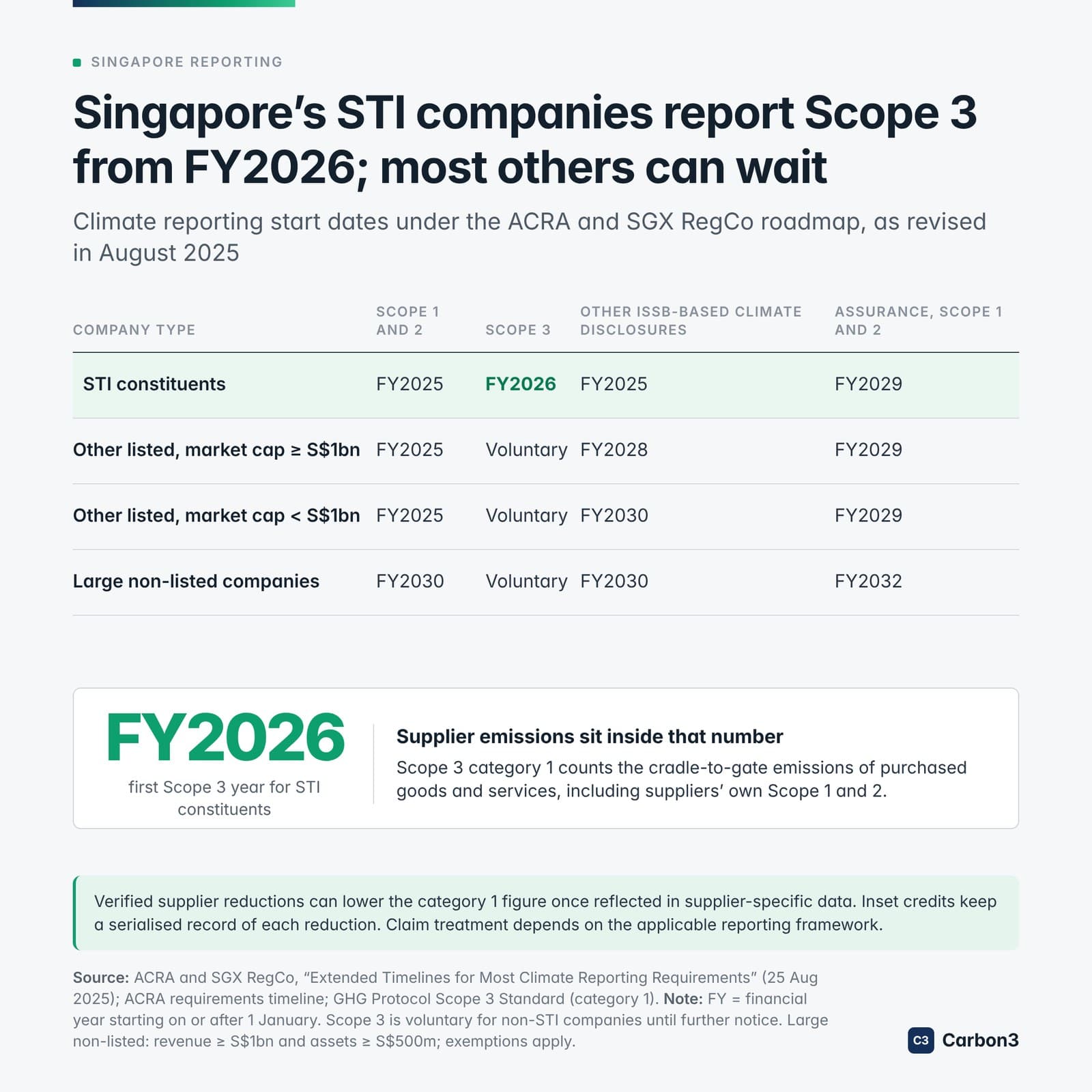
For Singapore's largest listed companies, FY2026 is the first year in which Scope 3 emissions must be reported. The date comes from the climate reporting roadmap of the Accounting and Corporate Regulatory Authority (ACRA) and SGX RegCo, as revised in August 2025. The revision extended most timelines, but it kept the earliest Scope 3 start for one group: constituents of the Straits Times Index (STI).
Who reports what, and when
Under the revised roadmap, the start dates differ by company type:
- STI constituents report Scope 1 and 2 from FY2025 and Scope 3 from FY2026. Their other ISSB-based climate disclosures also start in FY2025.
- Other listed companies report Scope 1 and 2 from FY2025. Scope 3 is voluntary for them until further notice. Their other ISSB-based disclosures start in FY2028 for a market capitalization of S$1bn or more, and in FY2030 below that.
- Large non-listed companies start ISSB-based reporting in FY2030, with Scope 1 and 2 from that year and Scope 3 voluntary. Large here means revenue of at least S$1bn and assets of at least S$500m, and exemptions apply.
External assurance of Scope 1 and 2 follows later: FY2029 for listed companies and FY2032 for large non-listed companies. A financial year here is one starting on or after 1 January of the year named.
Supplier emissions sit inside the number
For most companies, a large part of the Scope 3 figure comes from what they buy. Under the GHG Protocol Scope 3 Standard, category 1 covers purchased goods and services and counts their cradle-to-gate emissions, including the suppliers' own Scope 1 and 2 emissions.
That puts suppliers in the picture as soon as an STI company starts its first Scope 3 inventory. To report category 1, the company needs emissions data on what it purchases, and suppliers to STI companies may be among the first in Singapore to be asked for it. Where only spend-based estimates are available, a supplier's actual improvements will not show up in the buyer's figures.
Where verified supplier reductions fit
Verified supplier reductions can lower a buyer's category 1 figure once they are reflected in supplier-specific data. The harder part is the record: showing which reduction was funded, by whom, and that it was counted once.
That is where insetting comes in. When a company supports a reduction inside its own value chain, such as a supplier reducing the emissions of the goods it sells, the verified result can be recorded as an inset credit. Carbon3 keeps one serialized record of each tonne, so the reduction can be issued, transferred and retired once, and the trail can be shown to auditors and partners. Claim treatment depends on the applicable reporting framework.
For STI constituents, FY2026 is the first reporting year. For their suppliers, it may be the first year the question arrives.
Sources: ACRA and SGX RegCo, "Extended Timelines for Most Climate Reporting Requirements" (25 August 2025); ACRA requirements timeline; GHG Protocol Scope 3 Standard (category 1). Simplified; not legal or accounting advice.
Originally published on LinkedIn, 18 October 2026.
The Carbon3 Newsletter
Weekly analysis of industrial decarbonization and insetting across Scope 1 to 3, from the Carbon3 team.
Read more from the research team.
Policy
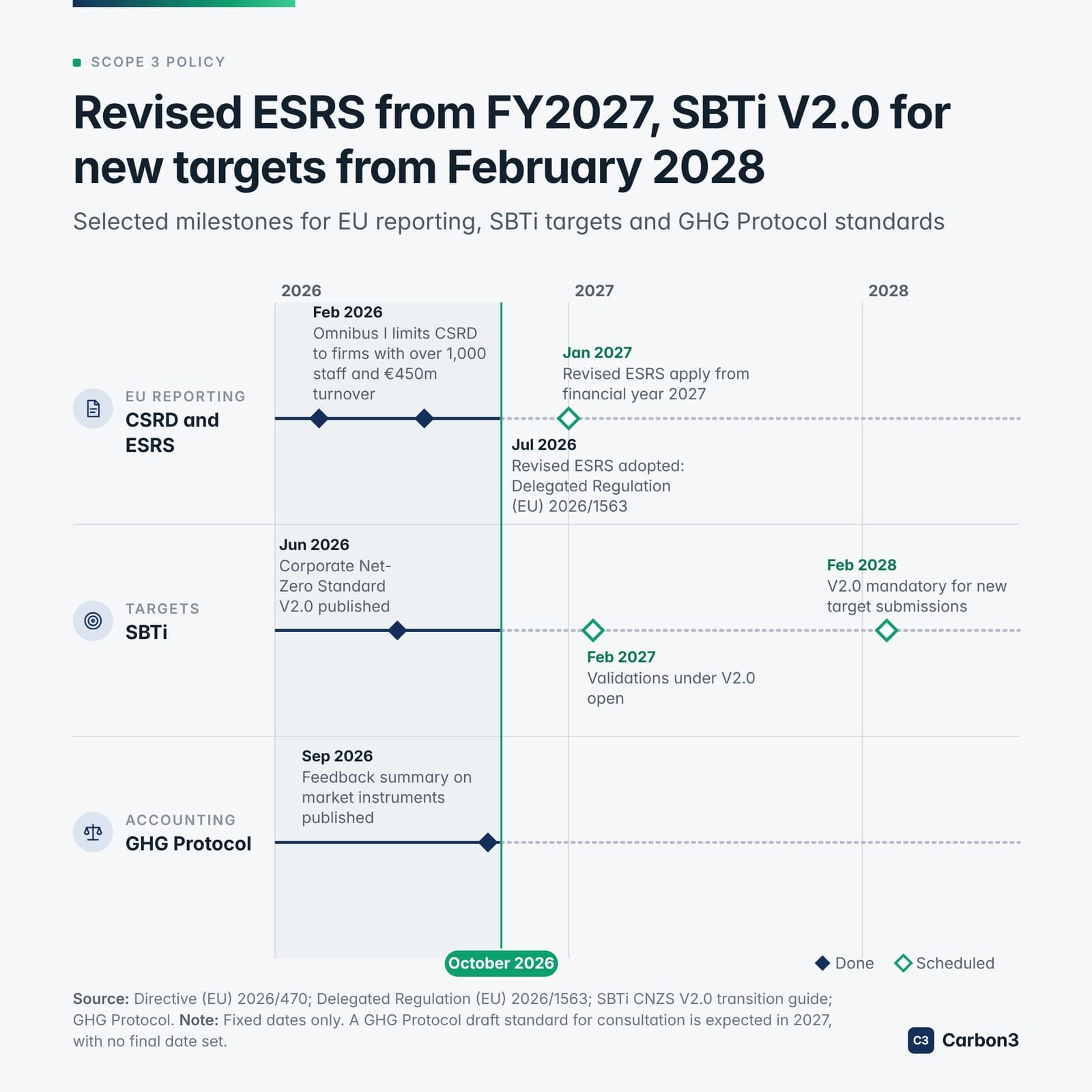
Two Scope 3 rulebooks now have fixed dates, and supplier programs take time to set up
Revised ESRS apply from financial year 2027 and SBTi's Net-Zero Standard V2.0 from February 2028.
Read the articlePolicy
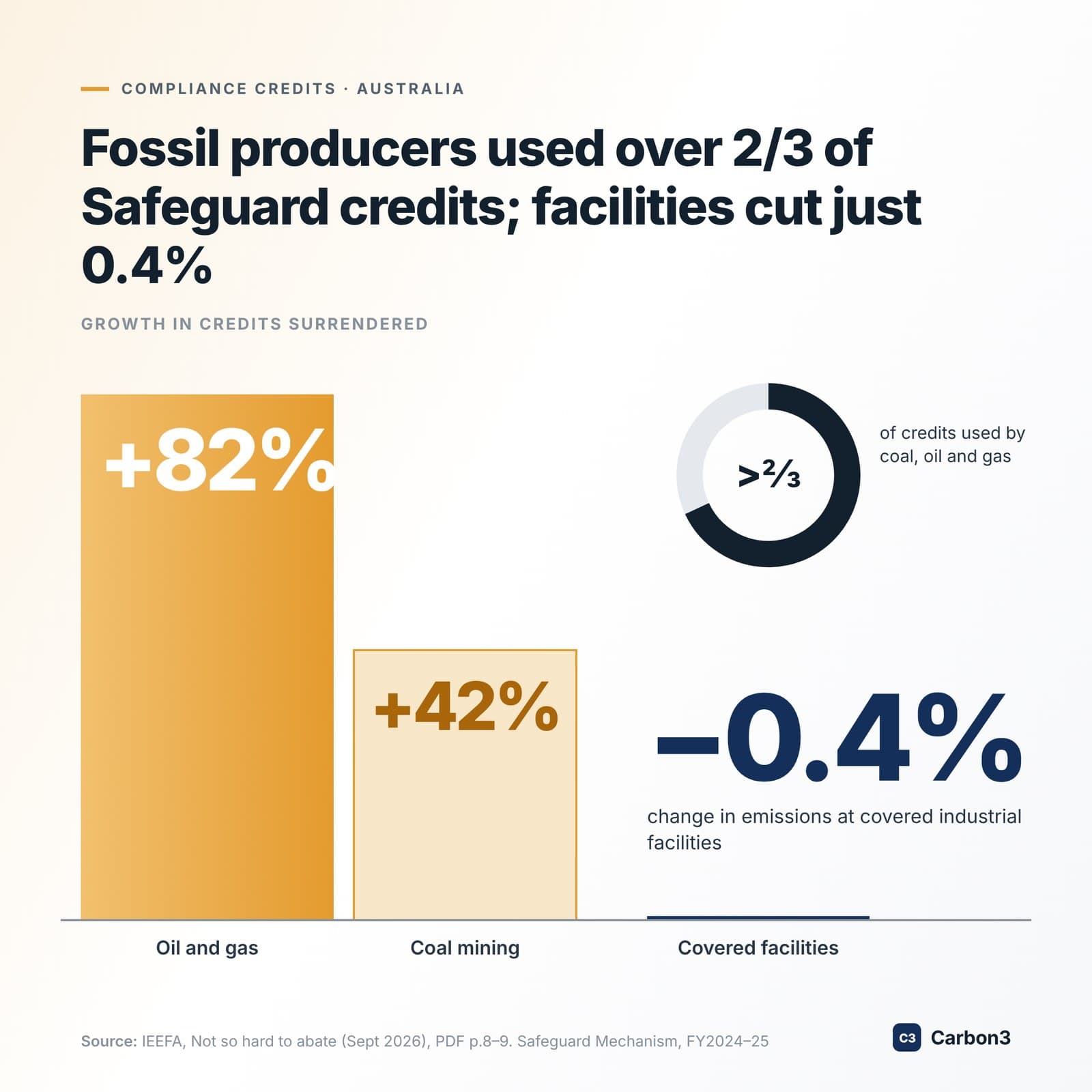
Under Australia's Safeguard Mechanism, credit use is growing faster than emissions reductions
IEEFA finds coal, oil and gas producers used more than two-thirds of the credits surrendered in FY2024-25, while covered facilities reduced emissions by only 0.4%.
Read the articleTransition finance
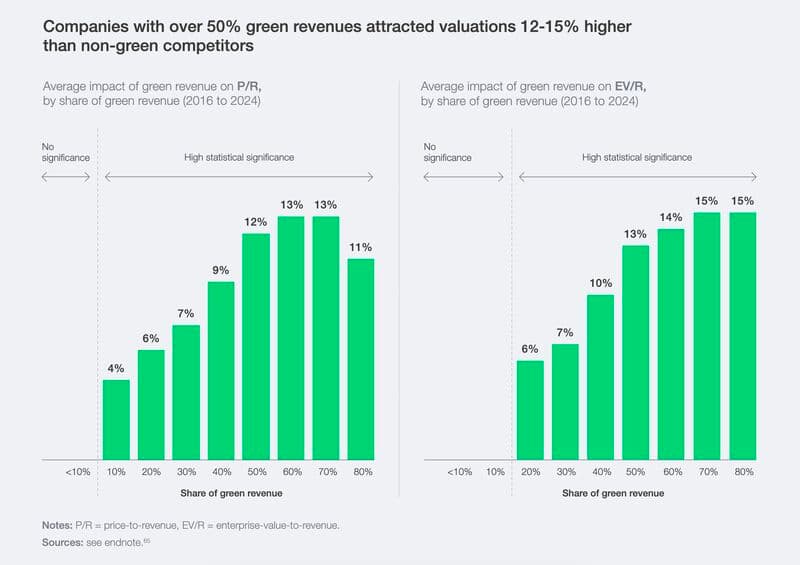
The green economy is 8.6 percent of listed equities
As of the first quarter of 2025, green-classified companies had a combined market capitalization of $7.9 trillion.
Read the article
See the companies behind these figures in the Data Hub.
Look up your suppliers’ emissions and targets, free.