CBAM liabilities are concentrated in steel and in a few exporting countries
Some exporters face tariff-equivalent exposure far above the global average.
By Carbon3 team1 min read
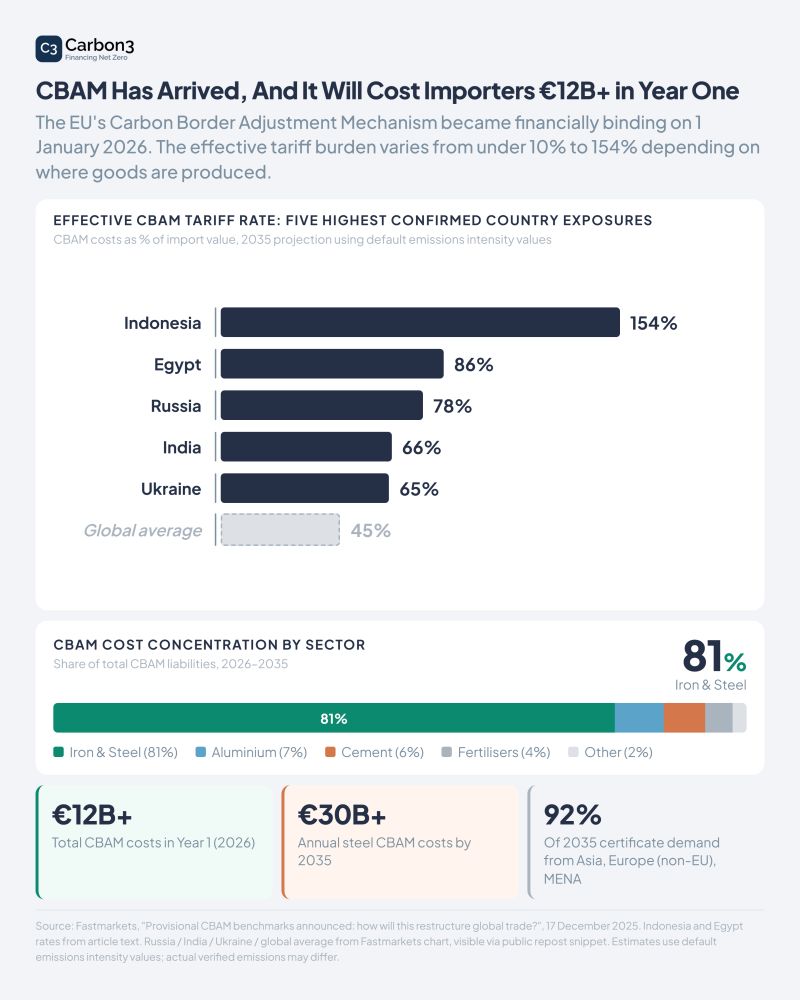
CBAM is now a financial reality, and the cost burden is highly concentrated. Steel dominates expected liabilities, while some exporting countries face tariff-equivalent exposure far above the global average.
Concentration is what makes the mechanism actionable. A small number of products and origins account for most of the expected cost, so a small number of supplier relationships account for most of a European importer's exposure. Those relationships are where co-financing a reduction pays back fastest, because the same tonne removed lowers the border levy and the importer's Scope 3 inventory at once.
Exporters see the mirror image. A verified reduction at the plant becomes a selling point to European customers and a source of revenue through inset credits, rather than a cost to be absorbed. Carbon3 structures that exchange so both sides can recover value from the same physical reduction.
Learn more
How insetting works in steel and cement
Originally published on LinkedIn, 18 May 2026.
Read more from the research team.
Policy
The EU's Temporary Decarbonisation Fund has an inverted incentive
The Court of Auditors warns that retroactive, history-based payouts deliver weak steering power.
Read the articlePolicy
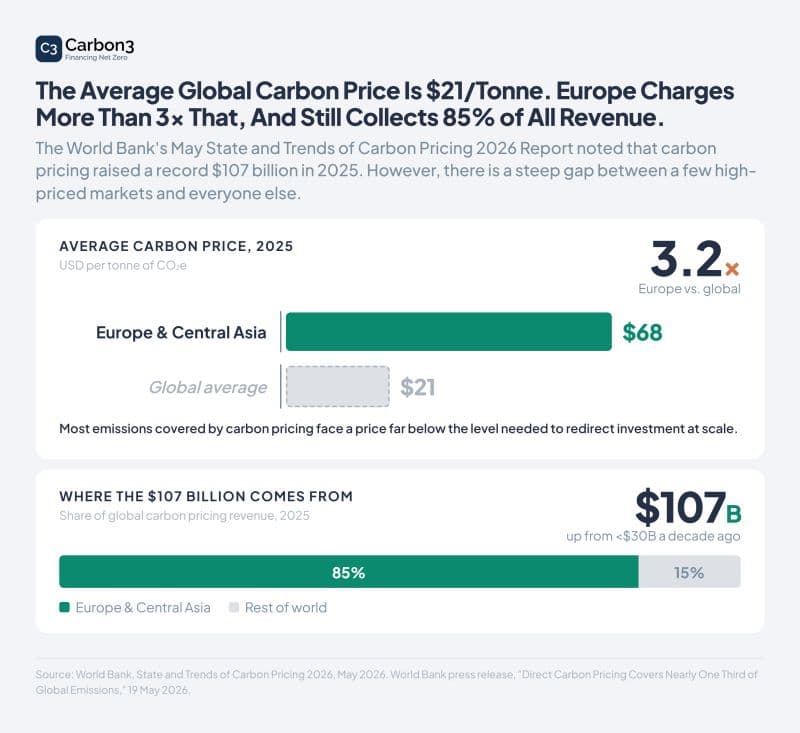
Outside Europe, the global average carbon price is $21 a tonne
Carbon pricing covers 29 percent of global emissions and raised $107 billion, but the average price is far below what redirects investment.
Read the articleSector: Steel
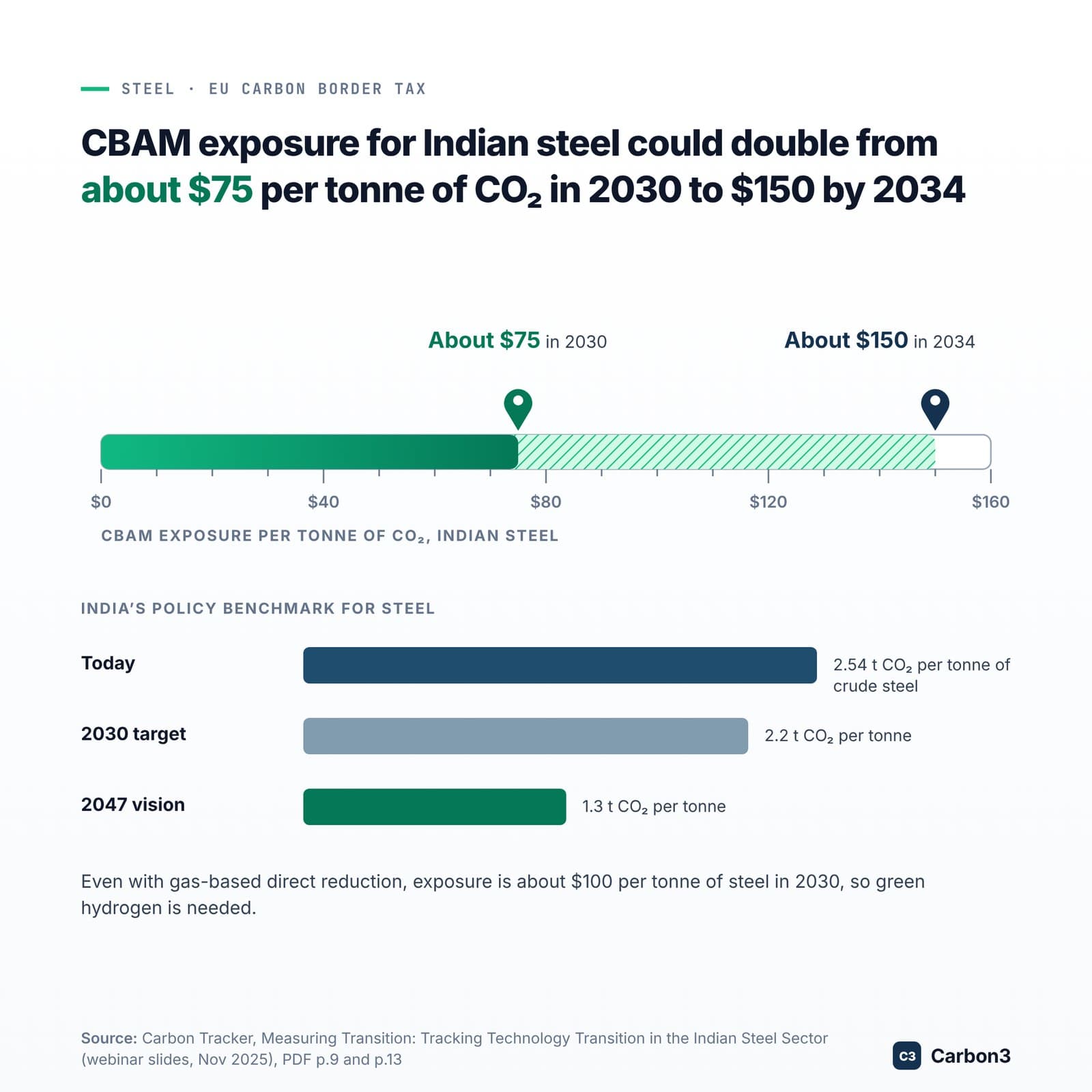
Europe's carbon border tax is about to get expensive for Indian steel
Carbon Tracker puts CBAM exposure for Indian steel at about $75 per tonne of CO2 in 2030, rising to about $150 by 2034, and European importers pay it.
Read the article
See the companies behind these figures in the Data Hub.
Look up your suppliers’ emissions and targets, free.