Collaborative financing beats compliance pressure
Suppliers will not decarbonize sustainably if the costs and risks are pushed entirely onto them.
By Carbon3 team1 min read
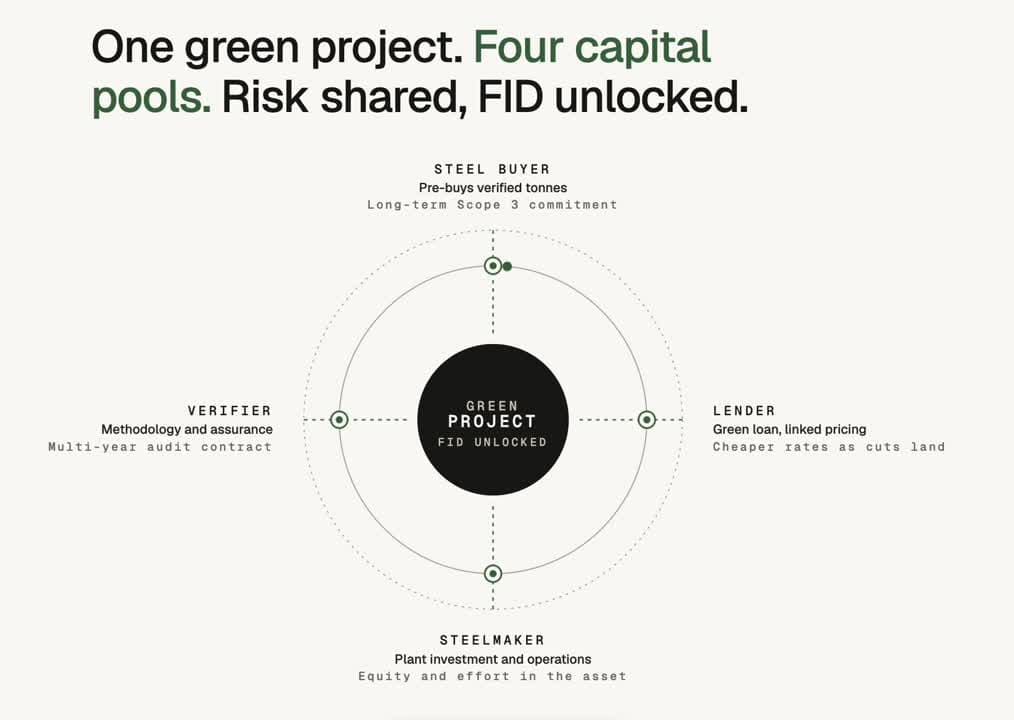
Recent analyses of Scope 3 strategies show that collaborative financing models between buyers and suppliers can accelerate emissions reductions without immediate balance-sheet strain on either party. By the World Economic Forum: weforum.org
Evidence from supply chain and sustainability research suggests that supplier development and collaboration are more effective than compliance-based pressure alone, particularly where suppliers face capacity constraints.
Many suppliers, especially small and medium-sized firms in emerging markets, lack the capital or technical capacity to decarbonize without support. Rather than imposing mandates, some buyers are investing upstream through training programs, equipment upgrades, technical assistance and long-term contracts that justify investment.
These approaches acknowledge a simple reality: suppliers will not decarbonize sustainably if the costs and risks are pushed entirely onto them.
At Carbon3 we make this type of supply-chain co-investment operational. Learn more at carbon3.net
Originally published on LinkedIn, 7 June 2026.
The Carbon3 Newsletter
Weekly analysis of industrial decarbonization and insetting across Scope 1 to 3, from the Carbon3 team.
Read more from the research team.
Transition finance
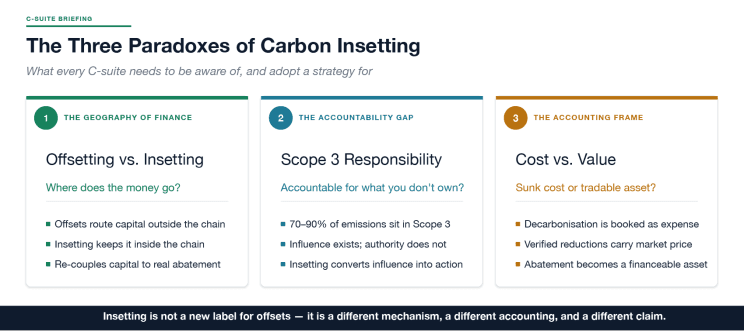
The carbon insetting paradox
Decoupled versus coupled finance, Scope 3 accountability, and the shift from sunk cost to recoverable value.
Read the articleTransition finance
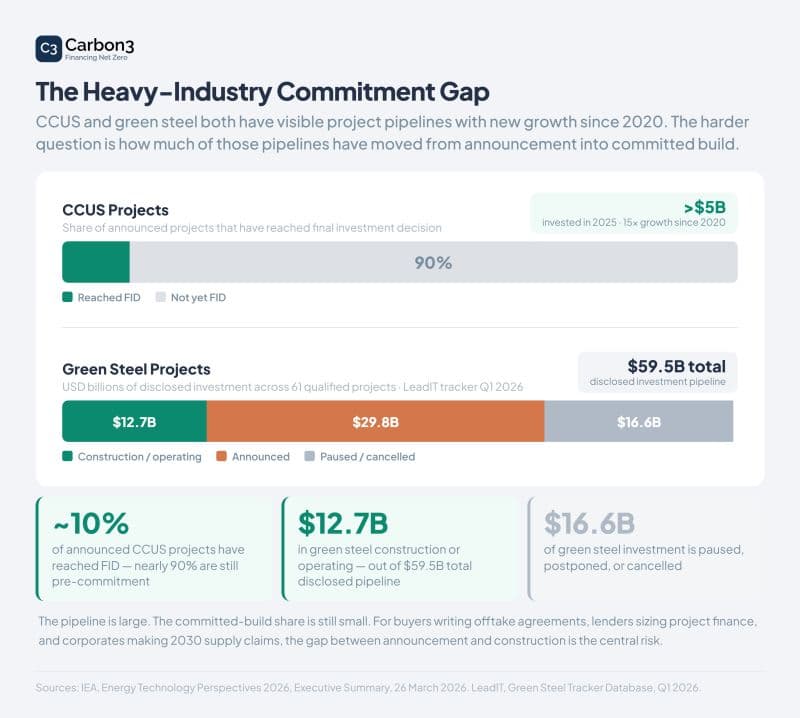
Heavy industry has a pipeline, not yet a committed build
CCUS investment has grown more than fifteen-fold since 2020, yet almost 90 percent of announced projects have not reached final investment decision.
Read the articleSector: Maritime
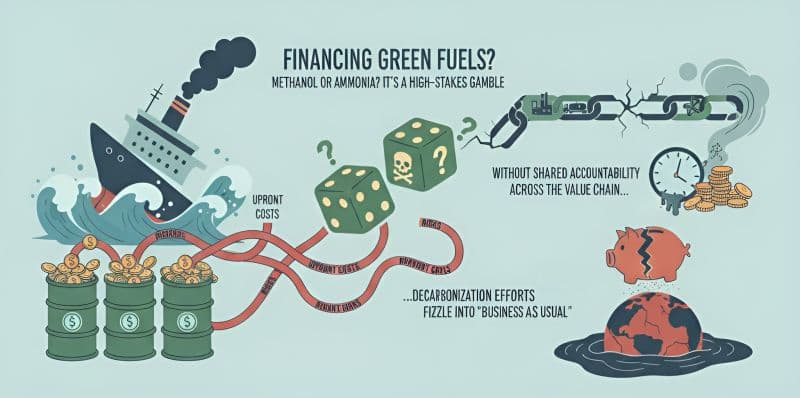
Financing green fuels is a high-stakes gamble
Methanol and ammonia carry high upfront costs and risks that no single company wants to carry alone.
Read the article
See the companies behind these figures in the Data Hub.
Look up your suppliers’ emissions and targets, free.