Financing green fuels is a high-stakes gamble
Methanol and ammonia carry high upfront costs and risks that no single company wants to carry alone. Sharing them changes the bet.
By Carbon3 team1 min read
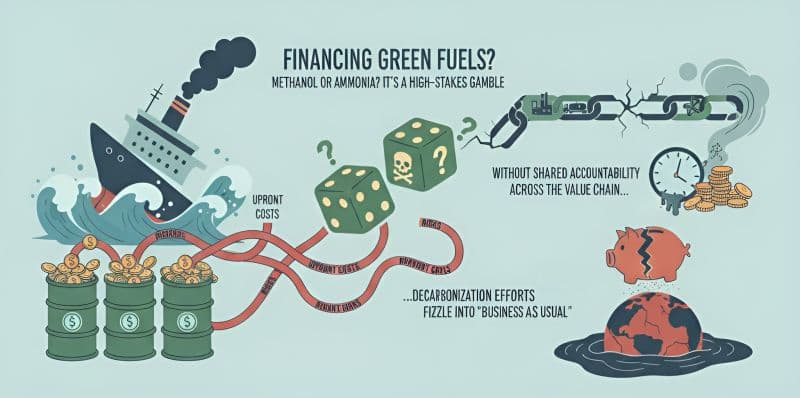
This illustration captures the problem shipping faces with methanol and ammonia. Upfront costs are high, risks multiply along the chain, and no single company wants to carry them alone.
Without shared accountability across the value chain, projects stall and decarbonization efforts drift back into business as usual. Compliance deadlines are missed and the potential of these fuels goes untapped.
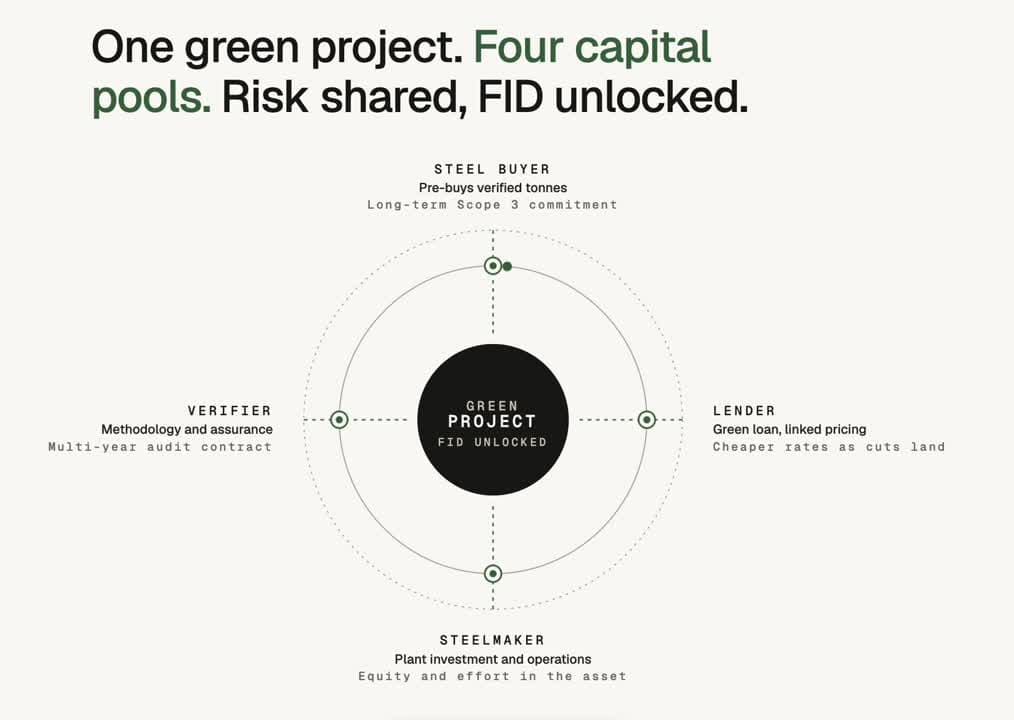
The way out is to spread both the cost and the benefit. When shipowners, fuel producers, cargo owners and lenders each fund part of the premium and receive a share of the verified reduction, the gamble turns into a project that can be financed.
Originally published on LinkedIn, 8 November 2025.
The Carbon3 Newsletter
Weekly analysis of industrial decarbonization and insetting across Scope 1 to 3, from the Carbon3 team.
Read more from the research team.
Sector: Maritime
The IMO delay is a demand signal for policy-agnostic decarbonization
Insetting lets cargo owners co-finance clean fuels, de-risk projects and secure FuelEU compliance while regulation stalls.
Read the articleSector: Maritime
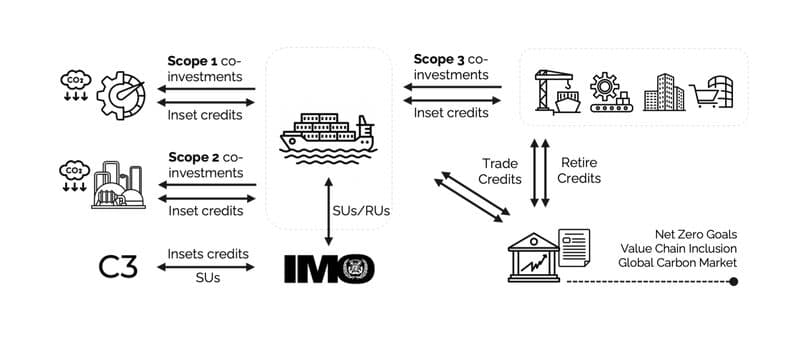
How inset credits can work alongside the IMO framework
A shipping value chain can keep decarbonizing through voluntary co-investment, whether or not the IMO's Net-Zero Framework is adopted.
Read the articleTransition finance
Collaborative financing beats compliance pressure
Suppliers will not decarbonize sustainably if the costs and risks are pushed entirely onto them.
Read the article
See the companies behind these figures in the Data Hub.
Look up your suppliers’ emissions and targets, free.