How inset credits can work alongside the IMO framework
A shipping value chain can keep decarbonizing through voluntary co-investment, whether or not the IMO's Net-Zero Framework is adopted.
By Carbon3 team1 min read
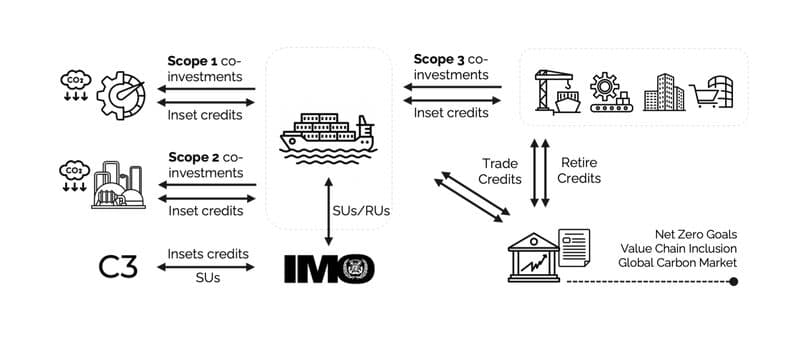
The IMO's Net-Zero Framework was pushed back in 2025, and there is no certainty about when it will be adopted. This diagram shows how a shipping value chain can keep decarbonizing either way.
A vessel operator receives co-investment for its Scope 1 and Scope 2 reductions, from fuel suppliers and energy providers, in exchange for inset credits. Downstream partners such as ports, manufacturers and retailers do the same for their Scope 3 emissions. The resulting credits can then be traded or retired against net-zero goals.
If the IMO framework does arrive, its surplus and remedial units can sit alongside the same system. The voluntary market does not have to wait for regulation to move first.
Originally published on LinkedIn, 12 November 2025.
The Carbon3 Newsletter
Weekly analysis of industrial decarbonization and insetting across Scope 1 to 3, from the Carbon3 team.
Read more from the research team.
Sector: Maritime
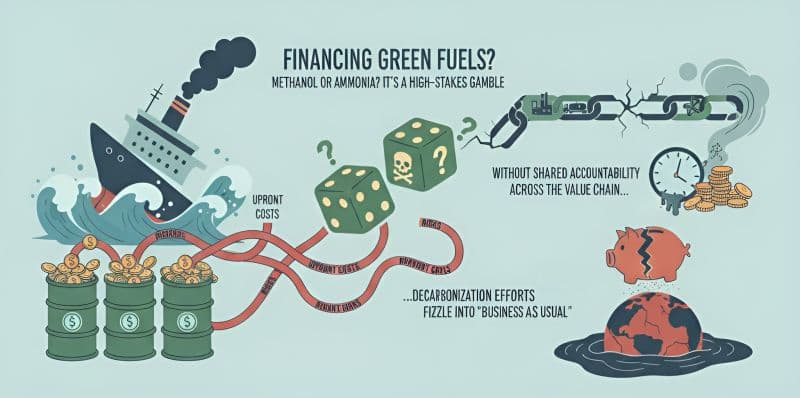
Financing green fuels is a high-stakes gamble
Methanol and ammonia carry high upfront costs and risks that no single company wants to carry alone.
Read the articleSector: Maritime
GCMD's FEET fund links retrofits to verifiable savings
A blended, unsecured structure opens a new tier of maritime decarbonization investment below fuel-switching and newbuilds.
Read the articleSector: Maritime
Decarbonizing the shipping industry with Carbon3
Our February 2025 brief on the cost of maritime decarbonization, and how inset credits can help fund it across the value chain.
Read the article

See the companies behind these figures in the Data Hub.
Look up your suppliers’ emissions and targets, free.