GHG Protocol AMI is insetting in a new reporting shell
GHG Protocol AMI: Carbon3 on the Actions and Market Instruments Standard, a multi-statement GHG report, and a market-based Scope 3 inventory.
By Carbon3 team5 min read
GHG Protocol AMI is the short name for an Actions and Market Instruments Standard the GHG Protocol is writing. It would give a company a place, inside its corporate GHG report, for actions and market instruments. That place sits beside the physical inventory, not inside it. The Phase 1 White Paper of March 2026 sets out the shape under discussion. The White Paper is not a draft standard, and nothing in it is in force.
Carbon3's view is plain. AMI is insetting in a new reporting shell. A buyer funds a real emissions reduction in its value chain. The claim is contractual, checked against a verification report, and reported next to the physical inventory. AMI is the set of boxes that report may use. The boxes are still being drawn.
AMI vs AIM Platform
The names are easy to confuse. They are different rulebooks.
AMI, from the GHG Protocol. Actions and Market Instruments. A corporate reporting architecture for actions and market instruments inside a GHG report. What exists today is a white paper and a closed request for information. No draft standard has been published.
AIM Platform. Advanced and Indirect Mitigation. A separate standard and guidance, version 1.0, published in April 2026, for value-chain interventions that sit outside a full physical inventory. It has its own rules for association, quality, accounting and reporting. It does not decide GHG Protocol inventory rules, and it does not decide target rules.
Related subject. Different document. This is Carbon3's commentary on AMI only.
The multi-statement GHG report
The White Paper puts four statements under consideration. The first two attribute emissions to the company. The third reports the effect of a project. The fourth holds indicators that are not greenhouse gases. A figure in one statement is not netted into another. The physical inventory stays as it is.
Physical GHG inventory. Emissions the company accounts for from its own activity and its value chain, on the physical basis it uses today.
Market-based GHG inventory. Qualified contracts and market instruments, with contractual traceability and a chain of custody. Book and claim belongs here. An inset credit is a market instrument in this sense: a recorded claim on a reduction, kept out of the physical inventory.
GHG impact statement. Results of projects, including work a buyer co-finances in its value chain, reported as an impact rather than as a change to the inventory.
Non-GHG indicators, optional. Other performance indicators, not stated in CO₂e. Support in the request for information was mixed, so the White Paper treats this statement as optional context, not a required part of the report.
A market-based Scope 3 inventory
Most of a manufacturer's emissions sit with its suppliers. A market-based Scope 3 inventory would gather the contractual claims that qualify, and show them on their own statement. The physical inventory does not change. A buyer can see what it contracted for, and an auditor can see that the same tonne was not claimed twice.
That split is the point of the shell. A market instrument should not vanish from the report, and it should not be subtracted from emissions the company still causes. Carbon3 reads the White Paper the same way: keep the statements apart.
Two guides on this site follow the same split. The book and claim guide explains the chain-of-custody model: the lower-emission attribute is recorded apart from the physical fuel, steel or other good, and it is claimed once. The GHG Protocol actions and market instruments guide tracks the dates and the documents as the GHG Protocol publishes them.
Book and claim Scope 3
Book and claim Scope 3 is the practical case. A cargo owner, a manufacturer or a food company pays for a lower-emission activity in a system it buys from, even when the physical good that reaches it is unchanged. The attribute is booked when the activity happens, and claimed when a buyer retires the record. One claim, one holder.
AMI would give that claim the market-based inventory, and would keep project results on the impact statement. Until the text is final, Carbon3 keeps that split, and keeps the evidence with each part.
Value chain insetting infrastructure
Carbon3 is value chain insetting infrastructure. It is self-serve. It does not manage projects.
The project developer issues credits on the Carbon3 registry once a verification report is on file. Carbon3 records allocation, transfer, listing and retirement. It does not verify or assure credits. A credit has one holder at a time. Retirement is final, so the same reduction is not claimed twice.
Carbon3 makes no claim about SBTi targets. The White Paper leaves target rules open, and Carbon3 does not fill that gap. What the record does provide is a trail: the project, the verification report the issuance relies on, who holds the credit, and whether it has been retired. A company preparing a market-based statement or an impact statement can point at that trail. The methodology sets the same roles out in one place.
Where the Actions and Market Instruments Standard stands
Phase 1 is the White Paper and the request for information, which ran in 2026 and is now closed. Phase 2 is underway. It covers quality criteria, safeguards and eligibility. None of this is a finished standard.
Consultation is aimed for Q2 2027, and final publication is aimed for Q4 2028. Those dates come from the GHG Protocol and ISO consolidation FAQ, and from the summary of responses to the request for information. The AMI landing page still names Q3 2027. Carbon3 uses the consolidation dates, and treats the landing page as behind them.
Primary sources, all from the GHG Protocol:
Learn more
How a buyer reports inset credits
Read more from the research team.
Claims & reporting
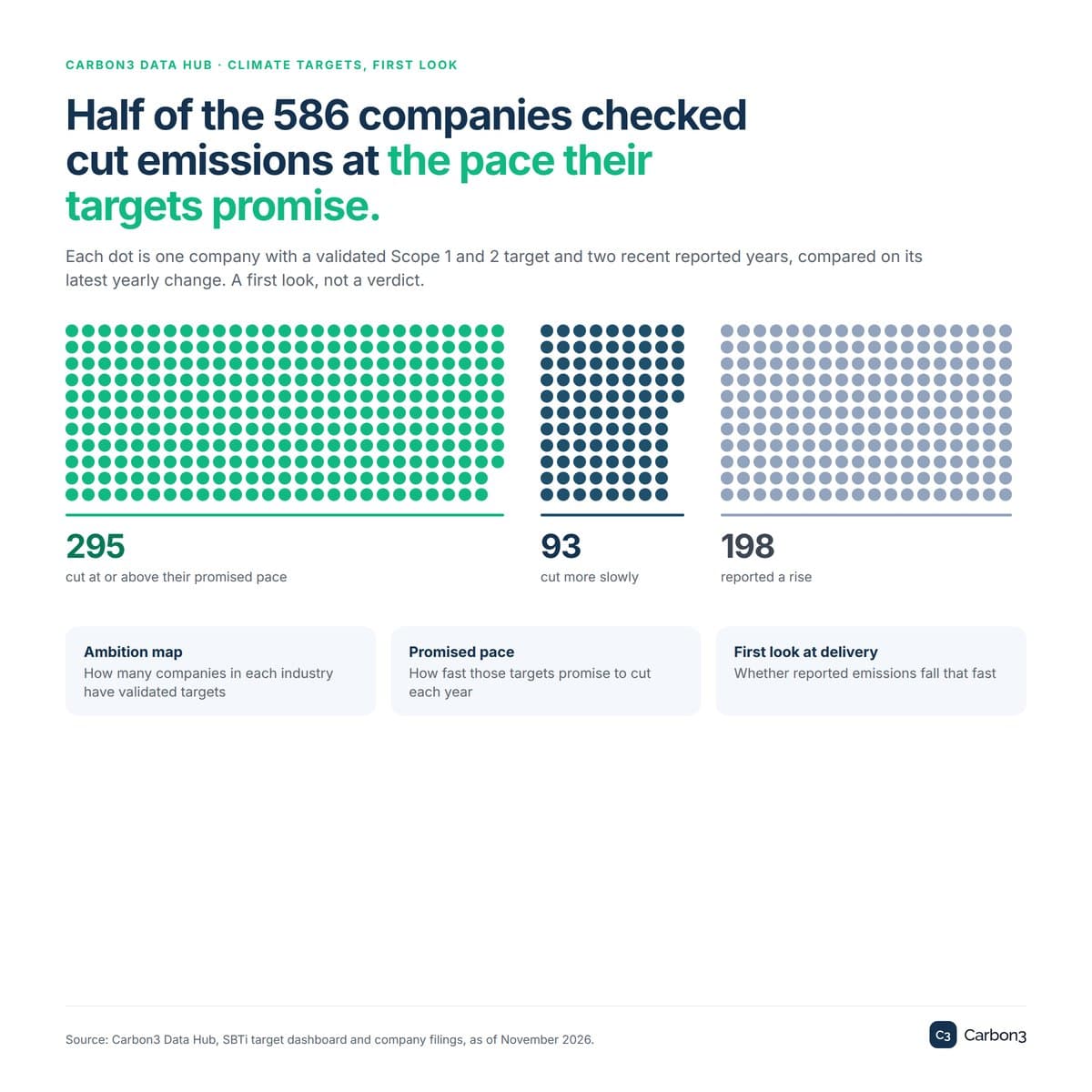
Half of the companies checked are reducing emissions at the pace their climate targets promise
Carbon3 compared about 7,200 companies on the SBTi registry three ways: how many have climate targets, how fast those targets promise to cut and whether reported emissions are falling that fast.
Read the articleClaims & reporting
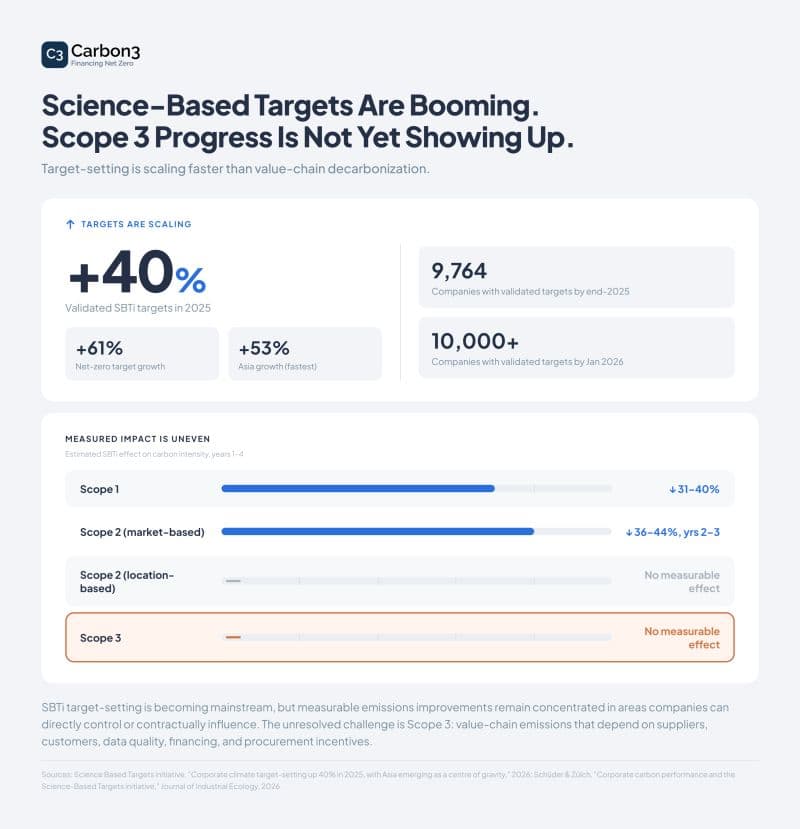
Science-based targets are scaling, but impact is still concentrated where companies have control
The next frontier is Scope 3: turning value-chain ambition into financed, verified and shareable outcomes.
Read the articleClaims & reporting
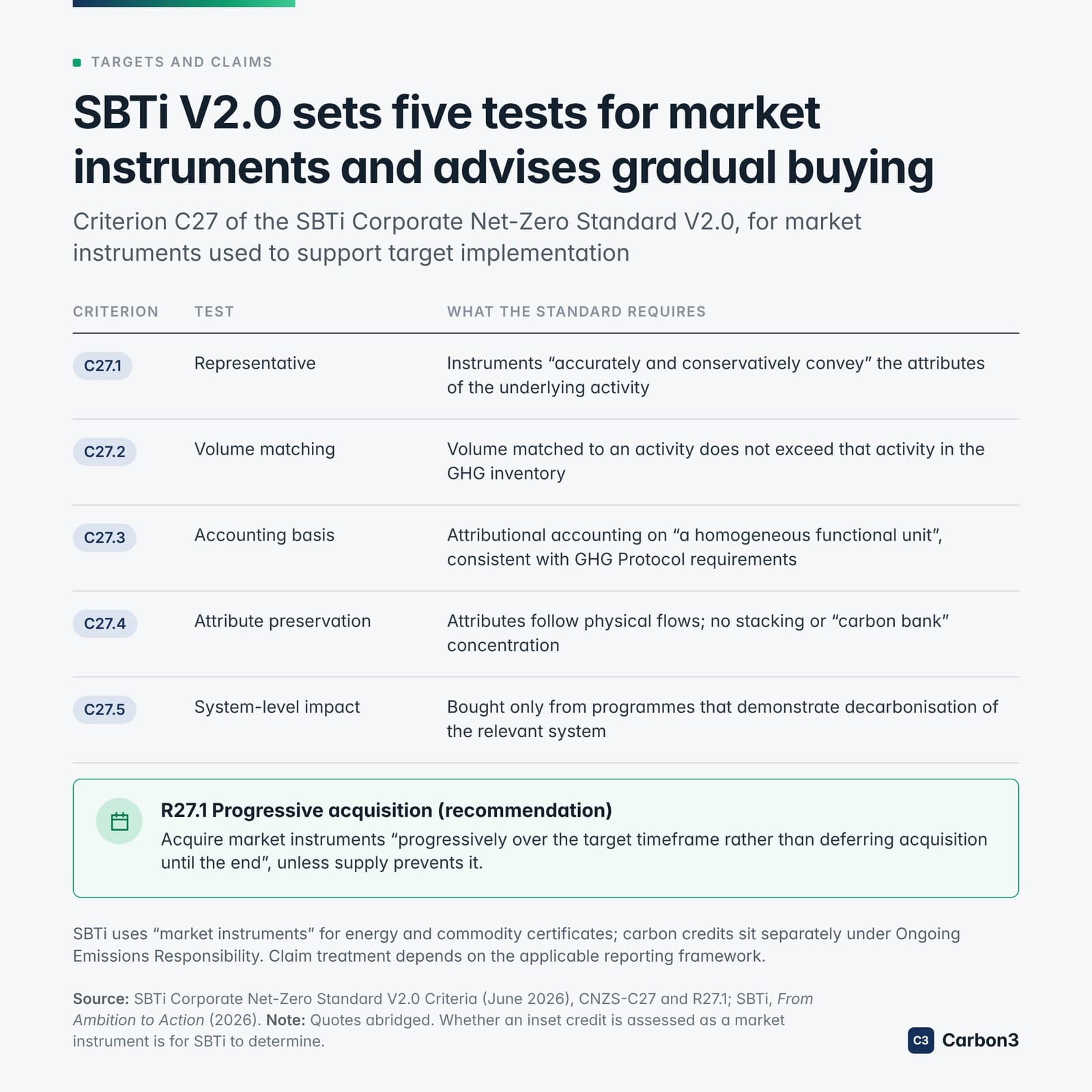
SBTi's new net-zero standard spells out what a market instrument must prove
Criterion C27 of the Corporate Net-Zero Standard V2.0 sets five tests for market instruments, and recommendation R27.1 advises buying progressively over the target timeframe.
Read the article
See the companies behind these figures in the Data Hub.
Look up your suppliers’ emissions and targets, free.