The battery boom is no longer one story
Grid-scale storage is scaling fast, while data centers add backup capacity to protect uptime rather than to make the grid more flexible.
By Carbon3 team1 min read
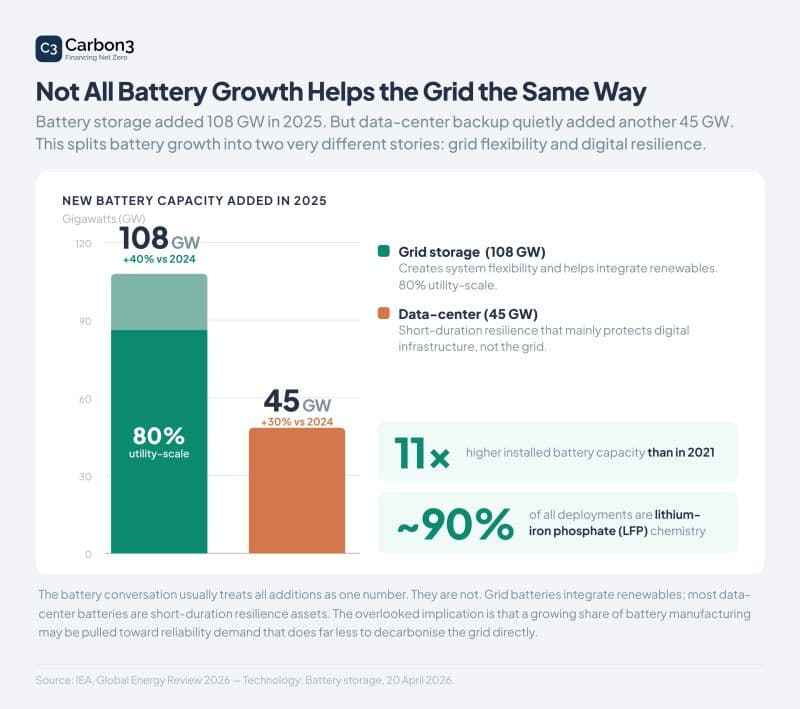
The battery boom is no longer one story. Grid-scale storage is scaling fast, while data centers are adding vast backup-battery capacity to protect uptime, not necessarily to make the grid more flexible.
The distinction in the post is worth holding on to. Storage that responds to the grid adds flexibility and displaces peaking fossil generation. Storage that sits behind a data center and waits for an outage does neither. Both show up in the same deployment statistics, and only one of them contributes much to decarbonization.
The same care applies to Scope 3 claims. A reduction has to be attributable to an intervention that actually changed emissions, not to capacity that was installed for another reason. Verification at the site and clear rules on additionality are what keep the two apart, and they are the basis on which a project developer issues inset credits, after an independent verifier has confirmed the tonnes, for the Carbon3 registry to record.
Originally published on LinkedIn, 22 June 2026.
The Carbon3 Newsletter
Weekly analysis of industrial decarbonization and insetting across Scope 1 to 3, from the Carbon3 team.
Read more from the research team.
Outlook
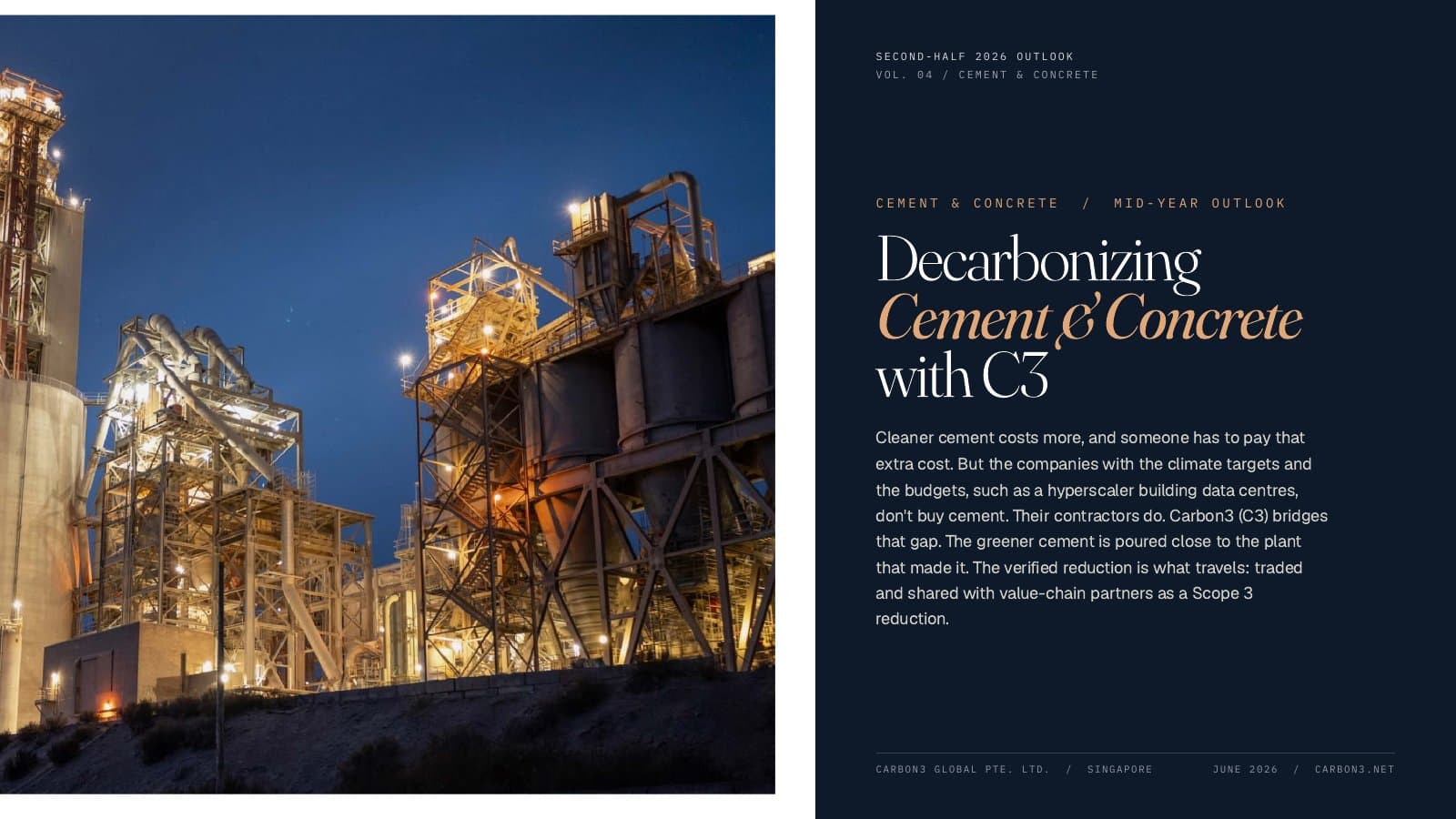
The Cement & Concrete Outlook 2026
Low-carbon cement is not a technology problem.
Read the articleOutlook
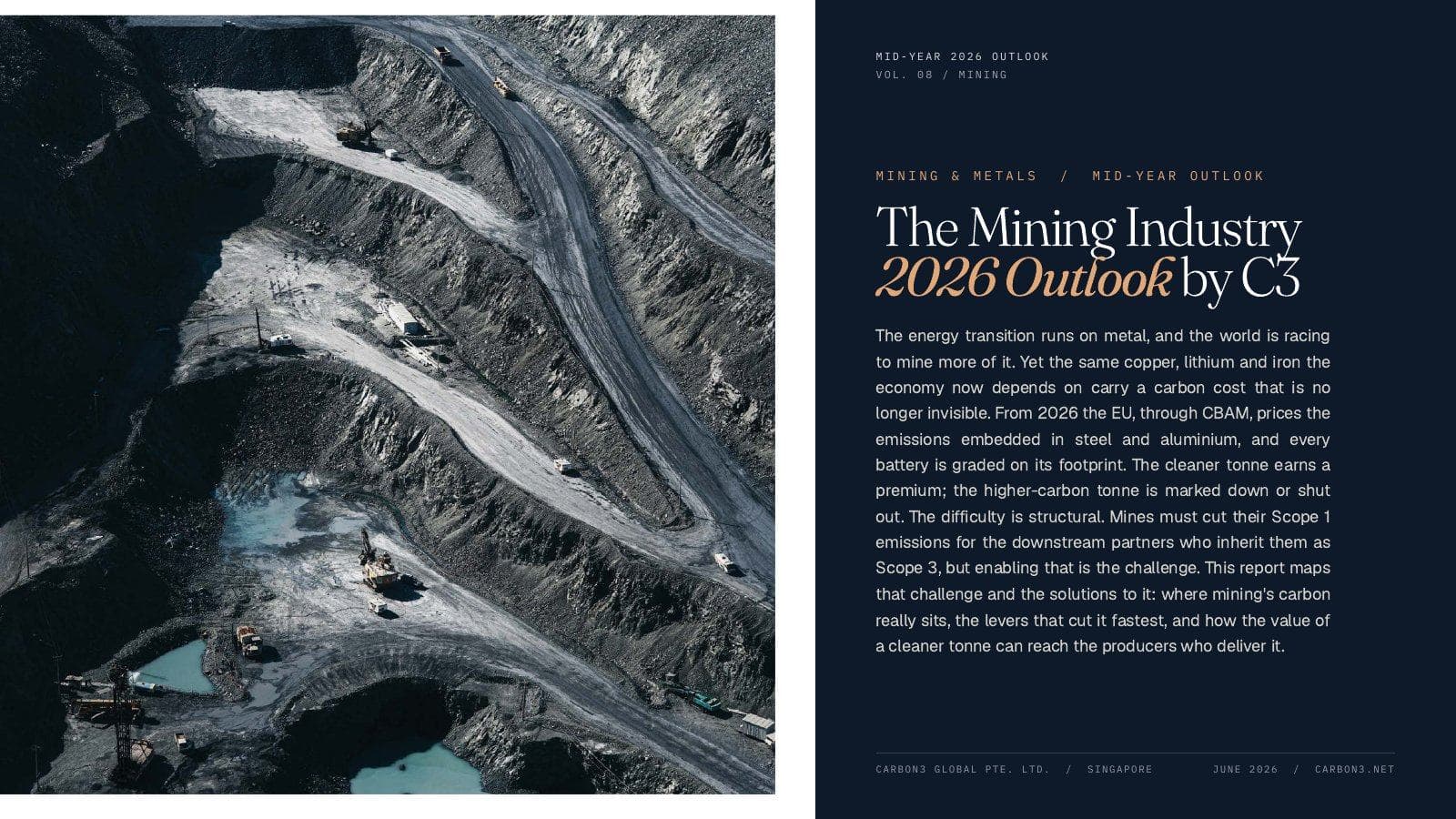
The Mining Outlook 2026
A mine's Scope 1 is its customers' Scope 3.
Read the articleOutlook
Battery storage reaches 110 GW
Battery storage capacity has reached 110 GW, and storage is becoming part of how clean power is delivered rather than an add-on.
Read the article
See the companies behind these figures in the Data Hub.
Look up your suppliers’ emissions and targets, free.