Transparency and traceability in chemical value chains
A Nature paper argues for harmonized accounting, digital verification and collaborative governance. Carbon3 provides exactly that.
By Carbon3 team1 min read
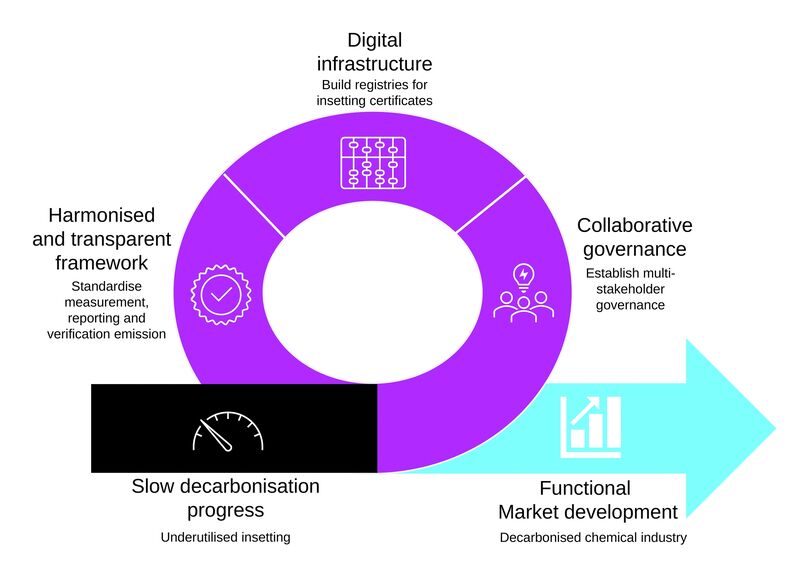
Complex supply chains pose an enormous challenge for decarbonizing the chemical industry in the face of pressure to move towards net-zero emissions. This paper in Nature Magazine argues that transparency, traceability and end-to-end governance can incentivize companies to invest in verified emissions reductions within their own value chains.
"The chemical industry can overcome these obstacles with three interconnected solutions (see figure):
- harmonized and transparent accounting frameworks,
- digital systems to track and verify reductions,
- collaborative governance and capacity building across the value chain."
At Carbon3 we're already enabling this vision. On our registry, project developers issue inset credits from real Scope 3 projects once a verification report on the reductions is on file. The registry acts as a co-financing instrument, with high additionality, no scope 1-3 double-counting, and facilitates cost & benefit trading/sharing across value chains.
Chemical companies: Invest in your supply chain's future with tamper-evident audits and dynamic allocation. Align with EU CBAM, US IRA, and Paris goals today.
Paper: nature.com Authors: Semra Bakkaloglu, PhD, Nilay Shah, Livio Scalvini, Maurizio Zollo Displayed Image is Figure 1 from paper.
Correction, 30 October 2026: An earlier version of this article said the reductions behind Carbon3 credits are independently verified. Credits are issued once a verification report is on file. Carbon3 asks for a verifier that is independent of the project, but the registry does not yet check who wrote the report.
Learn more
How insetting works in chemicals
Originally published on LinkedIn, 8 March 2026.
Read more from the research team.
Integrity
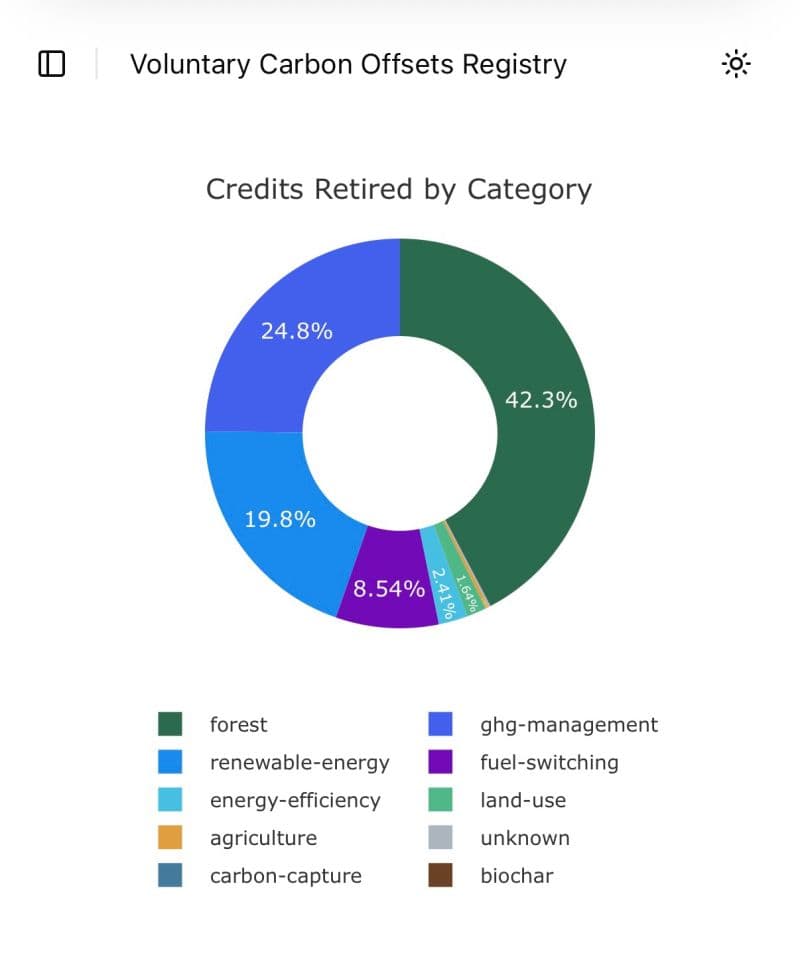
What the voluntary carbon market has actually been buying
Two views from the offsets registry on the Carbon3 platform: which project types dominate retirements, and who retires the most.
Read the articleIntegrity
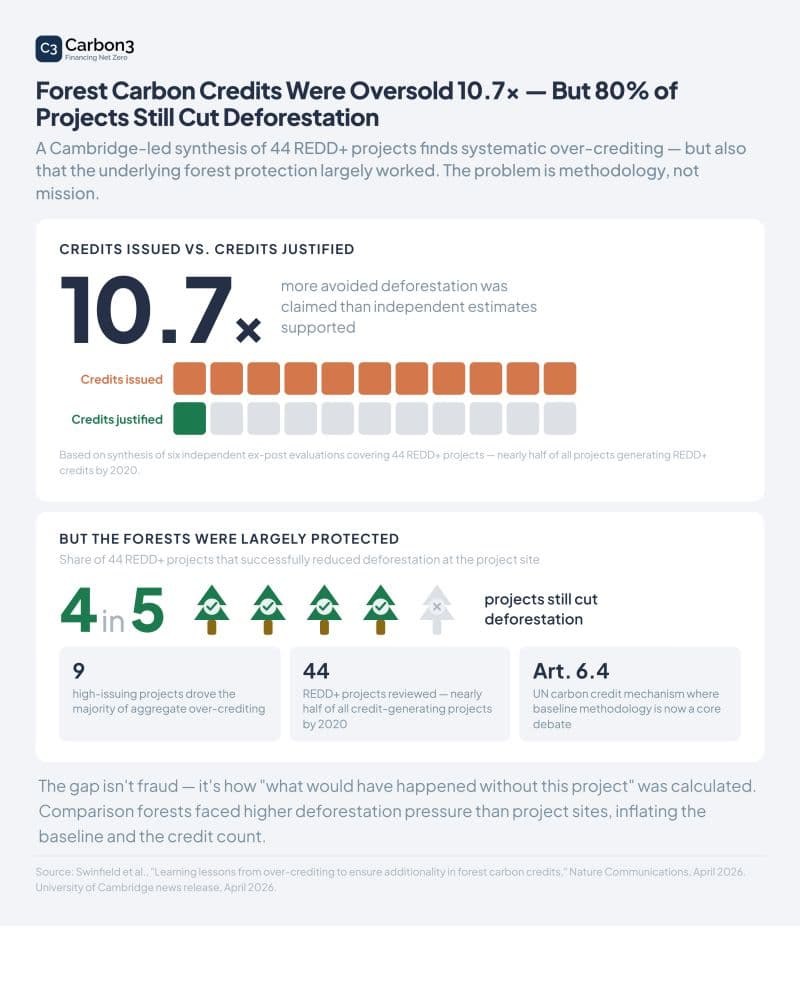
REDD+ credits were oversold, but most projects cut deforestation
A peer-reviewed study of 44 projects found credits oversold by a factor of more than ten, while four in five projects genuinely reduced forest loss.
Read the articleTransition finance
When cutting beats buying: the balance-sheet case for insetting
Our 2026 white paper models four value chains to 2050 and finds reducing emissions in-house already cheaper than buying credits in most sectors.
Read the article
See the companies behind these figures in the Data Hub.
Look up your suppliers’ emissions and targets, free.