What the voluntary carbon market has actually been buying
Two views from the offsets registry on the Carbon3 platform: which project types dominate retirements, and who retires the most.
By Carbon3 team1 min read
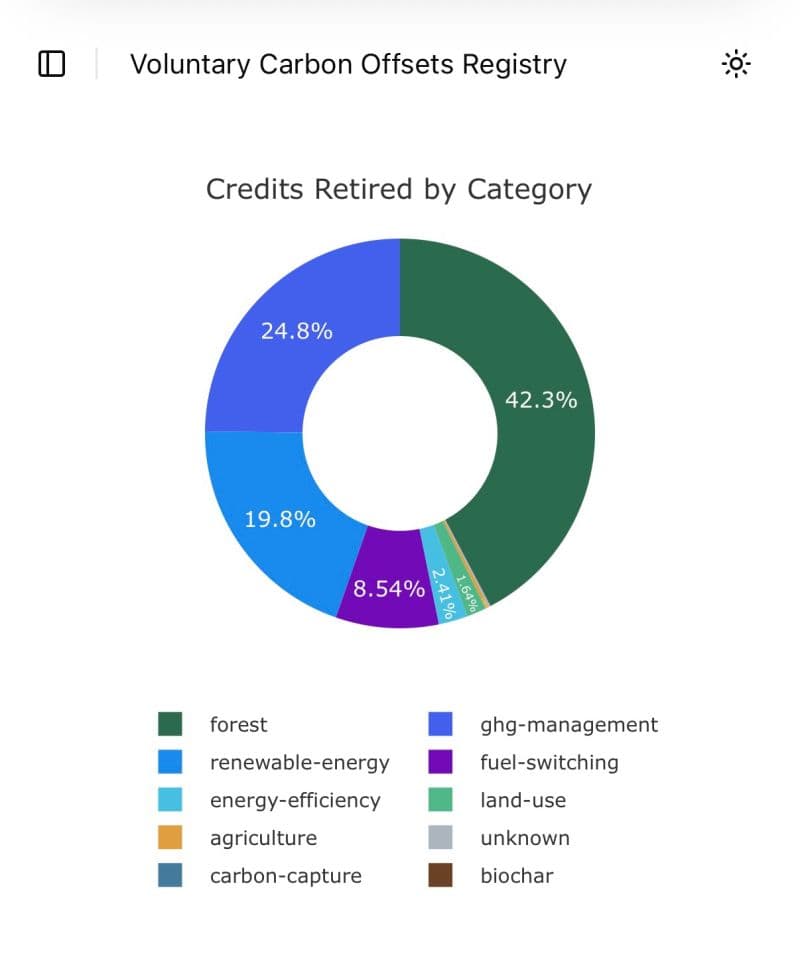
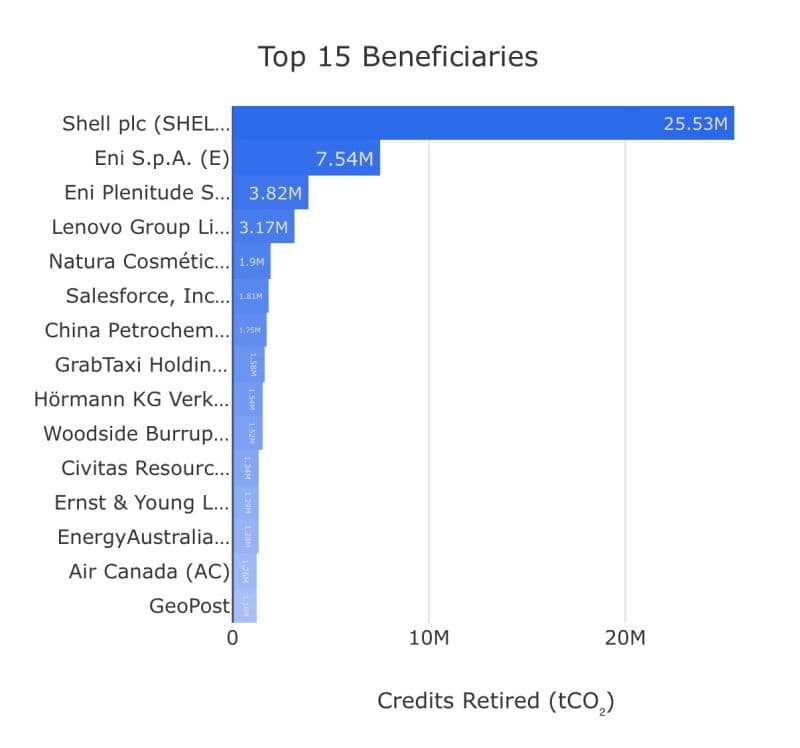
These two views come from the voluntary carbon offsets registry on the Carbon3 platform. Together they show where retired credits have actually gone.
Forestry credits make up about 42 percent of retirements, followed by greenhouse-gas management at about 25 percent and renewable energy at about 20 percent. Fuel switching accounts for less than 9 percent. The buyers are concentrated as well. Shell alone has retired more than 25 million tonnes, several times more than the next largest beneficiary.
Offset credits, by design, pay for reductions outside the buyer's own value chain. Insetting takes the other route. It channels the same budget into verified emissions reductions inside the supply chain, where the emissions actually sit and where a Scope 3 claim can be defended.
Originally published on LinkedIn, 14 February 2026.
The Carbon3 Newsletter
Weekly analysis of industrial decarbonization and insetting across Scope 1 to 3, from the Carbon3 team.
Read more from the research team.
Integrity
We asked the smartest AI models about insetting
Is insetting the best route to decarbonizing supply chains and tackling Scope 3?
Read the articleIntegrity
Transparency and traceability in chemical value chains
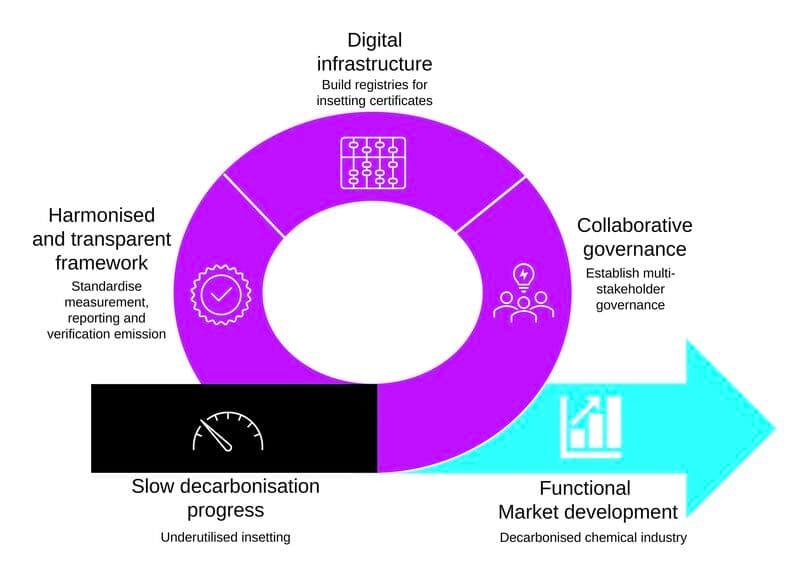
A Nature paper argues for harmonized accounting, digital verification and collaborative governance.
Read the articleProduct
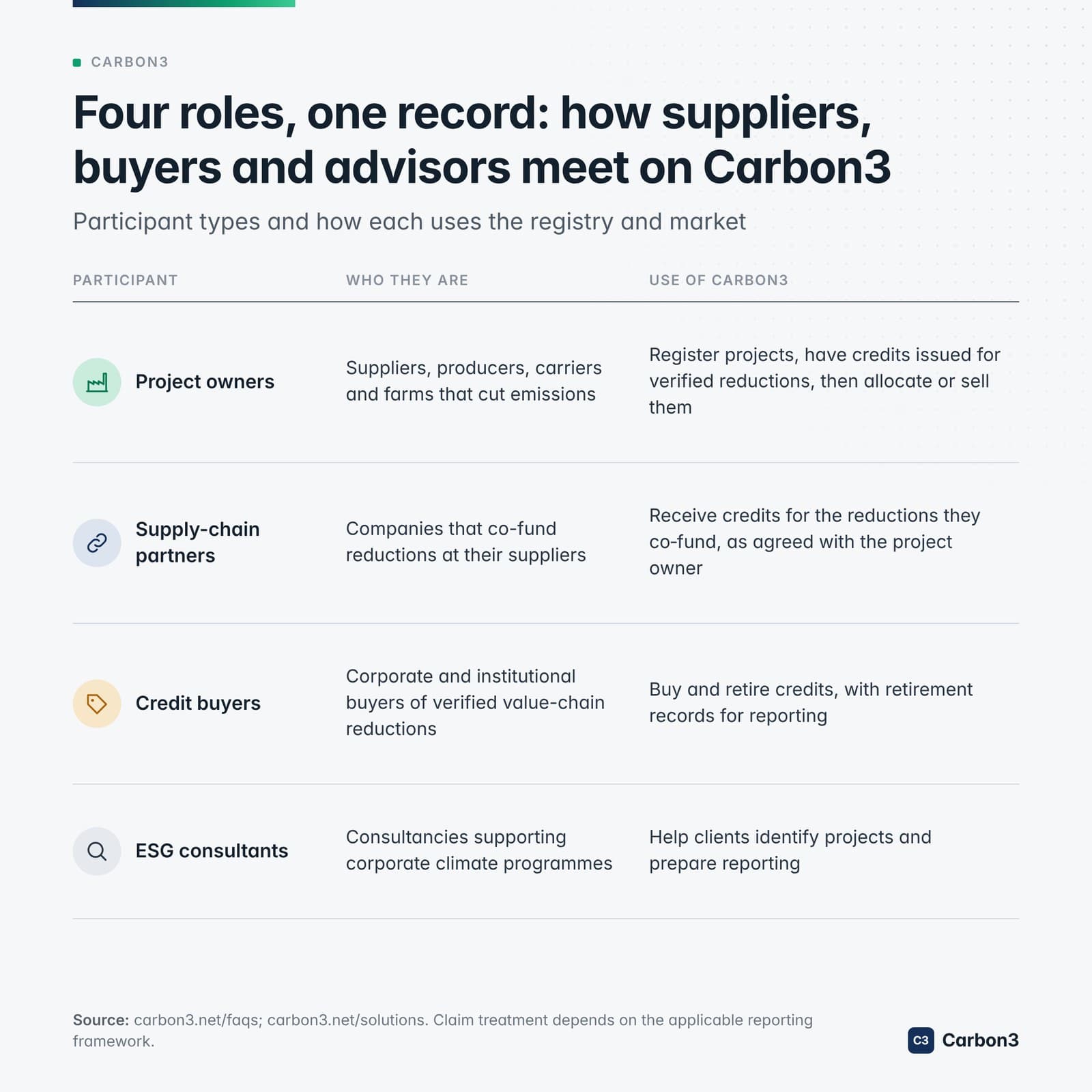
Suppliers, buyers and advisors rarely work from the same record of a reduction
Carbon3 has four participant types: project developers, supply-chain partners, credit buyers and ESG consultants.
Read the article
See the companies behind these figures in the Data Hub.
Look up your suppliers’ emissions and targets, free.