Around 40 percent of the runway to 2030 is already gone
Scope 3 targets need emissions reductions now, fuel projects take years to deliver, and European rules are already live. A graphic from our Maritime Outlook.
By Carbon3 team1 min read
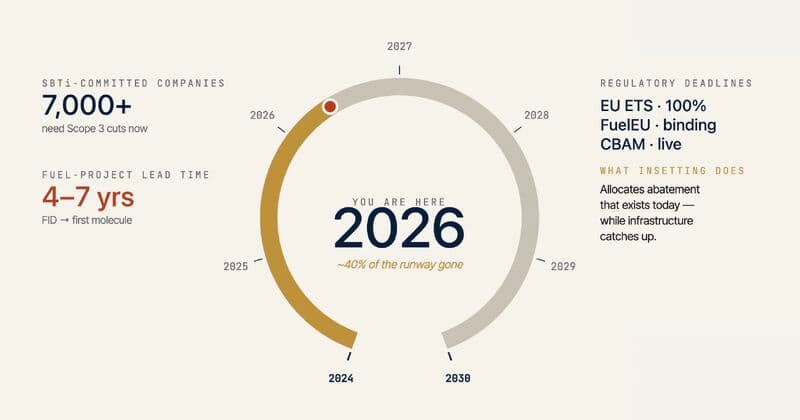
This graphic from our 2026 Maritime & Shipping Outlook puts the maritime calendar in one picture. Counting from 2024, around 40 percent of the runway to 2030 is already behind us.
The pressure comes from both directions. More than 7,000 companies with science-based commitments need Scope 3 emissions reductions now. In Europe, the EU ETS covers all shipping emissions this year, FuelEU Maritime is binding and CBAM is live. Yet a new fuel project typically takes four to seven years to go from final investment decision to its first molecule.
Global rules at the IMO have stalled, but they are likely to return in some form. In the meantime, insetting lets the value chain allocate the abatement that already exists today, while fuel supply and infrastructure catch up.
Originally published on LinkedIn, 7 May 2026.
The Carbon3 Newsletter
Weekly analysis of industrial decarbonization and insetting across Scope 1 to 3, from the Carbon3 team.
Read more from the research team.
Sector: Maritime
The green fuel premium is shared, not absorbed
Cargo owners, regulators, lenders and fuel producers can each take a tranche of the premium, leaving the shipowner a much smaller gap.
Read the articleSector: Maritime
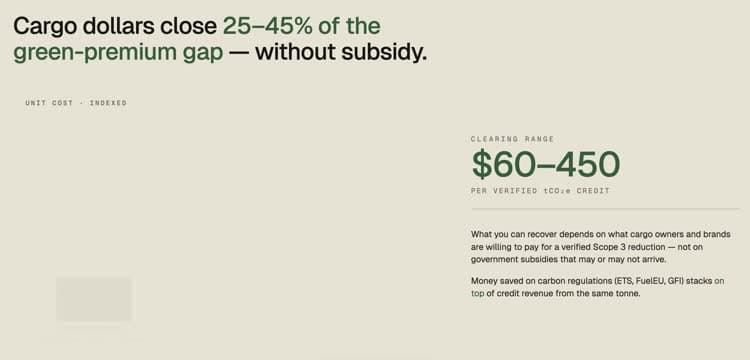
Clearing the green shipping premium without waiting for policy
A market-driven allocation model lets carriers close 25 to 45 percent of the premium gap from cargo-side demand.
Read the articleSector: Maritime
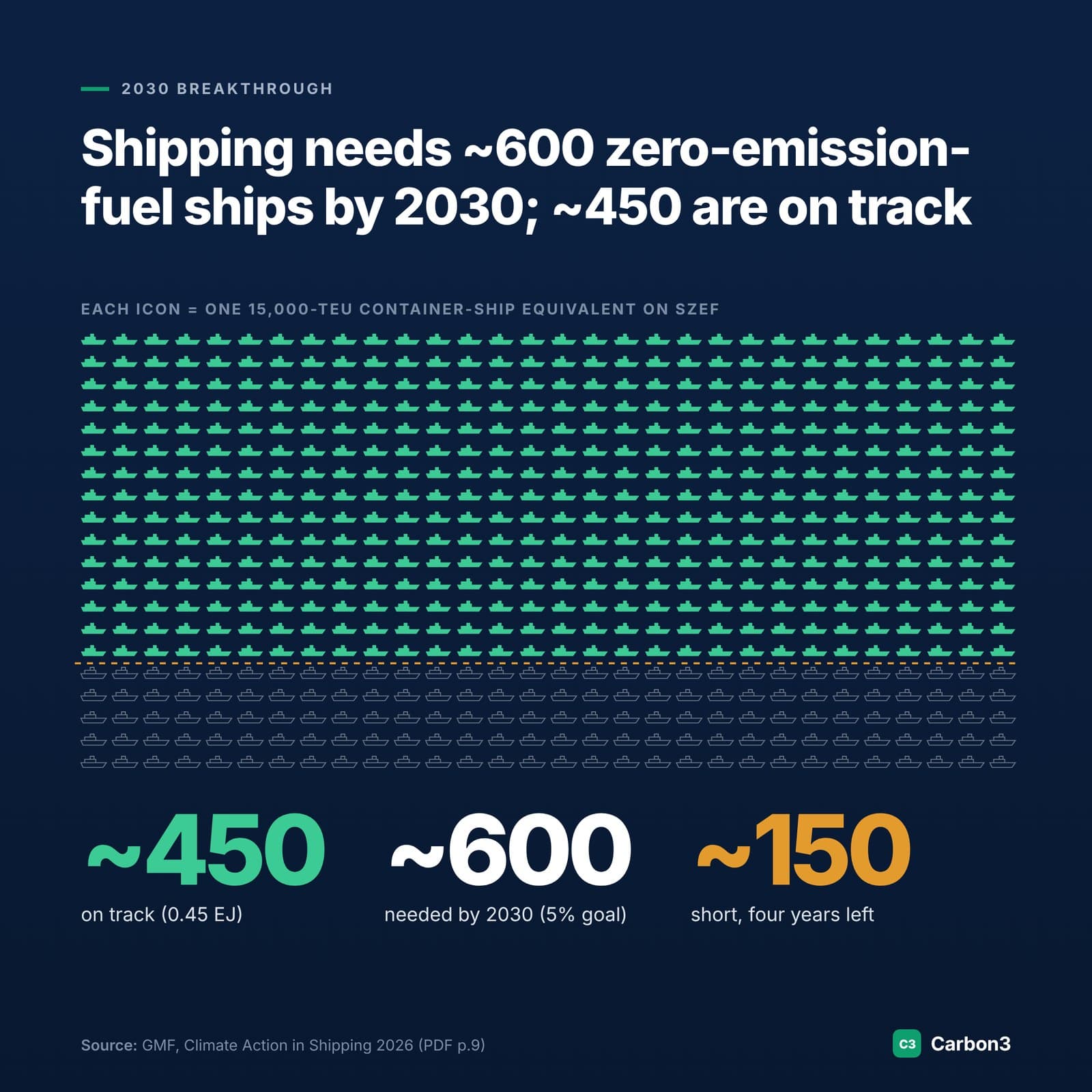
Shipping's 2030 fuel goal is about 150 ships short, with four years left
The Global Maritime Forum estimates the 5% breakthrough goal needs about 600 large container ship equivalents on scalable zero-emission fuels by 2030.
Read the article

See the companies behind these figures in the Data Hub.
Look up your suppliers’ emissions and targets, free.