The green fuel premium is shared, not absorbed
Cargo owners, regulators, lenders and fuel producers can each take a tranche of the premium, leaving the shipowner a much smaller gap.
By Carbon3 team1 min read

A shipowner switching to green fuel faces a large cost premium. This chart from our 2026 Maritime & Shipping Outlook shows how that premium can be split across the value chain instead of landing on a single balance sheet.
In the illustrative case, a cargo-owner inset claim covers 38 percent of the premium as a Scope 3 reduction. Avoided regulatory cost under the EU ETS and FuelEU covers another 26 percent. Sustainability-linked debt takes 16 percent, and a fuel-producer offtake share takes 10 percent. The shipowner is left with a residual gap of about 10 percent, which shrinks further as the market thickens.
Decarbonizing shipping is mostly a financial challenge. Insetting is the instrument that lets each party in the chain take its own tranche of it.
Originally published on LinkedIn, 6 May 2026.
The Carbon3 Newsletter
Weekly analysis of industrial decarbonization and insetting across Scope 1 to 3, from the Carbon3 team.
Read more from the research team.
Sector: Maritime
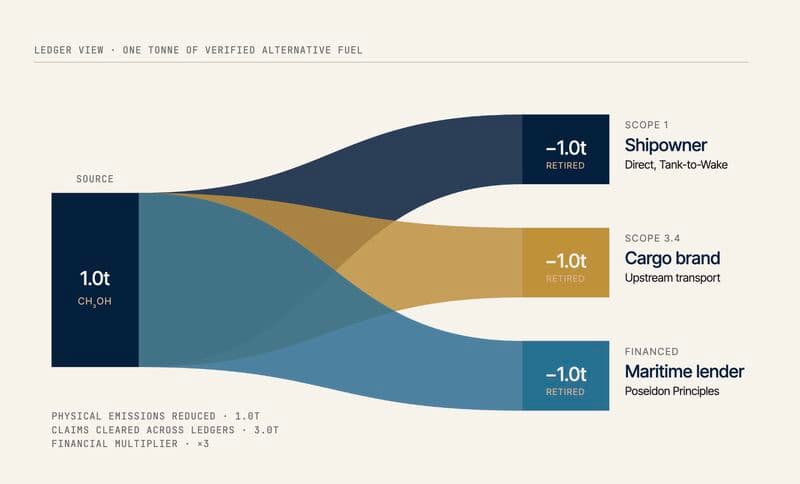
One tonne of green maritime fuel pays out three ways
Book-and-claim insetting fixes the shipowner's Scope 1, the brand's Scope 3 and the bank's financed emissions.
Read the articleSector: Maritime
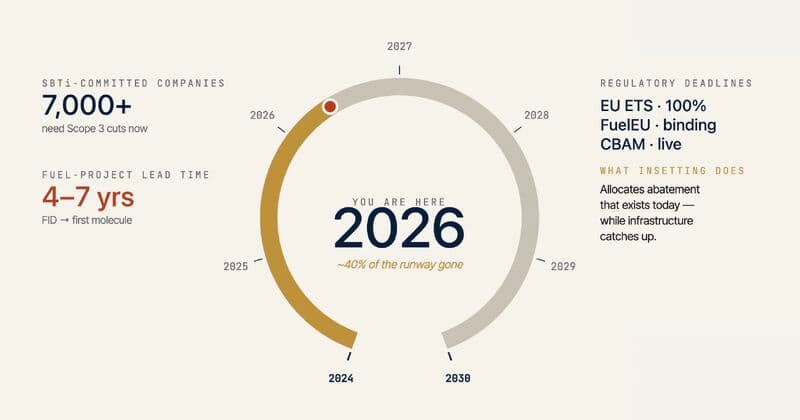
Around 40 percent of the runway to 2030 is already gone
Scope 3 targets need emissions reductions now, fuel projects take years to deliver, and European rules are already live.
Read the articleSector: Maritime
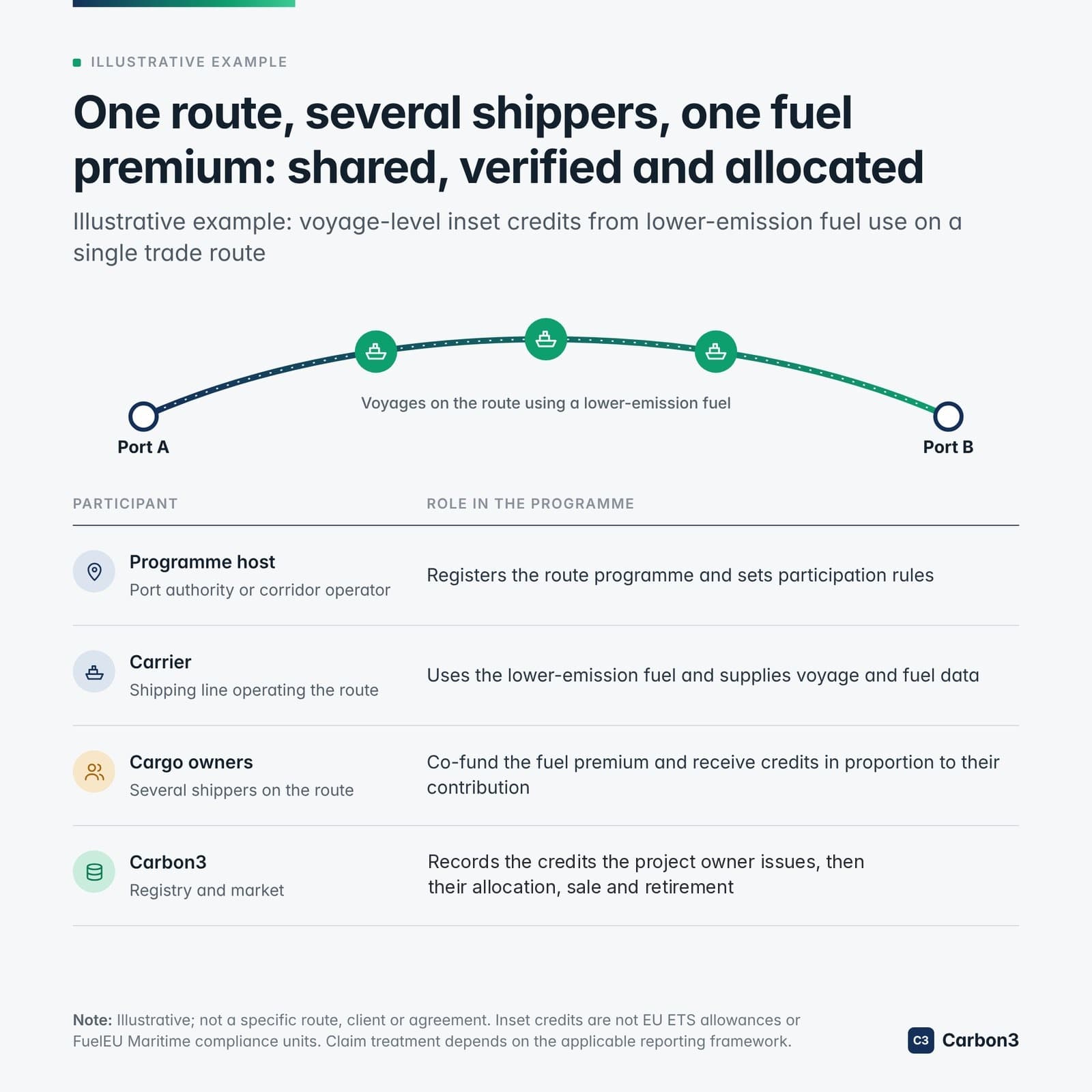
One trade route, several shippers, one fuel premium, shared and verified
An illustrative route program: cargo owners co-fund a carrier's lower-emission fuel, voyage-level inset credits are issued after verification, and each shipper receives its share.
Read the article
See the companies behind these figures in the Data Hub.
Look up your suppliers’ emissions and targets, free.