One tonne of green maritime fuel pays out three ways
Book-and-claim insetting fixes the shipowner's Scope 1, the brand's Scope 3 and the bank's financed emissions.
By Carbon3 team1 min read
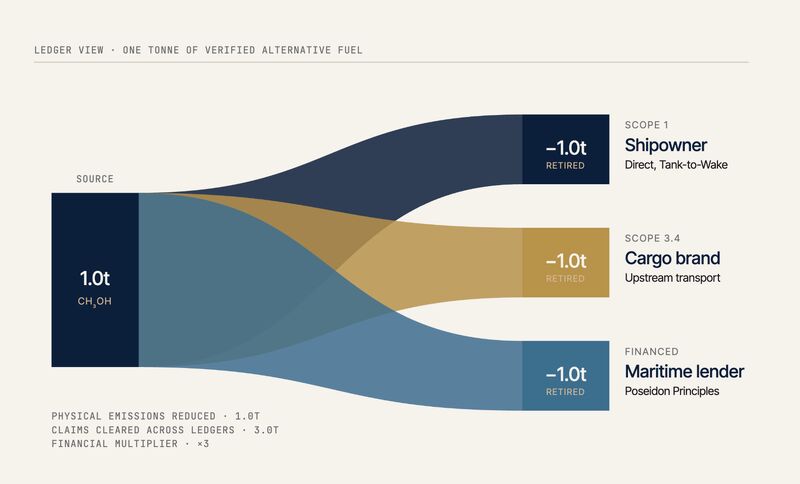
Green maritime fuel isn't just a physical commodity it’s a financial asset. Because of book-and-claim insetting, a single tonne of biofuel pays out three ways: fixing the shipowner's Scope 1, the brand's Scope 3, and the bank's financed emissions All three carry value which insetting can help monetize.
Discover how your organization can leverage insetting as an instrument to abate Scope 3 emissions across the supply chain, or as an investor to de-risk and co-finance the infrastructure buildout. The 2026 Maritime Outlook by Carbon3 linkedin.com
Authors: Chris Chatterton, Paul Cruickshank, Ilja Nevolin International Chamber of Shipping American Bureau of Shipping (ABS) Maritime and Port Authority of Singapore (MPA) Lloyd's Maritime Institute DNV - Maritime
Learn more
How insetting works in shipping
Originally published on LinkedIn, 5 May 2026.
Read more from the research team.
Sector: Maritime
Cargo owners need reductions now, not at the deadline
Regulation promotes last-minute compliance.
Read the articleSector: Maritime
The green fuel premium is shared, not absorbed
Cargo owners, regulators, lenders and fuel producers can each take a tranche of the premium, leaving the shipowner a much smaller gap.
Read the articleSector: Maritime
FuelEU Maritime only works if someone can pay the green premium
FuelEU Maritime asks ships calling at EU ports to cut the greenhouse gas intensity of their fuel 2% from 2025, rising to 80% by 2050.
Read the article

See the companies behind these figures in the Data Hub.
Look up your suppliers’ emissions and targets, free.