California's SB 253 sets the first Scope 1 and 2 deadline for August 2026
Scope 3 reporting follows in 2027 for large entities doing business in the state.
By Carbon3 team1 min read

California’s CARB just locked in SB 253: first Scope 1+2 reports are due 10 August 2026, Scope 3 follows in 2027 for large entities doing business in the state
Many will feel the data gap immediately. Insetting can turn that compliance pressure into funded, verifiable reductions shared across suppliersThis is what Carbon3’s marketplace was built for. Worth exploring if your value chain touches California: https://carbon3.net
The staggered timetable gives companies a year between the first disclosure and the Scope 3 requirement, and most will use it to discover how little of their value-chain data they actually hold. The rule does not require reductions, but it will make the size of the Scope 3 problem visible to regulators, investors and customers at the same time.
Visibility is where the commercial pressure starts. Once the number is public, the question becomes what the company is doing about it, and insetting is one of the few answers that produces a verifiable reduction inside the reported boundary rather than a purchased claim from outside it.
Originally published on LinkedIn, 28 February 2026.
The Carbon3 Newsletter
Weekly analysis of industrial decarbonization and insetting across Scope 1 to 3, from the Carbon3 team.
Read more from the research team.
Policy
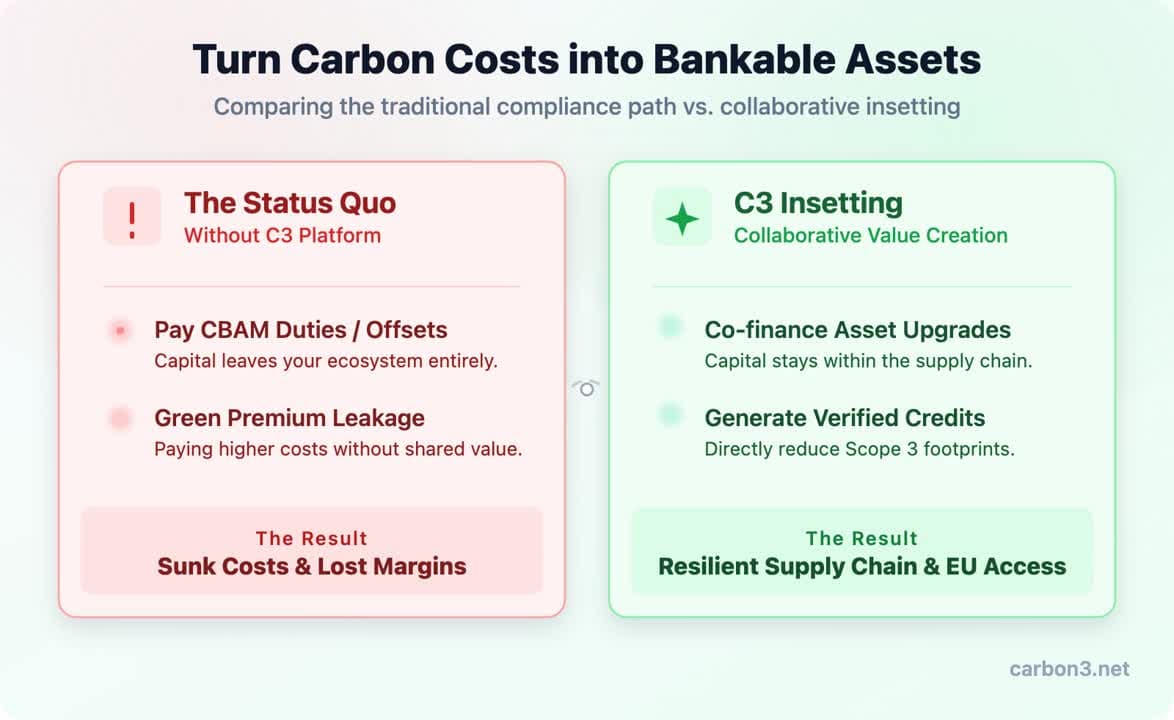
Turning CBAM costs into collaborative opportunities
Producers upgrade assets and generate inset credits.
Read the articlePolicy
The EU's Temporary Decarbonisation Fund has an inverted incentive
The Court of Auditors warns that retroactive, history-based payouts deliver weak steering power.
Read the articlePolicy
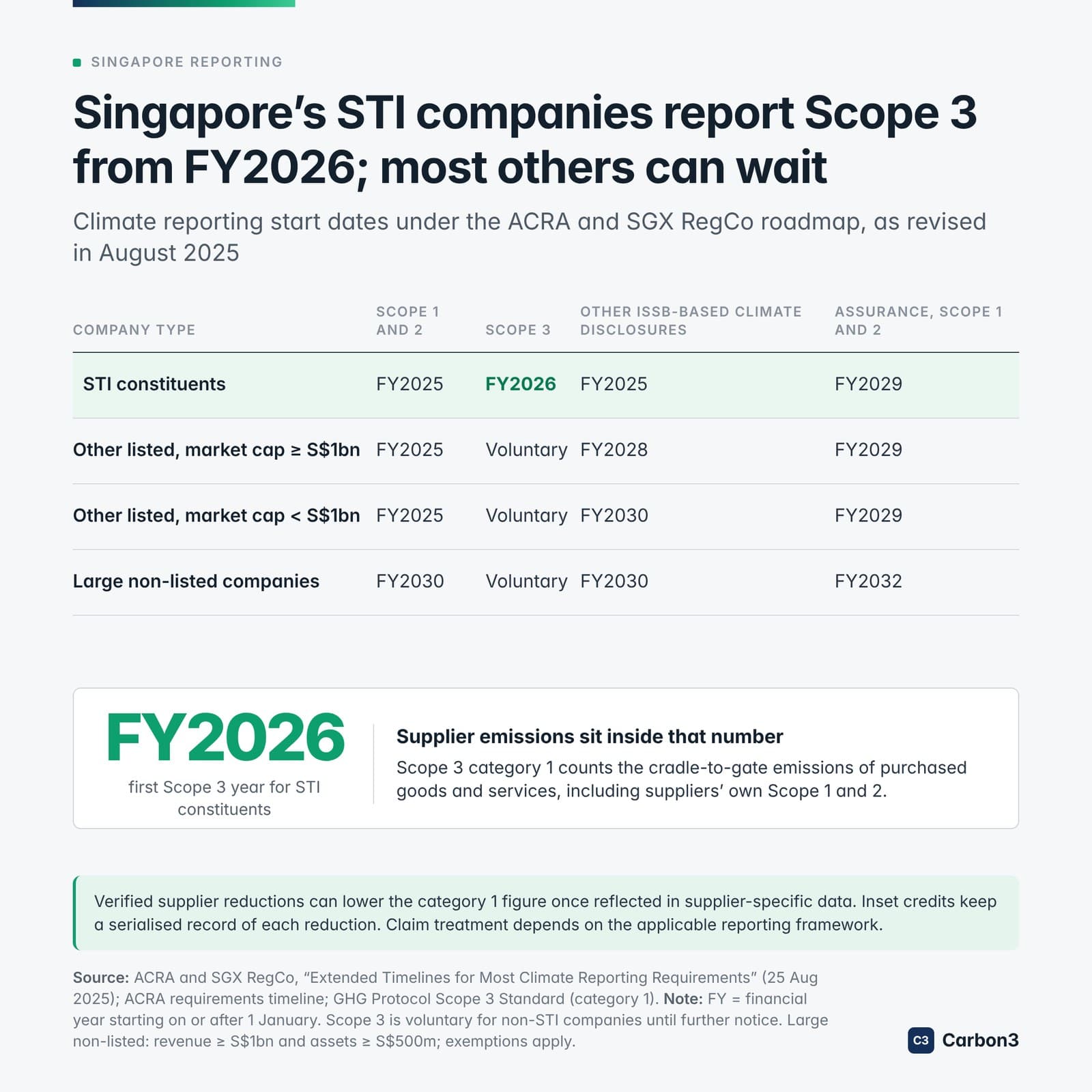
For Singapore's largest listed companies, FY2026 is the first Scope 3 year
Under the ACRA and SGX RegCo roadmap revised in August 2025, STI constituents report Scope 3 from FY2026, while other companies can wait.
Read the article
See the companies behind these figures in the Data Hub.
Look up your suppliers’ emissions and targets, free.