Turning CBAM costs into collaborative opportunities
Producers upgrade assets and generate inset credits. Downstream buyers co-finance and reduce their Scope 3, often below the cost of offsets or duties.
By Carbon3 team1 min read
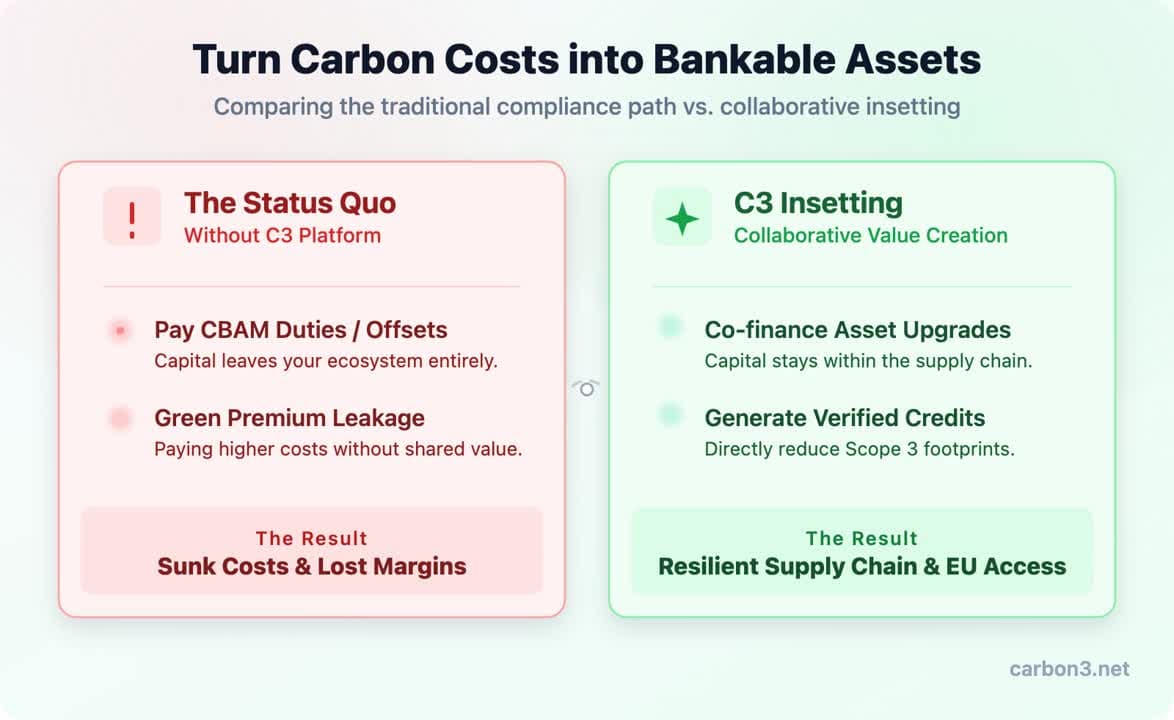
With CBAM's full implementation phase ramping up in 2026, many exporters to the EU are facing unexpected carbon costs on steel, cement, aluminum, fertilizers, hydrogen, and electricity. But what if those costs could be turned into collaborative opportunities? Through insetting on the Carbon3 platform:
-
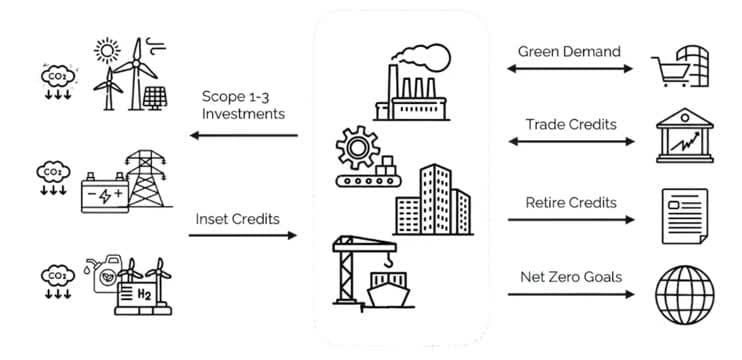
Producers can upgrade assets (e.g., green hydrogen integration or low-carbon process tech) and generate high-integrity inset credits.
-
Downstream buyers can co-finance those upgrades and receive credits to directly reduce their Scope 3 footprint, often at lower cost than purchasing external offsets or paying CBAM duties.
Result: Real, verifiable emissions reductions within the value chain + shared financial upside. No 'green premium' leakage, just bankable decarbonization that strengthens supply chain resilience and EU market access.
We've already seen early movers in steel and cement secure millions in co-financing via insetting. Who's next? Explore 1000+ opportunities (many CBAM-relevant) on our platform, still free access for a limited time: carbon3.net/data/companies
Join Carbon3's insetting platform at zero upfront cost, monetize your internal emission reductions as high-integrity inset credits and connect with downstream buyers ready to co-finance for their Scope 3 targets. Bridge the financing gap and make your transition bankable. Learn more at https://www.carbon3.net/
Originally published on LinkedIn, 20 February 2026.
The Carbon3 Newsletter
Weekly analysis of industrial decarbonization and insetting across Scope 1 to 3, from the Carbon3 team.
Read more from the research team.
Policy
CBAM changed the question from whether to decarbonize to whether you can afford not to
Turning the green premium into a revenue stream from the generated Scope 3 reductions makes the industrial transition bankable.
Read the articlePolicy
California's SB 253 sets the first Scope 1 and 2 deadline for August 2026
Scope 3 reporting follows in 2027 for large entities doing business in the state.
Read the articlePolicy
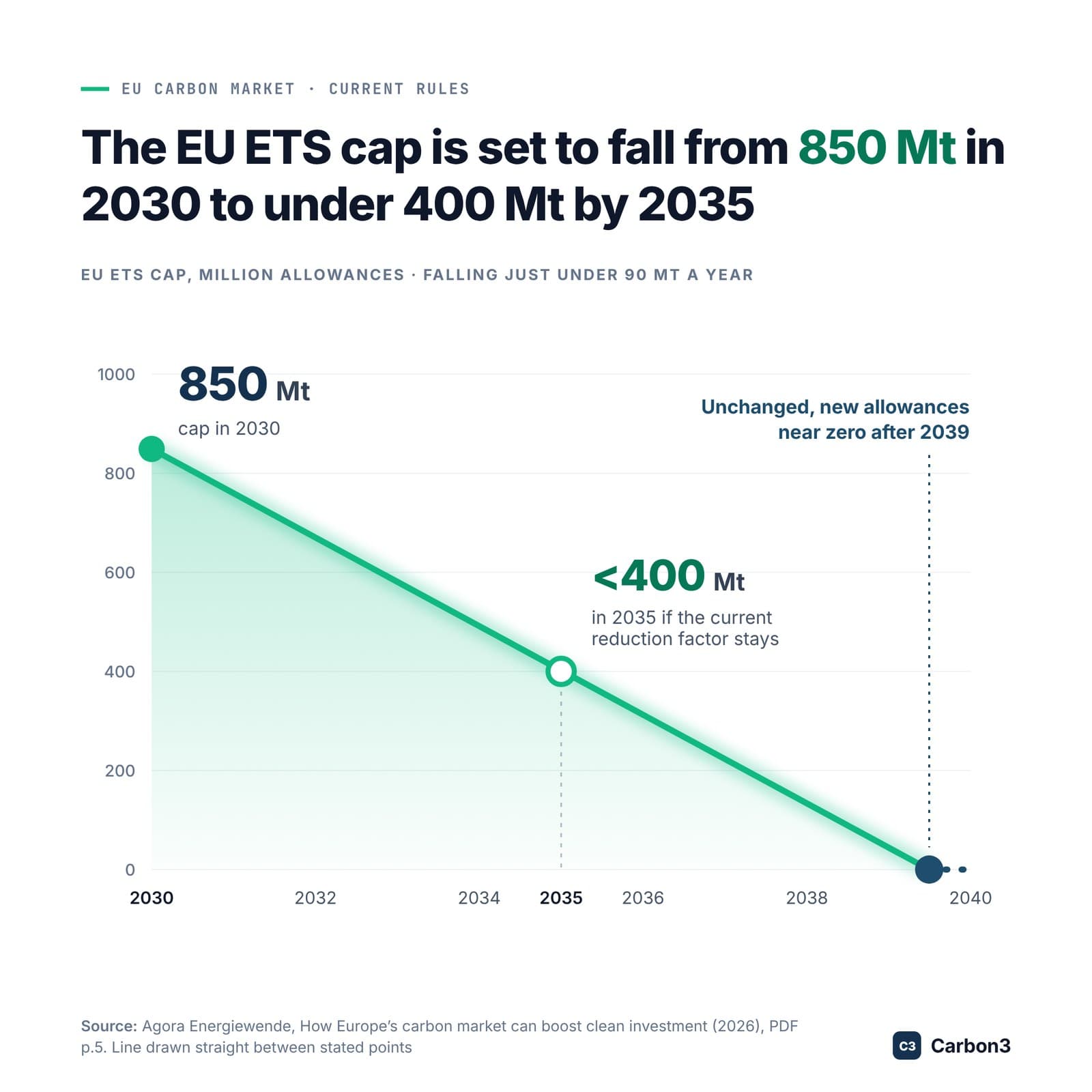
The EU carbon market is running out of allowances on a published schedule
Agora Energiewende shows the EU ETS cap falling from 850 Mt in 2030 to just below 400 Mt in 2035, a cost that buyers of steel, cement and chemicals will feel through their suppliers.
Read the article

See the companies behind these figures in the Data Hub.
Look up your suppliers’ emissions and targets, free.