Electrification changes what each dollar of energy delivers
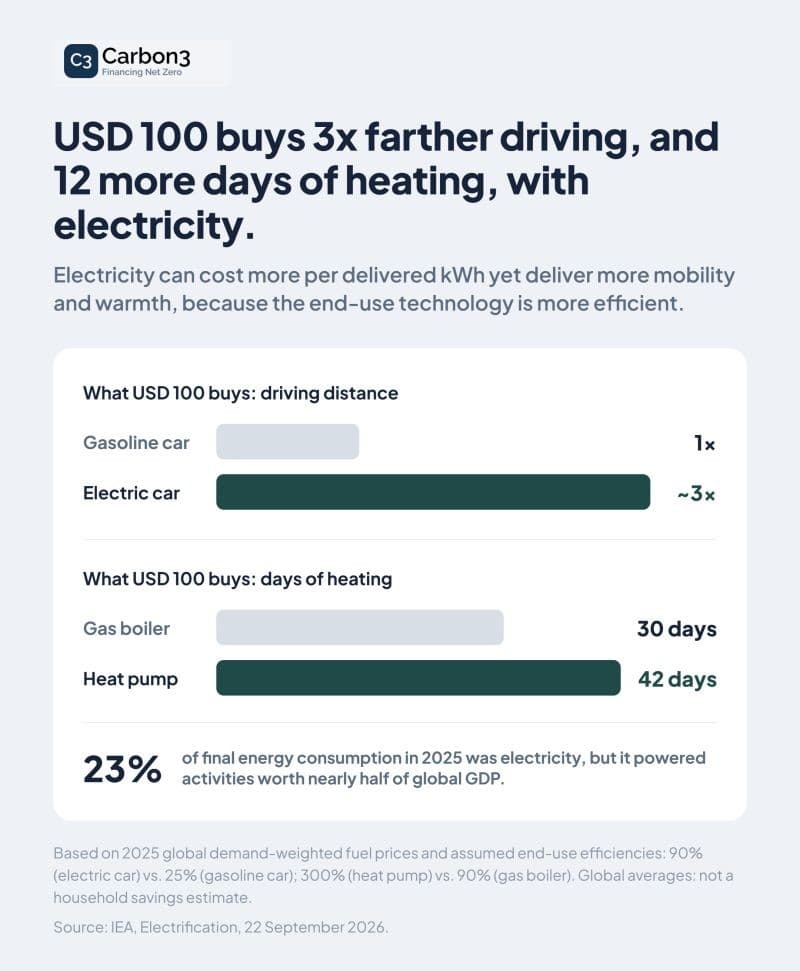
In the IEA's global averages, US$100 of electricity drives a car about three times farther than petrol and heats a home for 42 days rather than 30.
By Carbon3 team2 min read
The energy transition is not just about the price of electricity. It is about the service each dollar delivers.
Same spend, more service
Globally, US$100 can power a battery-electric car roughly three times farther than a petrol car. The same US$100 provides 42 days of heat from a heat pump, compared with 30 days from a gas boiler: 12 more days of heating for the same spend.
Those comparisons come from the IEA's Electrification report of 22 September 2026. They are based on 2025 global demand-weighted fuel prices and assumed end-use efficiencies: 90% for an electric car against 25% for a petrol car, and 300% for a heat pump against 90% for a gas boiler. They are global averages, not a household savings estimate, and local prices will move the numbers in either direction.
Why efficiency is the story
Electricity can cost more per delivered kilowatt-hour than the fuel it replaces and still come out ahead, because the technology at the point of use wastes far less of it. An electric motor turns most of its energy into motion. A combustion engine turns most of its fuel into heat. A heat pump moves heat rather than generating it, which is why it can deliver more heat than the electricity it consumes.
The IEA puts the wider picture in one figure: electricity made up 23% of final energy consumption in 2025, but it powered activities worth nearly half of global GDP.
Efficiency changes the economics of electrification. Comparing fuel prices per unit of energy misses the point if the units do very different amounts of work once they arrive.
What it means in value chains
Much of the electrification ahead will happen in fleets, buildings and industrial processes that sit in someone else's supply chain. When a logistics provider electrifies vehicles, or a supplier replaces a gas boiler with a heat pump, the operator sees the change in its own energy bill and emissions. Its customers see it in their Scope 3 inventories.
That shared interest is where Carbon3's work starts. Where a buyer helps fund a supplier's switch, the verified reduction can be recorded once, as inset credits, with a clear record of who holds it. Insetting is not offsetting: it records reductions made inside the value chain.
The IEA's comparison is a reminder that the case for electrification often rests on running costs as well as emissions. For many suppliers, the harder part is the upfront investment, and that is where buyers can help.
Source: IEA, Electrification, 22 September 2026.
Originally published on LinkedIn, 14 October 2026.
The Carbon3 Newsletter
Weekly analysis of industrial decarbonization and insetting across Scope 1 to 3, from the Carbon3 team.
Read more from the research team.
Outlook
Electrification is also a fuel-import strategy
In the IEA's high-electrification scenario, oil imports fall by 15 mb/d and 120 bcm of gas imports are avoided by 2035.
Read the articleOutlook
Chinese EV exports are being redirected, not disappearing
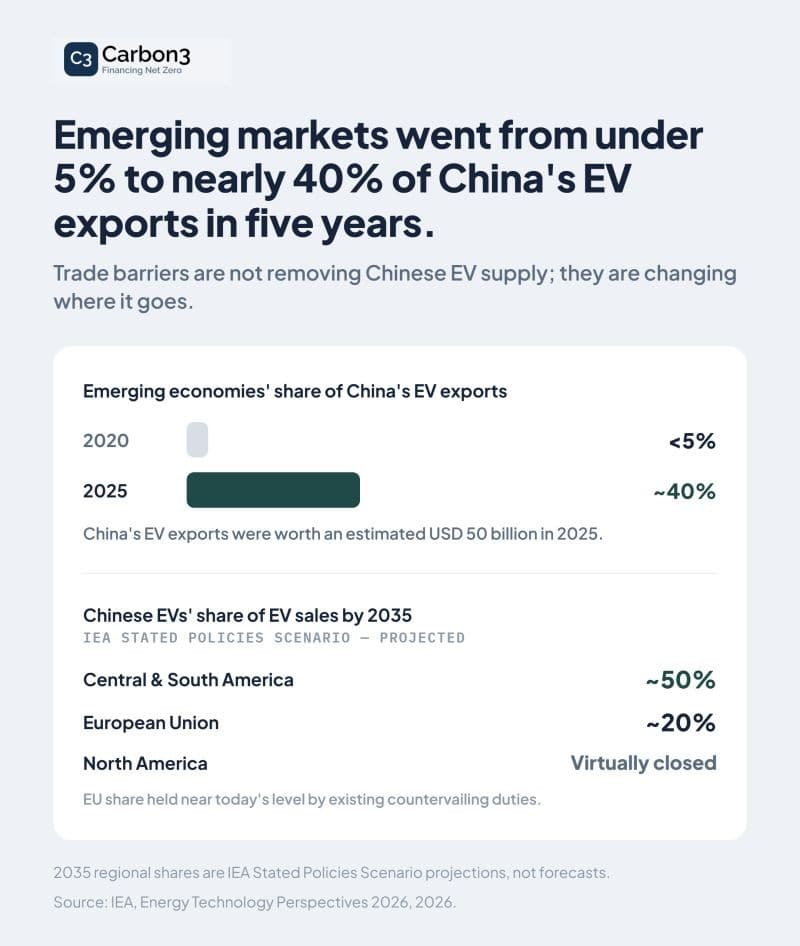
Emerging economies' share of China's EV exports rose from under 5% in 2020 to nearly 40% in 2025, according to the IEA.
Read the articleTransition finance
Transition investment hit a record, but not where heavy industry needs it
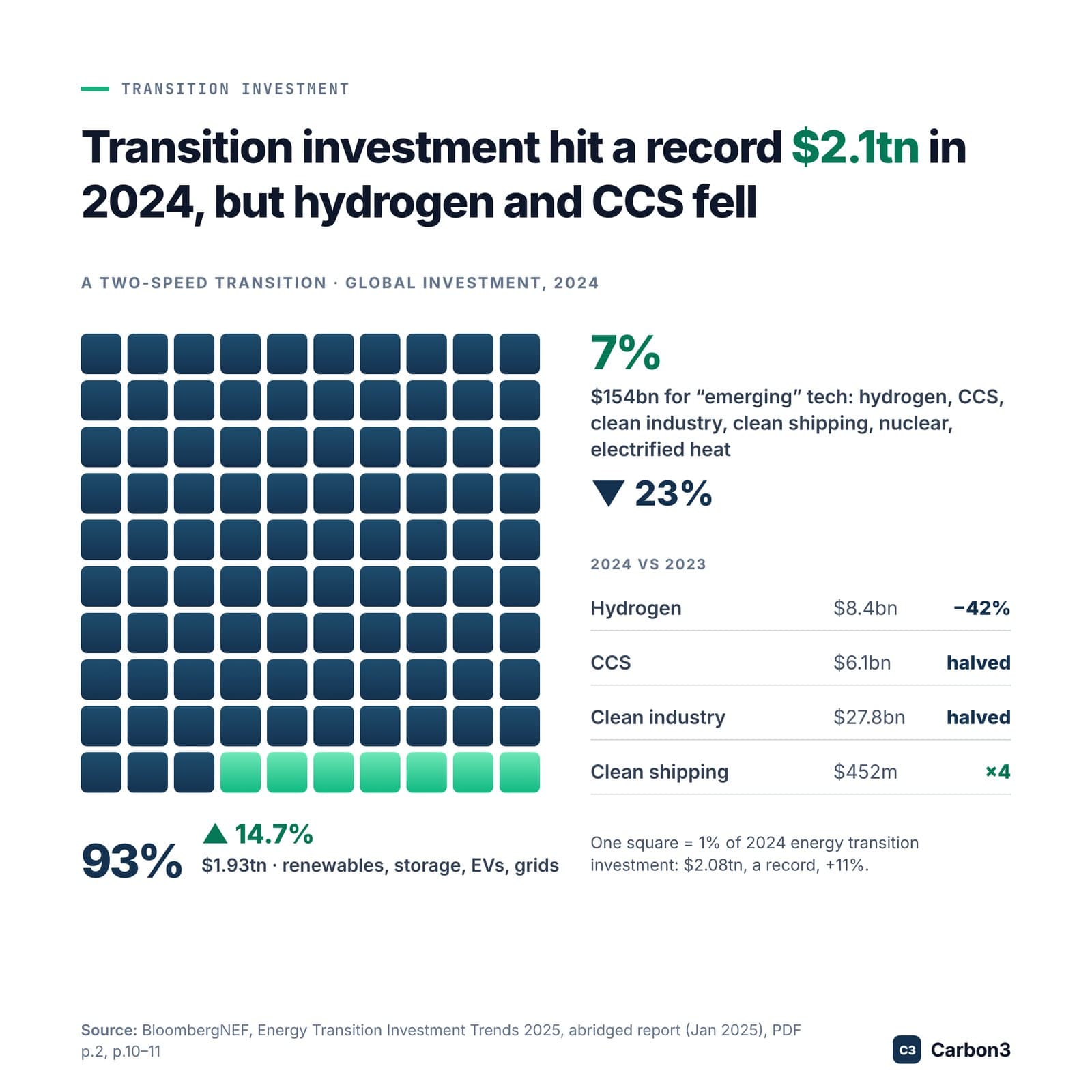
BloombergNEF counts a record $2.08 trillion in energy transition investment in 2024, yet hydrogen fell 42% and carbon capture and clean industry each roughly halved.
Read the article
See the companies behind these figures in the Data Hub.
Look up your suppliers’ emissions and targets, free.