Electrification is also a fuel-import strategy
In the IEA's high-electrification scenario, oil imports fall by 15 mb/d and 120 bcm of gas imports are avoided by 2035.
By Carbon3 team2 min read
Electrification is usually discussed as a climate measure. The IEA's analysis shows it is also an energy-security measure: a way to import less fuel.
The numbers
In the IEA's high-electrification scenario, oil imports fall by 15 million barrels a day and 120 billion cubic meters of gas imports are avoided by 2035.
Those figures reframe the case. Every electric vehicle, heat pump or electrified industrial process replaces fuel that, for many economies, has to be bought from abroad. Electricity, by contrast, can be generated domestically, increasingly from wind and solar.
Why the framing matters
Climate arguments and security arguments do not always point the same way. Here they do. For importing countries, electrifying transport, buildings and industry reduces emissions and reduces exposure to fuel-price shocks and supply disruption at the same time.
That alignment matters for policy, because measures that serve two goals are easier to sustain. It also matters for companies, because the business case for electrification no longer rests only on emissions.
What it means for supply chains
Much of the electrification described in scenarios like this happens in supply chains: in factories switching from fossil-fired heat, in logistics fleets, in equipment at supplier sites. For the companies buying from those suppliers, the change shows up as lower Scope 3 emissions.
It also shows up as resilience. A supplier running on electricity is less exposed to swings in oil and gas prices, which makes it a more predictable part of the chain.
Turning scenarios into projects
Scenarios describe what is possible at system level. Getting there depends on individual projects: a furnace replaced, a fleet electrified, a process redesigned. Many of those projects carry an upfront cost that the supplier alone may not be able to justify.
When a buyer co-funds that kind of project, the verified reduction can be recorded as an inset credit, tied to the supplier where it happened. Insetting is not offsetting: it funds reductions inside the value chain, and here it also helps reduce dependence on imported fuel.
The IEA's scenario is a reminder that the case for electrification is broader than emissions alone, and that much of it will be built one supplier at a time.
Originally published on LinkedIn, 29 September 2026.
The Carbon3 Newsletter
Weekly analysis of industrial decarbonization and insetting across Scope 1 to 3, from the Carbon3 team.
Read more from the research team.
Outlook
Battery storage reaches 110 GW
Battery storage capacity has reached 110 GW, and storage is becoming part of how clean power is delivered rather than an add-on.
Read the articleOutlook
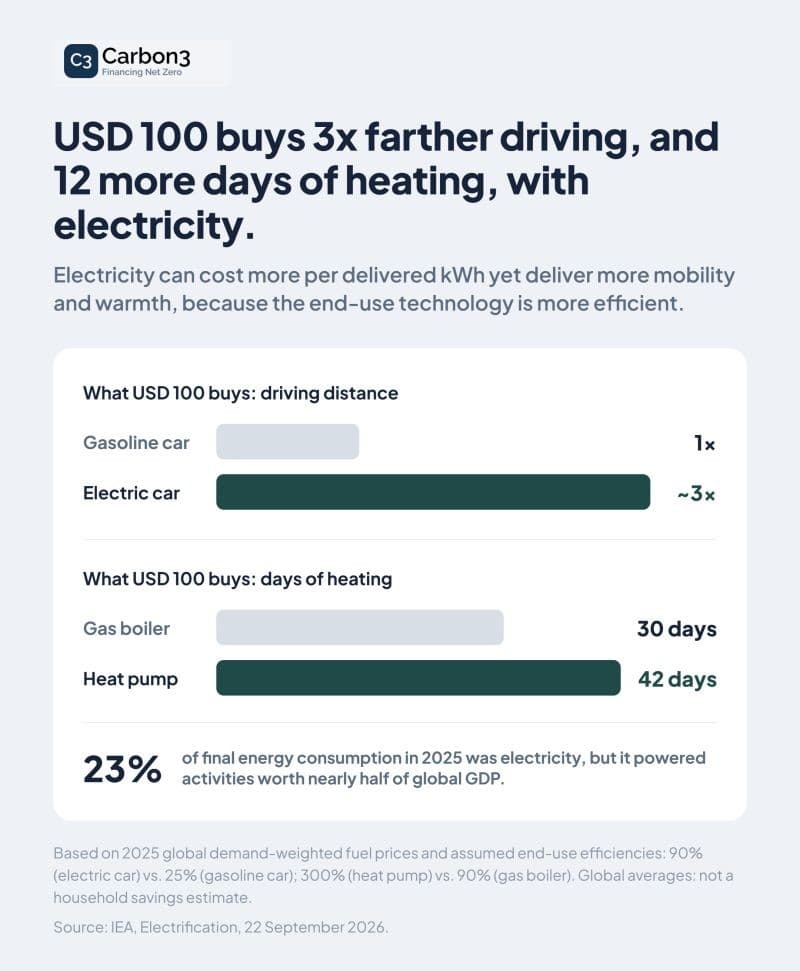
Electrification changes what each dollar of energy delivers
In the IEA's global averages, US$100 of electricity drives a car about three times farther than petrol and heats a home for 42 days rather than 30.
Read the articleSector: Maritime
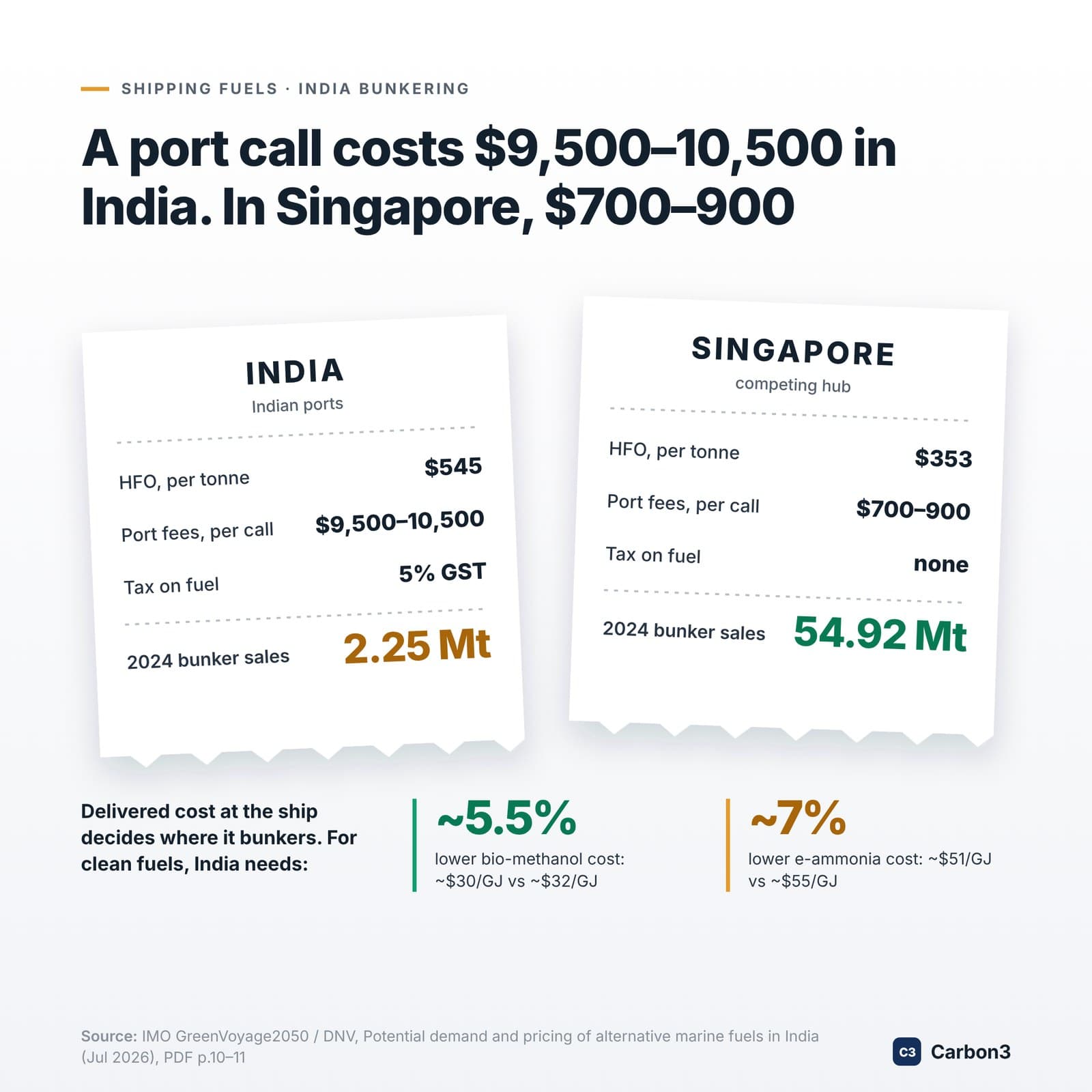
Bunkering in India costs far more than in Singapore, and not only for the fuel
A DNV study for IMO GreenVoyage2050 finds higher fuel prices and port fees in India, and says clean fuels there would need to be 5.5% to 7% cheaper than at the competing hub.
Read the article
See the companies behind these figures in the Data Hub.
Look up your suppliers’ emissions and targets, free.